Post #3

Nationalism can be defined as having pride in your own nation, taking an interest in it, or even excluding other nations and thinking them lesser than your own nation. This can be more intense or less intense for some people. 

I found a post onlinewritten by a Honduran, talking about how they view their country. Even though this post was written in 2011, from other sources that I have found on the internet this view of nationalistic pride towards their country is very strong.

“What seems very clear that we have is that this country is ours. We seldom think that Honduras is mine.”—Federico Alvarez

The author also talks about the many problems that are facing Hondurans at the time (and still), for example the political corruption, economic struggles, and more. He says that if they are to help with these problems, it is important to look at the country as a collective whole and see what you can do individually to make the situation better. He talks about his obligation to Honduras, and how he can personally improve the country. This is what nationalism is in a nutshell. He feels pride towards his country, but also acknowledges that there is a lot of work to be done to improve the state of the political and social climate. 

I think this is an interesting article to read because it does not talk solely about what is wrong with the country (which is mostly what you see when you search for Honduras) but why this citizen loves his country and why he is willing to work to improve the state of it. 

Zakaria, in The Rise of the Rest, sees the potential danger in the rise of nationalism because it is happening so rapidly around the world, and it is making citizens revert back to thinking their country is the best. This stems from the continued general improvement of welfare in most countries around the world compared to the past. Economies are improving and people are becoming more proud of their countries. While this is great to an extent, the author argues this has potential danger as well. 

One example of a conflict that I have seen a lot of in my country is between the government and the citizens. According to a timeline of the country’s history on bbc.com, there has been a series of human rights abuses by the government against the citizens. According to the timeline,in August of 1988, “Inter-American Court of Human Rights finds Honduran government guilty of “disappearances” of Honduran citizens between 1981 and 1984”. This is obviously not something that should be happening to citizens by their own government, and it is obvious that corruption was involved. To correct (at least some) of the corruption, they needed an outside source to come in and assist. Because the government is so powerful, they were able to sweep it under the rug, unnoticed, for so long before it became a big deal. After this there are other human rights abuses brought to light, one being against the military. 
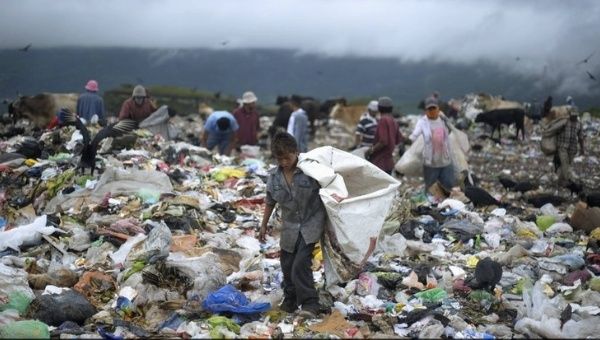
This problem with human rights also goes hand in hand with inequality, which is a major issue in Honduras. 

“Despite the favorable economic outlook, the country faces the highest level of economic inequality in Latin America.”—Worldbank.com

This inequality stems from many different issues in Honduras, some being corruption and violence, as previously stated (many times).

As you can see in the above graph, most Latin American countries are facing a decrease in income inequality. But this, unfortunately, is not true for Honduras. Income inequality is rising by more than .5 percent each year, used by the Gini coefficient. The Gini coefficient, as we have learned from a previous reading, is used to measure inequality in countries. 
Because of the changes in presidency, there seems to be little to no attempt to change these inequality issues. Worldwide organizations are aware of the problems, but it is difficult to get an organization in the country without upsetting the leader or creating bigger issues. I believe to solve the inequality issues in Honduras, the issue of political corruption needs to be solved first. Inequality is a major issue, and there are many different reasons for the huge scale in this country. To decrease inequality, Honduras needs to fix the problems causing inequality first. 

Works Cited

http://www.freerepublic.com/focus/f-bloggers/2786852/posts

Zakaria The Rise of the Rest

https://www.bbc.com/news/world-latin-america-18974519

https://www.worldbank.org/en/country/honduras/overview

https://www.telesurenglish.net/news/Inequality-Increases-In-Honduras-With-300000-Added-to-Poverty-List-20171223-0029.html

https://www.cgdev.org/media/income-inequality-falling-most-latin-america-2000-2010-compared-select-other-countries

http://hdr.undp.org/en/content/income-gini-coefficient

https://en.wikipedia.org/wiki/President_of_Honduras

Blog Post #3

“Identification with one’s own nation and support for its interests, especially to the exclusion or detriment of the interests of other nations” – The definition of nationalism according to Dictionary.com.

According to Zakaria, nationalism is a relatively new phenomenon, with the basis of its origin coming into existence in the past 100-200 years.  Today, more than ever, we are starting to see more and more countries with this nationalism mindset. Britain had their Brexit and the United States (some parts) want their wall.  It appears as nations advance more and become more independent their overall nationalism also increases. The danger of this comes with the “me-first” mentality and I can understand the point some nations are giving.  A leader, like Trump, wants to put his priority into his citizens, economy, and general well being. However, if not done in the right manner, this can be problematic. Trump began banning travelers from the middle east as well as pissing off China with tariffs.  Actions like these can begin to stir up things on global scale and have repercussions that affect much more than the American people. A major downside to nationalism is the inability to tackle global issues in an affective manner. If 196 countries approach global warming in a different manner, nothing efficient or effective will get done unless everyone is on the same page.

Now onto El Salvador.

Image result for people holding el salvador flag


Nationalism is an interesting topic in El Salvador to say the least, but with recent election outcomes an increase may be on the way.  With 88% of the country being a mix of indigenous native and european descent, there isn’t much to disagree about when it comes to race. When it comes to sports, football (soccer), brings the nation together as a whole, and even started a physical war with Honduras in 1969.  

Image result for el salvador soccer war

On the other hand, the country is riddled with gang violence that contributes to the astonishingly high murder rate of 82.84 homicides per 100,000. As a comparison the U.S. murder rate is 5.35 per 100,000 ( Murder Rate ).  This violence may be a contribution to the 3.2 million Salvadorans living elsewhere, with the majority in the United States ( [1]  ).   My friend from El Salvador actually studies university in Mexico as she claims the opportunities are better abroad.  Interestingly enough, officials and economists are worried about the “impact to the deportation of criminals” [2]  after President Trump’s crackdown on illegal immigrants.  The sudden surge will most definitely lead to an increase in crime as well as more competition for jobs.  In a country where crime is an issue, adding even more criminals into the mix does anything, but help the problem.  Only time will tell how this sudden influx of deportees affects the nation.

https://www.youtube.com/watch?v=lbmXsNmwIng
Quick video covering gang warfare in El Salvador.

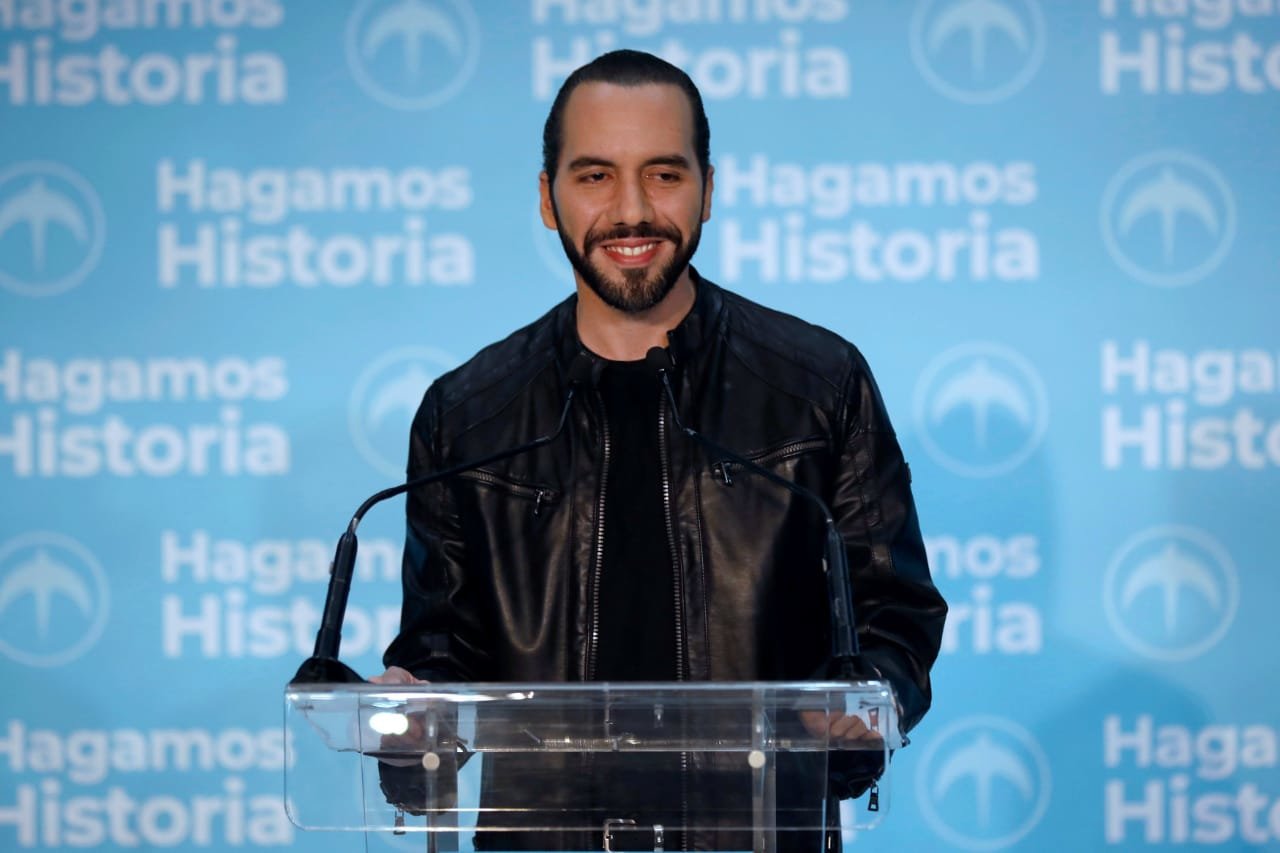
“Over 25 percent of children below the age of 5 experience extreme poverty in El Salvador and 36 percent of the rural population lives in poverty” [3] .  As the country begins to urbanize the rural communities are especially left out.  Medicine and advancements in technology are centered around the cities and the rural communities are inadvertently left out of the benefits.  The country is becoming more equal with a 5% decline in the Gini coefficient between 2007 and 2016 [4]   Crime and corruption are currently El Salvador’s biggest barriers from seeing an substantial growth in the economy.  The issue is that crime, violence, and corruption aren’t the most inviting when being looked at from a business standpoint.  MS13, Mara Salvatrucha, is one of the most prominent gangs in the country and actually originated in Los Angeles. Various accounts of homicide, extortion, and terrorism can be contributed to the gang [5] .   Besides these faults El Salvador has made strides in areas such as health care, water access, and most recently, education.  President Elect Nayib Bukele is looking into ways to redistribute government funds to rebuild the legislative building, 50 new schools, and 14 new libraries in a push to further fortify the growing education system.  This comes with backlash from the traditionalist and further solidifies his case for being the right candidate for the job. [6]

President-elect, Nayib Bukele


Blog #3- Haiti

Image result for nationalism in haiti

Nationalism, as explained by Fareed Zakaria, is the sense of being proud of your nation. It also may mean placing your country in front of others, which is unfortunately seen more often these days instead of cooperation between nations. Nations, as stated in our discussion class, is a group of people who share the same history, geography, language, customs, and sometimes religion. In the US, they call nationalism a “melting pot”. However, nationalism is considered universal in that every individual belongs to a nation, yet each nation is completely distinct from other nations, much like how nationalism is different in Haiti, compared to the rest of the world. As of right now, the feeling or sensation of nationalism within Haitians is at a low point, considering the protest that have turned deadly, because of a massive scandal following the 2010 earthquake. Zakaria sees the danger in the rise of nationalism because it incites violence. Zakaria gives the example of a Chinese businessman he had a conversation with, and the businessman said how China should invade Taiwan if it ever declared its independence, or how Japan is an “aggressor nation that could never be trusted” (pg 35). I would say that there almost no examples of conflict between nation-states and tribal, ethnic, or religious groups only because most of the conflict seen now a days is between the people as a whole and the government.

            Inequality is such a big problem in Haiti that it is now considered the most unequal country in Latin America and the Caribbean. Only because the richest 20% of its population holds more than almost 64% of its entire wealth, while the poorest 20% barely hold 1%. Inequality plays a very crucial role because it determines how people are treated in society. The poorest 20% are often seen on the crowded streets selling trinkets, clothes, bottled water, soda, etc., trying to make ends meet. Violence among the people of Haiti can often stem from inequality, because those who own all of the money don’t care for any of the poorest people. In 2012, Haiti’s GINI coefficient index stood at 41.10. While that isn’t the worst, it is certainly not the best at all. Considering the GINI coefficient for the United States is around 34.60, Haiti isn’t too far off from some first world countries. The results of inequality in Haiti can often be seen in the rural areas, where the roads aren’t paved, and there is a daily struggle to secure meals. Just in 2014, an extreme drought had increased food insecurity among the entire population of people living in rural areas. Of the 80% of extremely poor people that live in rural areas, 38% of those people aren’t able to satisfy their own nutritional needs. In July 17, 2018, President Jovenel Moïse’s administration decided to announce that the fuel prices in Haiti would be increasing. Unfortunately, the inequality seen is not being addressed correctly. Instead of investing money into the people and helping increase education efforts, the government decides to increase fuel prices. This does no good to the extreme poor in Haiti, who only make $1.30 a day. Not only the financial instability and low income, but the recurrent natural disasters that afflict Haiti do not help the poverty stricken become better.

Image result for nationalism in haiti
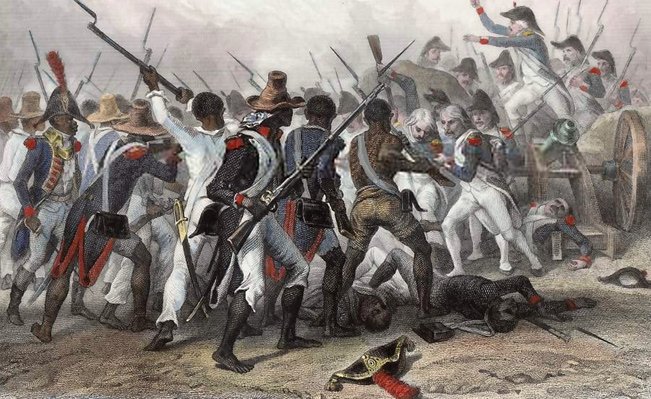
Black Haitian troops fight French troops for freedom from the French (1791-1804)

            In the Post-American World, written by Fareed Zakaria, he mentions how nationalism has always perplexed Americans, because they believe that when they get involved in international affairs, its for the greater good, however, that’s not what Haiti thinks. History tells the story of how Haitian’s fought against French colonialism, and won their freedom, which only worried the US at the time because of slavery and how the plantations may react. This is how nationalism can often be portrayed differently, based on the cultures originating in said country.

Post #3

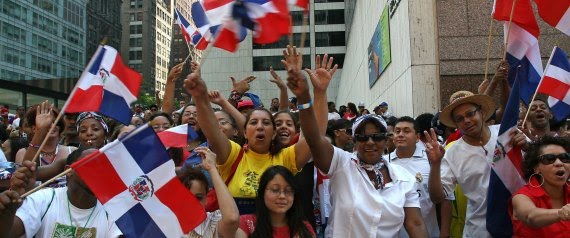
Nationalism the sense of pride that one feels as a member of a nation state. The term is used often today in the media and is often used very loosely to refer to any opposition to globalization based on a feeling of connection to a national identity. Not to be confused with patriotism, nationalism is often a more radical form of political and militaristic movements. Nationalism is focused around a country’s language, culture, and sometimes race. Nationalist countries are less likely to join world organizations, maintain a higher view of themselves, and promote themselves at the expense of others. According to Fareed Zakaria, nationalism is a danger to the world because it promotes violence. He gives examples of average, everyday people who can have a sense of hate toward other nations for no apparent reason. Nationalism a positive view of taking control of other nations, seeing themselves as the superior nation. In its most extreme forms, nationalism has led to war, genocide, and other horrific tragedies.

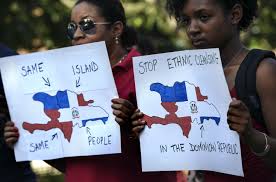
One long standing theme of nationalism in the Dominican Republic is their hatred toward their neighboring country, Haiti, with whom they share the island of Hispaniola. In 2013, the highest court in the Dominican Republic ruled that anyone with parents who entered the country illegally would not be considered legal. Until 2010, anyone born on Dominican Republic soil was considered a legal citizen. In fact, it was declared that anyone born between 1929 and 2010 who had foreign ancestry were “not true Dominican Nationals.” The result of this ruling was a mass deportation of those who did not meet legal immigration status, a majority of which were Dominicans of Haitian parents who entered the country illegally.

According to the Michigan State University College of Law, the plan was promoted by the Dominican government as a way to “…reform its immigration system and erase the statelessness within the country.” The government even claimed that “no person born in the Dominican Republic will be expelled from our territory.” This turned out to be a false claim as more than 200,000 people of Haitian descent have either been deported to or fled to Haiti. The tragedy here is that these people of Haitian descent are being deported for something they had no control over.

This is not a new idea in the Dominican Republic, the country has long been in a struggle with Haitians and has committed atrocities against them before. One of these events includes the Parsley Massacre. Dominican dictator Rafael Trujillo made his intentions clear in a speech he delivered on October 2nd, 1937. He claimed that “Three hundred Haitians are now dead in Bancia. This remedy will continue.” The remedy, killing Haitians along the border between it and the Dominican Republic who were reportedly stealing crops, provisions, etc. from borderland residents, lasted for a mere 6 days. Estimated for the number of deaths range from 12,000 to 20,000.

The Dominican Republic has experienced above average economic growth. According to a 2013 United Nations Development Program report, its average annual growth rate was 5.4%. Due to a more diversified economy, and strong trade agreements internationally, its GDP rose 50% from 2000 to 2011. Despite these economic advances, income inequality has increased as well as poverty. According to a World Bank report from 2014, the poverty level was 32%, and by 2011 had risen to 40.4%. The report states that income inequality is a larger issue in urban areas. It is difficult for the poor to bring themselves out of their situation. Between 2000 and 2009, 41% of the Latin American and Caribbean population were able to move into a higher income group, while in the Dominican Republic only 2% was able to move up. When there is a large gap between the rich and the poor, a relentless cycle of poverty persists. The Dominican Republic ranks 146th in the world by the GINI coefficient, making it one of the most unequal countries in the world.

Post #2

Español es la lengua más hablado en el salvador.  Based off my four years of Spanish in high school this should roughly translate to “Spanish is the language spoken the most in El Salvador”.  Off the top of my head when thinking about the languages spoken in El Salvador I figured it would mainly be Spanish, as well as some English as my friend told me she grew up learning English and Spanish in school.  After researching I was able to confirm that Spanish was the official language of the Republic of El Salvador as well as discovering the use of multiple indigenous languages. Before we dive into the indigenous languages, I would like to start off by stating that the Spanish used in El Salvador is referred to as Salvadoran Spanish.  I like to think of this sort of an accent with the English language. Essentially they sometimes emphasize some letters over others or refrain from pronouncing them all together. Sort of like how a Boston accent uses broad ‘a’ sound. At the root it’s still Spanish and still understandable to Spanish speakers ( https://www.graphicmaps.com/el-salvador/languages )  Now onto the indigenous languages.  A quick list of the lesser known languages used in El Salvador include:  Nahuatl, Pipil (aka Nawat), Q’eqchi, and the now extinct languages of Lenca and Cacaopera.  For the most part these languages are remnants of the past and of the people that used to inhabit the area such as the Mayans or Aztecs.  Nahuatl is the language of the ancient Aztecs is spoken by about 1.5 million people worldwide and is seen throughout rural areas of El Salvador.  Pipil is another language derived from Nahuatl and came to existence when a group of Aztecs ran away to start anew. Q’eqchi has its roots from the ancient Maya civilization. Like Lenca and Cacaopera these lesser known/used languages may soon find themselves extinct. The benefit of learning these languages continues to dwindle and soon these languages, and more importantly, the culture connected with them, will fade into time. https://www.studycountry.com/guide/SV-language.htm

IMF, WTO, and the UN are all organizations that embody globalization and some way or form aim towards “expansion and intensification of social relations” (Steger 17).  Luckily for El Salvador they happen to be members of all three organizations. El Salvador became a member of the International Monetary Fund (IMF) on March 14, 1946, a member of the World Trade Organization (WTO) on May 7, 1995, and a member of the United Nations (UN) on October 24th, 1945.  UN , IMF , WTO .  El Salvador is a member state of the UN and is currently involved in four peacekeeping missions in Western Sahara, South Sudan, Liberia, and Coted’voire.  In regards to the WTO, I couldn’t necessarily find any roles, but something that I found interesting were PDF’s on their imports and exports. I found out that manufacturing makes up 77.7% of their exports with clothing manufacturing being the majority.  Along with this, the number one importer of their goods was the United States ( Imports/Exports ).  Since I’m on the topic of money moving around lets transition into a recap of the nation’s GDP (PPP) and GINI coefficient.  The countries nominal GDP sits at $24.81 billion while the purchasing power parity (PPP) per capita is $7292.46. PPP is used to make comparisons of prices across countries that help economists understand and measure global growth and productivity.  This link can go into greater to detail to explain PPP.  When looking at GDP based on PPP, El Salvador ranks 16th in Latin America and the Caribbean tradingeconomics.com.  The GINI coefficient for the nation, as of 2015, sits at 40.80.  A coefficient of 0 represents perfect equality and 100 represents perfect inequality for the distribution of wealth GINI.

El Salvador GDP per capita PPP
GDP per capita (PPP)

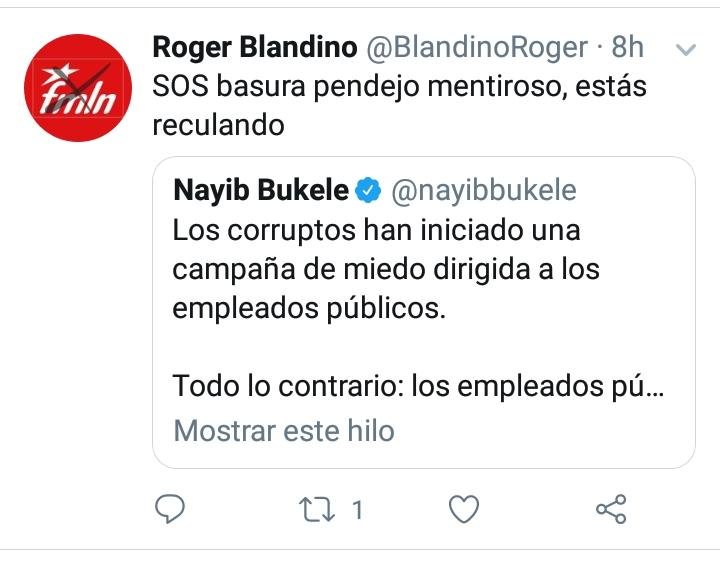
The El Salvador Times headlines are currently flooded with politics following the election of the President last Sunday. Former Mayor of San Salvador, Nayib Bukele, won the hearts of the country Sunday whilst running on the GANA party’s ticket. As with any election, the aftermath had its fair share of allegations of corruption and controversy. Immediately after elections, President-elect Bukele called for the prohibition of salary increases and hiring of government officials to prevent corruption. Along with this he claims that he will have all government officials audited as another corruption prevention. The best part is to see that the government is adhering to Bukele’s demands with the Ministry of Finance asking executives to back his decision. In response to this, FMLN affiliate Roger Alberto Blandino Neiro retaliated with comments calling Bukele an “imbecile, liar and asshole”. This complaint goes along with the “massive” dismissal of public employees as stated by Neiro himself. Bukele’s counter argument is that the positions were given in order to “shield” the government from the upcoming Bukele presidency. On the other side, Bukele is being applauded for upholding his promises made during his campaign. I am now heavily invested in Bukele’s presidency and I still look forward to see what he can do with the country. ElSalvadorTimes.com

WhatsApp Image 2019-02-10 at 9.10.22 AM
Nayib Bukele responding to offensive Tweets from Roger Blandino

Post #2

Spanish is the official language of The Dominican Republic. In different parts of the country, you can find different dialects being spoken. The most common of these is known as Dominican Spanish, a subset of Caribbean Spanish based on Andalusian and Canarian dialects of Spain. Dominican Spanish includes a lot of pieces of other languages and dialects, it borrows words from Arawak, Spanish words that are no longer used in modern Spanish, and even includes words from African languages spoken by those who immigrated to the island of Hispaniola, on which The Dominican Republic sits, after the Taino extinction.

The Dominican Republic also has minority languages, such as Haitian Creole. It is spoken by an estimated 160,000 people, or about 1.5% of the population, of which a majority are of Haitian descent. Haitian Creole is largely based on French, and is influenced by Spanish and West African Languages. A majority of the Haitian Creole speakers in the Dominican Republic are bilingual, with most having Spanish as a second language. The language is sometimes considered a foreign language in the Dominican Republic, and has not been given official recognition.

Another minority language spoken in the Dominican Republic is Samana English. It is spoken by around only 12,000 people who reside in the northeastern part of the country. Most individuals who speak this language are descendants of black immigrants from the United States, known as the Samana Americans. It is similar to Creole English and Caribbean English Creole. Due to government policy, Samana English is in decline in the Dominican Republic and is now considered an endangered language.

The Dominican Republic was a founding member of the United Nations, joining in its formation on October 24, 1945. According to its website, the Dominican Republic has been involved in numerous initiatives, especially those relating to women’s rights, elderly rights, and domestic violence. The Dominican Republic played a pivotal role in the creation of the International Day for the Elimination of Violence against Woman, which is observed on November 25.

On December 28, 1945, the Dominican Republic became a member of the International Monetary Fund, where they have had little lending and borrowing activity. Since their membership began, they have drawn just over 1.6 billion SDR, with close to half of that amount outstanding. The Dominican Republic has been a member of the World Trade Organization since March 9, 1995.

The Dominican Republic has a GINI index of 45.3, as of 2016. This measures the extent of much the wealth and consumption distribution deviates from an equal distribution. A score of 0 means perfectly equal distribution, while a score of 100 means perfectly unequal distribution. When looking at GDP based on PPP, or purchasing power parity, The Dominican Republic ranks 70th in the world, according to World Bank. GDP (PPP) is a measure of a country’s GDP relative to purchasing power. In other words, it is a measure of “how many goods can that much money buy you” in any given country.

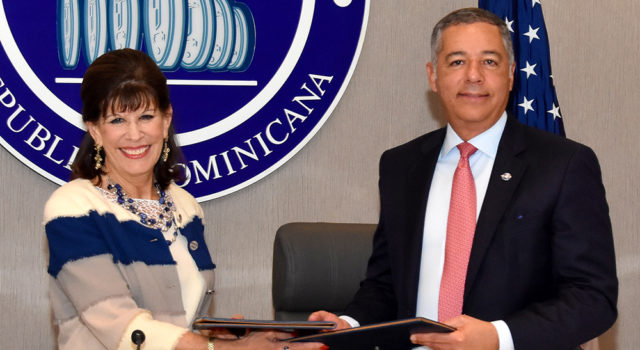
This week, the governments of the United States and the Dominican Republic made a pact to facilitate the investments of US companies in the Dominican, via the financial entity, Overseas Private Investment Corporation, or OPIC. This simplifies and streamlines the approval process for US companies to invest in Dominican companies.

Post #2

According to worldatlas.com, the official state language is Spanish. This is because Honduras was a part of Spain’s conquest of the new world back in the 1400’s and 1500’s. Even though they speak Spanish, it is a different dialect than the Spanish that Spaniards speak. This is the only official language of Honduras, but there are also indigenous languages spoken throughout the country. According to Worldatlas.com, these are: Garifuana, Miskito, Sumo, Pech, and Jicaque. Garifuana is the language with the largest amount of people who speak it, about 100,000. This number is slightly different than the graph shows down below, but it shows generally the same ideas of how many people speak Spanish in relation to the indigenous languages. 

Because there are so many indigenous people and different cultures throughout Honduras, there are problems that many people face. 

“19 per cent of the indigenous population in Honduras is illiterate, compared to 13 per cent of the general population”. 

 —minorityrights.org

A good portion of the indigenous population is illiterate, which makes it harder for them in day to day life. These indigenous people not only face a language barrier if they travel other places in the country, but they may face stigmatization for not being able to read or write. Because of these high illiteracy rates, it can also be assumed that education is low in this country. 

Another issue discussed on this website is the discrimination and poverty that the indigenous people face. I believe this can be linked to the language barriers in the country. People in poverty probably do not have the means to get a proper education, leading to illiteracy which was discussed above. 

Honduras is a member of the UN, and the IMF, and became a member in 1945. Honduras also became a member of the WTO in 1995. The WTO, or the World Trade Organization, aids with trade with member countries, organizing rules, and being a general third party. There are rules in place that aid in making sure all trades are considered equal. 

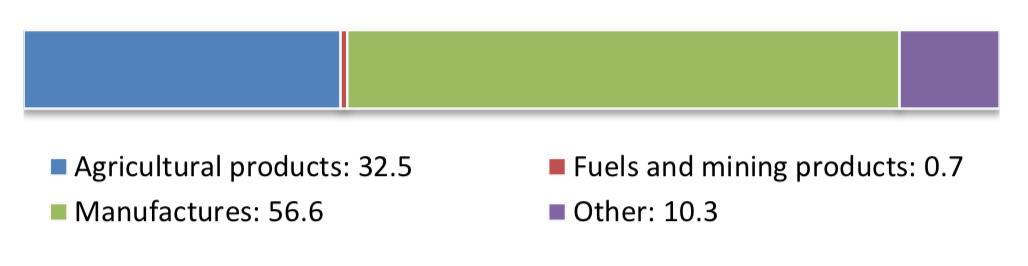
Honduras Exports

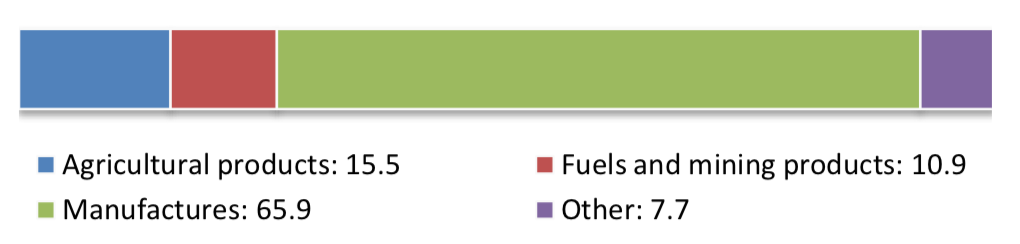
According to wto.org, Honduras’ main exports are agricultural products, and manufactures. Their main imports are also manufactures and agricultural products, with fuels and mining products closely following. Honduras mainly trades with the United States and the European Union, along with Guatemala, Nicaragua, and El Salvador. 

Honduras Imports

Trade is an important part of Honduras’ economy, which is why its membership in the WTO is extremely important as well. Without its’ membership and trade with other countries, the country’s economy would be far worse off. 

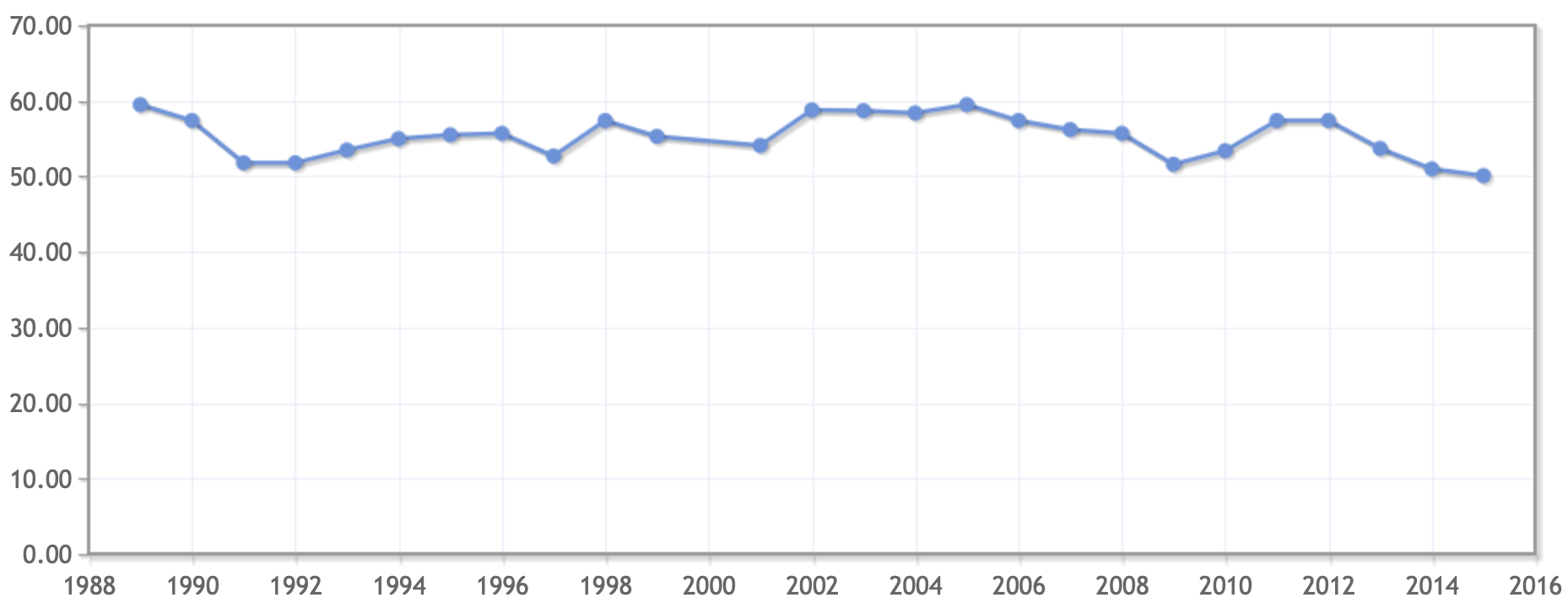
According to indexmundi.com, the GINI coefficient “measures the extent to which the distribution of income…among individuals or households within an economy deviates from a perfectly equal distribution”. A score of 0 measures perfect equality, and a score of 100 measures perfect inequality. Honduras’ GINI coefficient was 50.10 in 2015, which according to the graph, is the lowest it has been in at least 26 years.  Hopefully this number continues to decrease over time. 

Honduras GDP PPP throughout the years

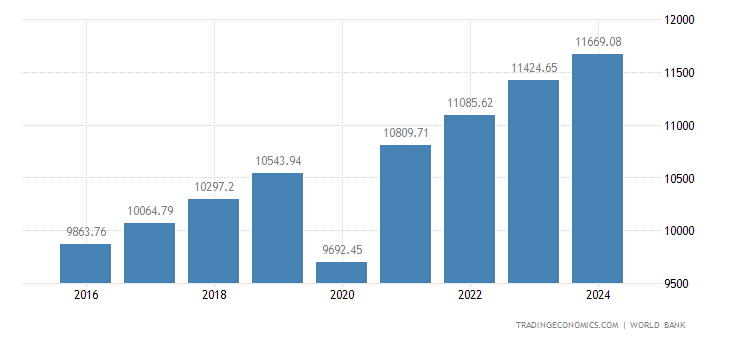
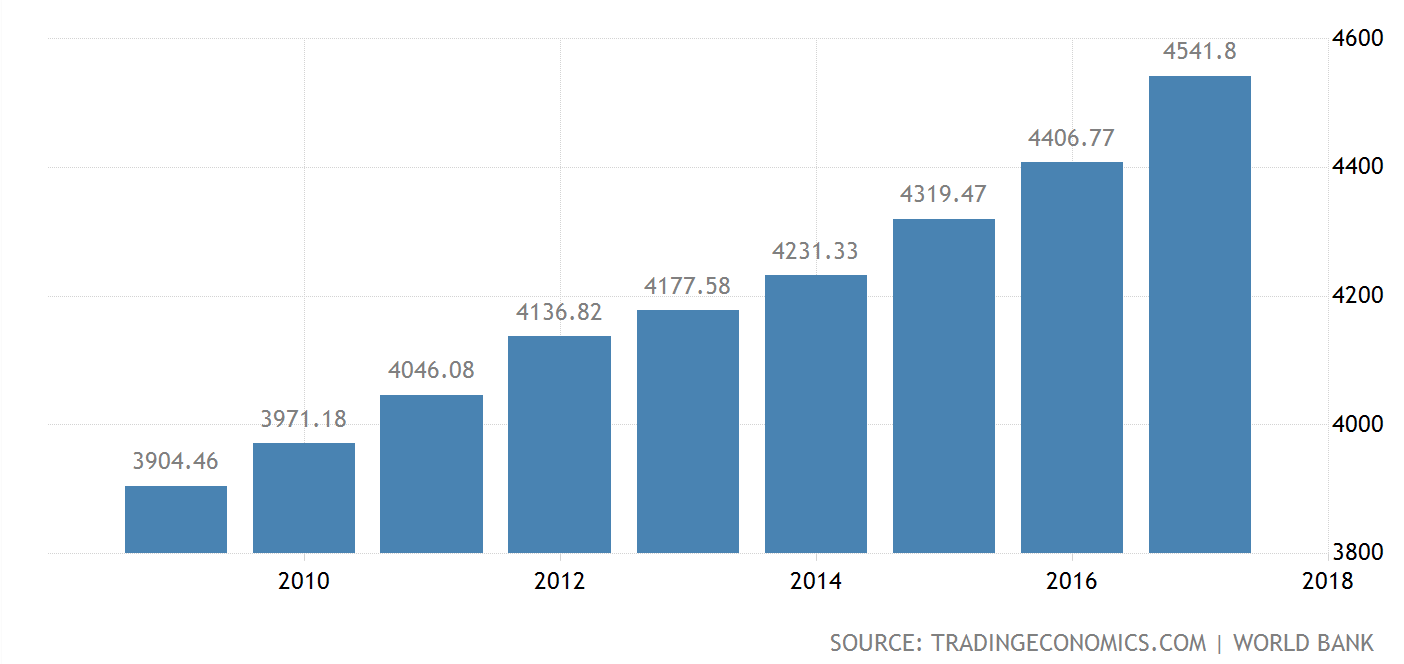
A country’s GDP based on PPP means dividing the GDP by the country’s total population. Above is a graphof Honduras’ GDP per capita PPP from 2009 through 2017. As you can see, it has increased steadily every year, and in 2017 it was 4541.8 US dollars. 

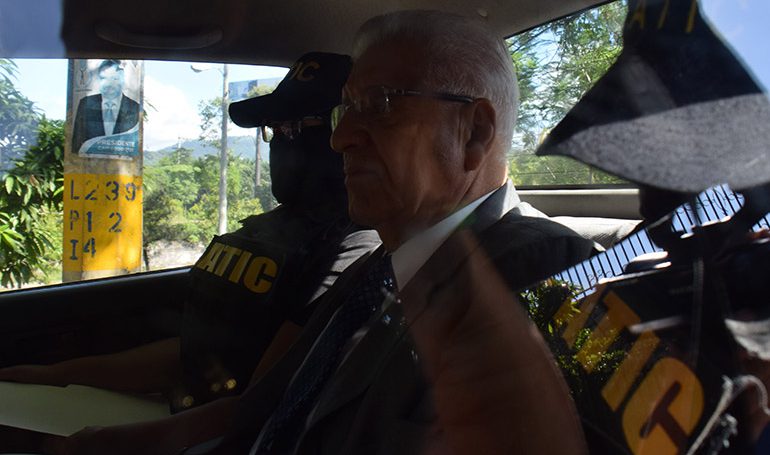
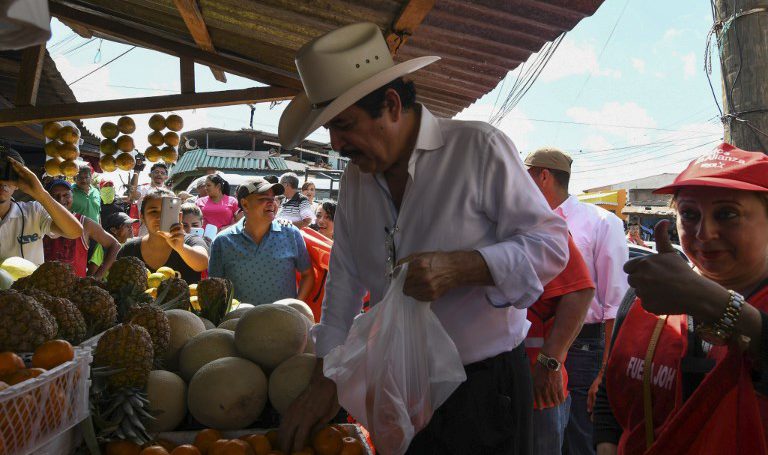
Upon looking at elpais.hn, and other news sources, it seems like nothing major was in the news this week. There were a lot of small articles about investigating and arresting people associated with political corruption, and gang violence. One article, with the picture below, discusses the trial of Wilfredo Cerrato Durón, who was accused of fraud and embezzlement. Two days ago a short article was written about a body of a cab driver found in El Progreso, Yoro, which is a neighborhood. It says they do not know how he died but it is an ongoing investigation. It is obvious that corruption and violence in general are still a major concern in the country. 

http://www.elpais.hn/2019/02/09/proximo-jueves-revision-de-medidas-para-wilfredo-cerrato/

Sources 

https://www.worldatlas.com/articles/what-languages-are-spoken-in-honduras.html

https://minorityrights.org/country/honduras/

https://www.wto.org/english/res_e/statis_e/daily_update_e/trade_profiles/HN_e.pdf

https://www.indexmundi.com/facts/honduras/indicator/SI.POV.GINI

https://tradingeconomics.com/honduras/gdp-per-capita-ppp

Post #2-Haiti

        Some of the languages spoken in Haiti are French and Creole. The state languages are also French and Creole. There is an indigenous language known as “Haitian Vodoun Culture Language”, also called Haitian VCL. It is also known as Langaj or Langay. However, according to Ethnologue, there are no known speakers of this language, and is now considered a second language only. This language consisted of a broad range of religious words, songs, or chants, drawing on multiple African languages. Because of the fact that there are no known speakers of Haitian VCL, it does not pose any kind of problems. It is, however, kind of sad to realize that another language that once held cultures and literacy among people is now considered extinct, and that because there is no one capable of reading or writing or even understanding Haitian VCL, any sort of sentimental value people may have will inevitably fade away.

        Haiti is one of the original 51 members of the United Nations and has been a member since October 24, 1945. Their mission within the United Nations is to “promote the governments philosophy of external action” which utilizes international peace, cooperation, and co-prosperity, all based on the highest level of dignity to all involved. Haiti is also a member of the International Monetary Fund; however, their last informal meeting was on December 24, 2018. They joined the IMF in September 8, 1953, with around 47.97 million in outstanding loans, total quotas of roughly 81.90 million. The IMF, created with the hope of unifying countries to create global monetary cooperation, financial stability, and monitor international trade. As for the WTO, or the World Trade Organization, Haiti has been a member since January 30, 1996, which aims at organizing the world’s trading nations together to work for a better goal. The WTO is the only global organization that deals with the rules of trade between countries. Their main goal is to “help producers of goods and services, exporters, and importers conduct their business”. The GINI coefficient index measures how income is distributed among households in a certain country’s economy. In 2012, the GINI coefficient index in Haiti measured at 41.1, meaning that while the wealth distribution is not as equal as should be, it is better than some countries. In fact, the highest 10% of people hold over 31.2% of all the nation’s wealth. As for PPP, also known as the Purchasing Power Parity, which measures and compares different countries currencies through a market basket, or a set group of items bought without looking at currency, to compare all currencies. Haiti’s Gross Domestic Product per capita was around 165.173 in 2017. When adjusted to the PPP, their GDP equated to roughly 9% of the world’s average.

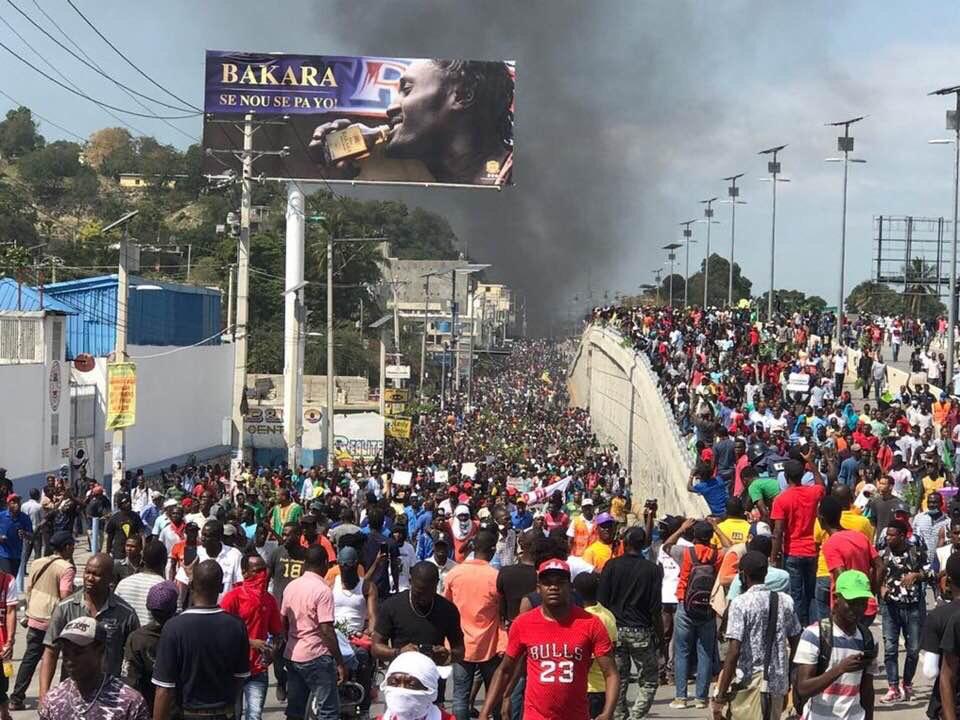
One of the biggest or main concerns for Haiti as a country is the ongoing protest that come about from a huge scandal concerning the 2010 earthquake in Haiti. In 2018, it was shown that the President at that time, Rene Preval, was able to take almost 2 billion dollars in donations from an oil reserve company, which was set up in hopes of providing oil and gasoline for a cheaper price to those in Haiti. Once again the protesters have taken to the streets, calling for an investigation into the missing money and condemn the ongoing corruption within the current government. Not only are they condemning the corruption, but they are also calling for the resignation of President Jovenel Moise. Jacqueline Charles, a reporter for Radio Mega, stated that at least one individual was killed just three days ago, along with roughly six other people being arrested. Tires and cars were set on fire, and the police in the area ran out of tear gas to fire at the people, which only added to the instability of the current situation inside of Haiti.

Post #1–Honduras

Honduras

Honduras is a relatively small country in Central America, and is also the second poorest country there. This is mainly because of a hurricane that tore through the country in 1998, which caused massive amounts of destruction and deaths throughout the country. Since then they have been able to slowly improve their economy, but not by much.

According to the CIAwebsite, the country faces high unemployment rates, lots of corruption issues, and drug trafficking problems. There is also a high risk of getting an infectious disease, and a poor quality of education which can lead to poor job quality. 

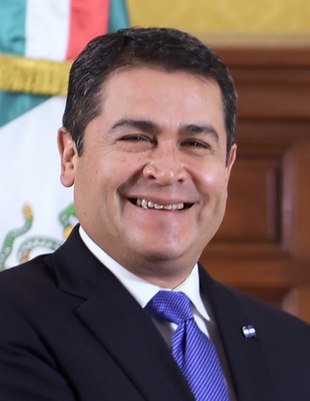
Juan Orlando Hernández

The president of Honduras is Juan Orlando Hernández, and he has been in office since January 2014. Like our political system, the president is in term for four years, but is able to renew for another four years.  

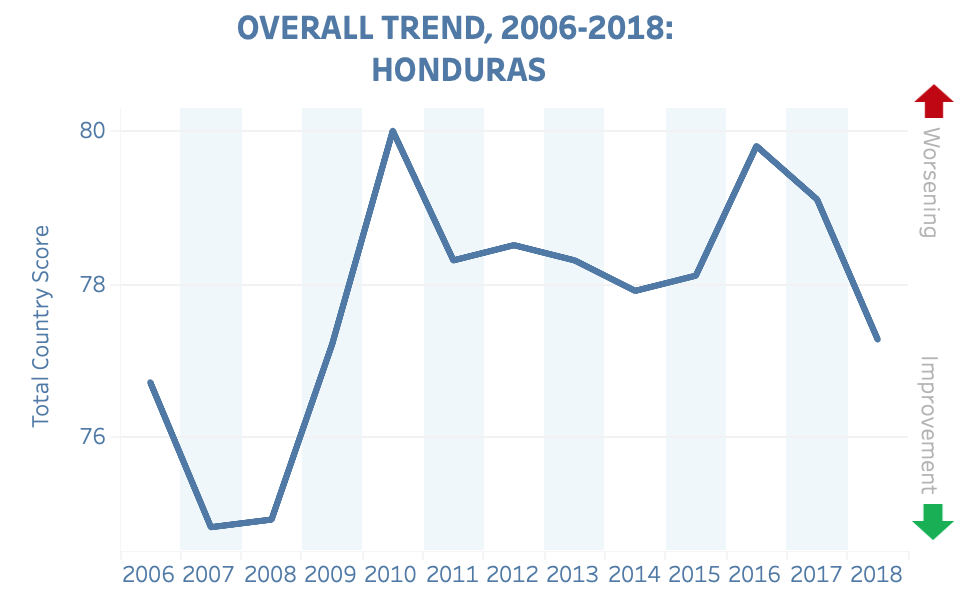
On the fragile state index, Honduras is ranked 68thout of 178 countries. The fragile state index score is 77.3, on a scale from 0.0 to 120.0. The higher the number, the higher risk the country is, and the more pressures it faces. According to the graph below, Honduras’ state has varied from 74-80 in the past 12 years. 

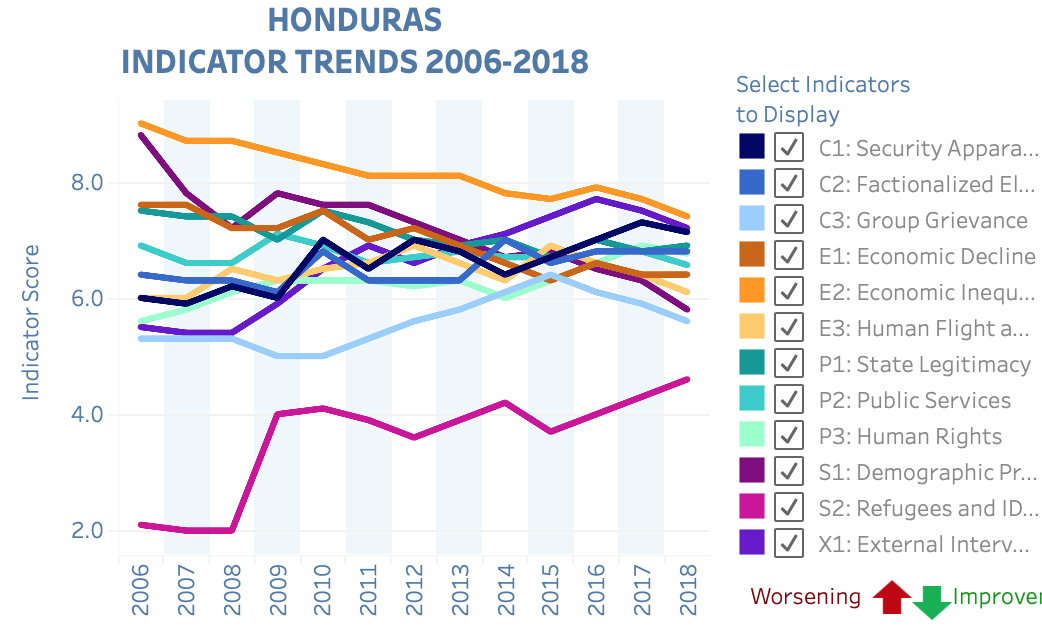
According to the website, and my research on the country, Honduras’ biggest problem is with economic inequality. This can most likely stem from the hurricane they experienced 21 years ago in 1998. It can also be explained because of poor education, corruption, along with other influences. The country’s least problematic indicator is refugees and IDP’s (Internally Displaced Persons). The graph can be seen below, different colors showing different indicators. 

On the Gini coefficient scale, which measures a country’s inequalities, in 2013 Honduras measured at 57, or 129thout of 187 countries. The Gini coefficient ranges from 0 to 100, zero being perfect equality and 100 being perfect inequality. 

Current Issues In Honduras

The main issue I have seen when looking up Honduras online is the new reforms being implemented. Apparently there have been many fraudulent elections in years past, and now they are trying to correct those wrongs. As stated above, Honduras has dealt with lots of corruption throughout the years, so maybe these new reforms will be beneficial to the country. 

“Las reformas “son una necesidad histórica por las malas experiencias que hemos tenido en las últimas tres elecciones, cuando se ha derrumbado el sistema electoral (…) y el presidente ha sido nombrado por la computadora”, sentenció.”

El País

According to elpais.hn, a news source directly from Honduras, the current president was elected because a computer system was manipulated to sway the results towards Hernández. There was also a dispute on whether or not Hernández was actually able to run for reelection on his second term, and if it was unconstitutional. 

These reforms include such things like having a council in place to make sure the ballots are counted fairly and correctly. This is so that one person is not able to hack the computer system and change the ballots. They are also getting the Registro Nacional de las Personas, or RNP, to check IDs to make sure nobody is using either a fake one, or one of the dead or migrants. These are important reforms that can help reduce corruption in the country if implemented correctly. They are also ones that we have here in the U.S., so we do not think of the importance of rules like these. 

In a more recent article that I read on El País’swebsite, there has been talk of “Operación Morazán II”, which is trying to reduce corruption and violence in the country. The article talks about the efforts of arresting gang members, and confiscating drugs, weapons, and other things to try to clean up the streets. So far the operation seems to be successful, because according to the article, in January alone, they captured more than 150 gang members. Hopefully this operation continues to be successful, and Honduras can improve their political and social problems. 

Works Cited

https://www.worldatlas.com/webimage/countrys/namerica/camerica/hn.htm

https://en.wikipedia.org/wiki/Honduras

https://www.cia.gov/library/publications/the-world-factbook/geos/ho.html

http://www.worldometers.info/world-population/honduras-population/

http://hdr.undp.org/en/content/income-gini-coefficient

https://en.wikipedia.org/wiki/President_of_Honduras

http://www.elpais.hn/2019/02/01/manuel-zelaya-celebra-nuevas-reformas-electorales/

http://www.elpais.hn/2019/02/03/mas-de-150-presuntos-pandilleros-capturados-reporta-operacion-morazan-ii/

Post #1

Sunday, February 3rd

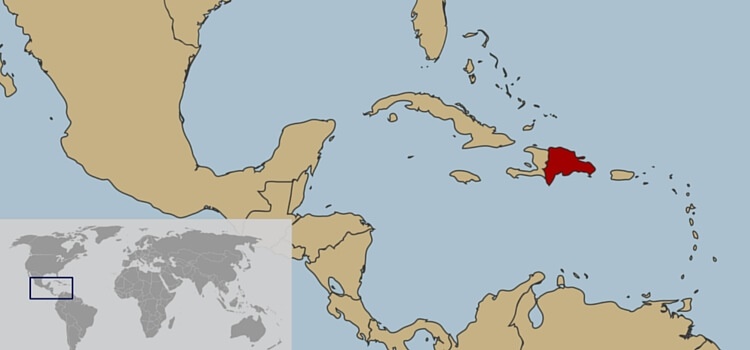
  The Dominican Republic is a Central American country sharing an island with the Republic of Haiti. Originally inhabited by native Taino people, it would be colonized by Europeans in the late fifteenth century, with the colony of Santo Domingo becoming the first European settlement in the Americas. Today, the Dominican Republic has an estimated population of 10.7 million, is known for its agriculture, mining, and tourism industries, and ranks ninth in economy size among Latin American countries.

The Dominican Republic within Central America

The Dominican Republic has a Gini index score of 45.3. This is a measure of income or wealth inequality, where a zero represents maximum equality, and a one represents maximum inequality. Its fragile state index score is 69.2 out of 120, down from 77.7 ten years ago. The higher this score, the more fragile the state is, indicating an increased risk that the state falls into chaos

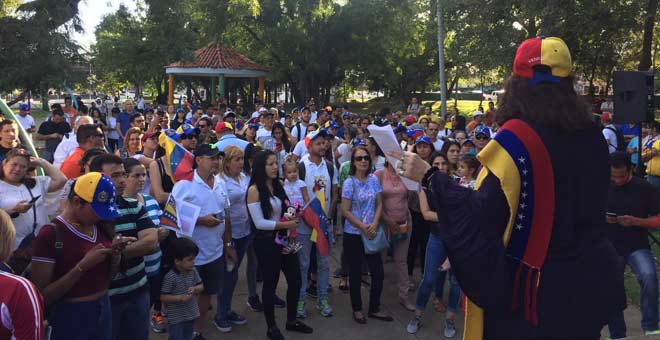
Over the weekend, groups of Venezuelans residing in the Dominican Republic gathered in a park in Santo Domingo to protest Nicolas Maduro. They are demanding that Maduro steps down from his presidency, either to give way to self-appointed interim president Juan Guaido, or re-hold an election. The protesters received the support of Dominican legislator Rafael Bisono. The Venezuelans abroad claim to be pleased with the political movement happening in their home country, emphasizing their hope that this situation brings about changes for the better.

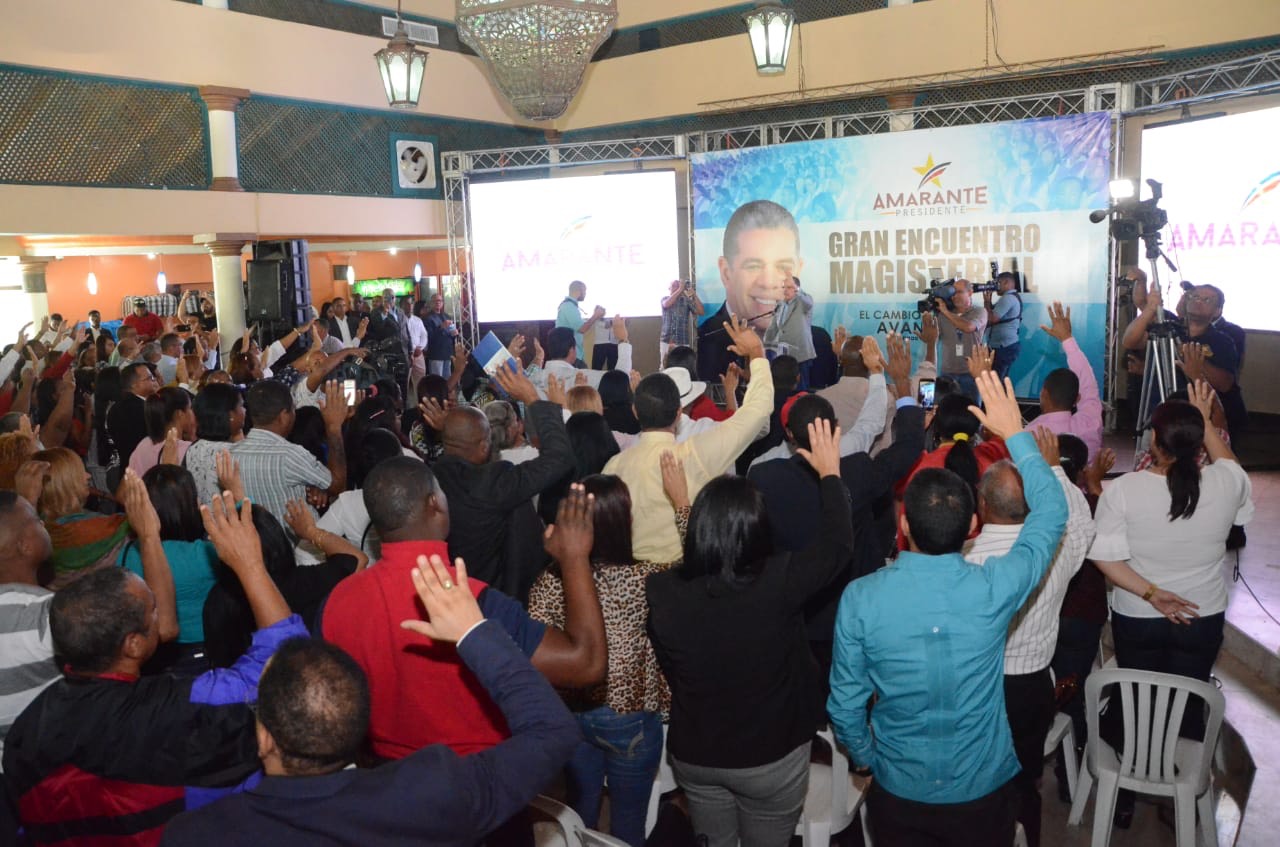
Presidential candidate Carlos Amarante Baret claimed today that he will take over the presidency in 2020 from Danilo Medina, and per Almomento, “…continue consolidating the economic and social transformations, the Educational Revolution and the living conditions of the professors.” Amarante Baret has a background in education, formerly serving as the Minister of Education, he initiated the Educational Revolution. Amarante Baret has gained notable support, today he spoke before thousands of teachers at a Grand Magisterial Encounter at the Club de Legisladores in Santo Domingo Este. He has stressed the facts that during his tenure as the Minister of Education, teachers’ salaries increased, and they received scholarships for preparation and training courses.

Amarante Baret confidently assures he will be the successor to Danilo Medina

Renewable energy is on the rise, as authorities have approved of steps to be taken to improve and increase the amount of energy coming from renewable sources. Per EFE, “Authorities in the electricity sector approved short-term action lines to promote renewable energy in an organized, planned and transparent manner, prepared by the inter-institutional commission that evaluated the impact of that area on the electricity system.” This information comes from a press release sent today from the Ministry of Energy and Mines. Certain areas of interest include wind and solar power. Currently in the Dominican Republic, only 5.7% of energy consumed comes from renewable sources, while more than 80% comes from fossil fuels.

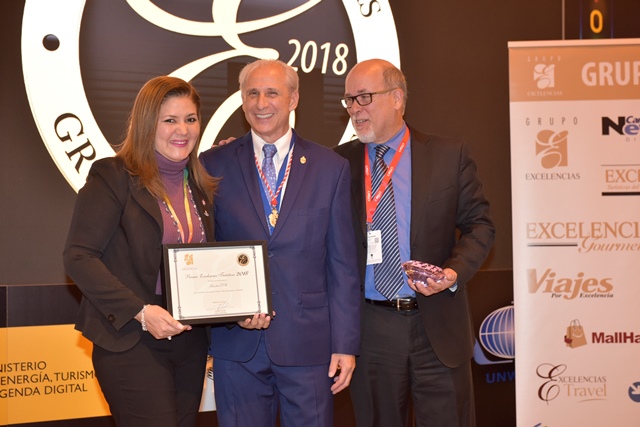
Teddy De Lara and Diana Toribio accepting the awards

The Dominican Ministry of Tourism announced on Tuesday that the Dominican Republic won two prizes related to tourism at the International Tourism Fair. According to EFE, Dominican Republic Scooters were “recognized for the growth of inclusive tourism in favor of vulnerable segments, thus consolidating the company with the greatest potential for growth in the accessibility sector.”

On Monday, February 4th, the Eastern Stars of the Dominican Republic will play Cangrejeros de Santurce, from Puerto Rico, beginning the 61st Caribbean Series, a baseball tournament held in Panama. This year is the first time a new tournament format will be used. Teams will have to play each other twice in the preliminary rounds before entering the elimination round. The tournament will close on Sunday, February 10th, at Rod Carew Stadium in Panama City.

Rod Carew Stadium