Post #8

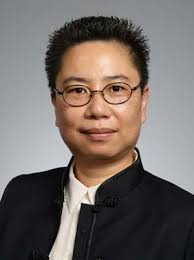
Guest lecturer 1- Jung Ha-Brookshire

She stuck out to me first, because my roommate is a TAM student, so she has had Jung Ha-Brookshire in class before and has said how interesting her lectures are. She discussed how she traveled to South America to see a factory that a guy started to reduce the amount of gang activity in the area. I thought it was interesting because I never would have thought that this sort of thing would work. I would have thought the gangs would have gone for the factory owner, or tried to get people on the inside. But it was amazing to see how the actions of one man changed the lives of almost everyone around him by them not having to worry about gang activity anymore. 

I also thought her lecture was interesting because she has done so many different things throughout her life, and traveled to many different places in the world. You could tell she was passionate about what she was talking about, and she definitely knew a lot, as well. 
Guest lecturer 2- Lisa Palmer

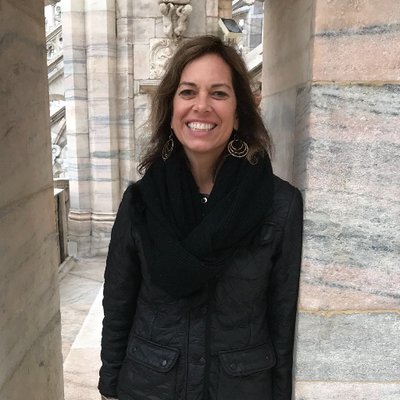
Lisa’s lecture really stuck out to me because, like Jung Ha-Brookshire, she seemed extremely knowledgeable on the topic she was talking about, as well as enthusiastic about the issues brought up. I liked how even though she is a journalist, speaking from that perspective, she was able to bring up other topics from previous experiences so that we were all more interested, and not speaking solely to journalism students. 

I also found it fascinating how many people she has talked to and interviewed, just for her book alone, and how easily she was able to keep track of everyone she has ever talked to. She mentioned her book quite a few times, and some background on how she wrote it, which I thought was interesting as well. I got curious what her book is like, so I plan on ordering it after the school year ends, and I have time to read it. 

Before this class, I did not know much about Honduras besides the big stories in the news. After this semester, I know so much more about this country, and the region in general. I learned that there are large amounts of violence and corruption, which affects the whole country socially, economically, politically, etc. I learned that there are massive caravans of people trying to escape the country (and that region in general) because of the corruption and poverty, and trying to move further north to escape to a better life. Looking at this and the instability in the country, It is obvious that major changes need to occur politically and socially. They definitely need to change leaders and go towards a more democratic government to reduce corruption. I also think education needs to be increased in the country, and seen as more important than it is. 
The NGO that I researched for this last paper, beca, focused on education in the country, as well as shared success stories of individuals on the website where they said where previous students were working currently. Some students even came back to teach at these schools as adults, which I thought was important. I thought this was important because it all stemmed from someone who visited the country and decided there needed to be a change, so she took action. 

Researching this country, as well as hearing about different countries in class made me more aware of what is going on around the world, because sometimes the mass media does not cover it. I think it is important to be more critical about what is going on in the world, and to understand why things happen the way they do, and this class greatly helped in doing this. 

Sources

https://muckrack.com/lisa-palmer-8
http://tam.missouri.edu/faculty_brookshire.html

Blog Post #7

There is definitely a sex trafficking and sex slavery issue in Honduras. According to the US embassy website, Honduras Is a transit country, as well as a source for sex slavery. Everyone is affected by it, whether it’s men, women or children. Because it is an agricultural based country, there is also a lot of slave labor involved with physical work as well, which does not help the situation at all. According to usembassy.gov, “Honduras is a destination for child sex tourists from Canada and the United States”. The fact that people come from that far away to see that kind of thing makes me sick to my stomach, along with many other people, and there needs to be a way to stop it. The government, as well as many NGOs in Honduras and other countries are working hard to improve the situation. 

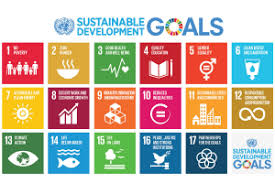
According to the article Born Free, by Sarah E. Mendelson, human trafficking is not one of the SDGs. She argues why it should be, but says every time she brings it up, it gets pushed back to the corner, or gets told that it does not matter as much, and other things matter more. People do not make human trafficking a priority unfortunately. I think if people were better educated on the subject, and it was talked about more, this would be different. I think people say it does not matter as much because they do not know fully all of the details and are not properly educated on the issue. If it was their daughter, wife, or someone that they knew who was personally affected by the issue, they would have something different to say. But because human trafficking is viewed to be a problem in majorly other poorer countries, it does not matter as much to some people. 

Sarah E. Mendelson

If we want to better combat human trafficking and decrease the amount of people affected, we need to improve education on the matter, like stated above. After people are properly educated on the subject, there needs to be more funding allocated to the victims, and improving the situation in general. We also need to educate the people who are buying the victims and who think that this is okay, because obviously it is not. It is dangerous for the people being sold obviously, and anyone else who gets involved. There are many survivors from human trafficking, but unfortunately, there are also many, many people who do not survive, and we need to improve the situation so that there are more survivors and less victims. 

There are always places that need more diversity, because I think that is an area that we are working on in general and not solely in one place. There could definitely be more diversity when it comes to resources and solutions to human trafficking. If there was more funding there could be more resources in helping the people affected from human trafficking, and we might be able to save more people as a result. 

Sources Cited

Trafficking in Persons

https://harriman.columbia.edu/event/learning-while-serving-reflections-five-years-working-international-development-and-diplomacy

https://www.un.org/development/desa/disabilities/envision2030.html

Post #6

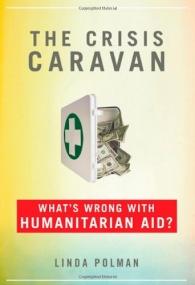
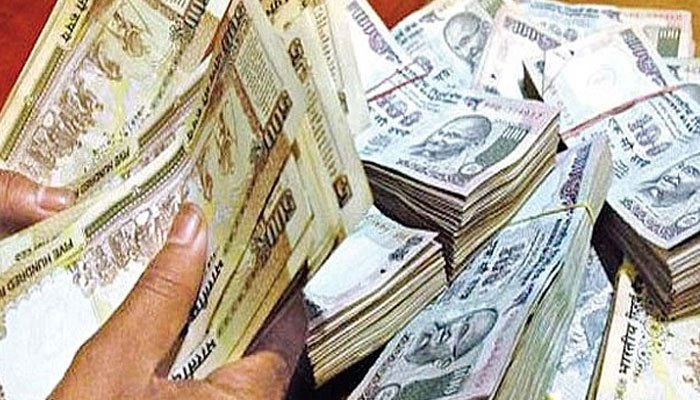
In Linda Polman’s book read for class, she discusses aid from NGOs, where that money comes from, where it goes to, and how people get that money. She also discusses how much money goes to leaders, and the shady things that go along with this. Reading this chapter, Aid as Weapon of War, really opened my eyes to what aid could potentially be doing to countries and how not all of it could be helpful. Some of the aid we send could actually be doing more harm than good which is something we do not normally think about when we think of aid. We like to sit in our safe houses in the west, and believe that we are doing good by sending money or some other form of aid to a war stricken country.

 This may not be the reality, though. We never know fully where our money that we donate goes to, and it may very well be fueling the fire we actually want to try and put out. She even goes further to discuss how much the salaries are for local politicians and ministers in Sierra Leone. She discusses how these politicians try to get more aid out of NGOs and the mind games they play to talk to specific people and how to get around talking to others that they know they will not get money from. 

Mother Teresa

            Linda Polman compares aid organizations to “businesses dressed up like Mother Teresa” (177) because many times these aid organizations are only trying to get money out of people so the top dogs of the organization can earn money. She discusses that if insurance companies did the same things that these NGOs were doing, the journalists would go crazy and it would be major news. But because NGOs are doing it and they are seen as the “good guys” with good intentions, it is seen as okay to do these things. They are just as manipulative as other businesses, if not more, and they have similar intentions as they do too. Their business models would look completely different if they had different intentions. If they were in the “business” solely to help the needy and poor out, they would not be paying those politicians and ministers as much as they are. She discusses that the warlords are being helped just as much, if not more, by these aid organizations because they get part of the cut. They have business deals with the aid organization officials that allow them to get a portion of the share. 

            When discussing aid, and handling it in general, it is important to try to eliminate corruption as much as possible. The more money that can go directly to aid and where it needs to go the more beneficial it is, which should be an obvious statement, but some people do not see it as such. The people involved who are getting paychecks, only want bigger and bigger paychecks. This would potentially increase corruption involved in these organizations, and less money would actually be going to a good cause. Journalists should make more information readily available to the public and make it more eye opening as to what is really going on behind closed doors. Even if they cannot do that because of security issues, if they just made the public aware that this sort of thing was going on, the public may be more careful about where they donate their money. The public should do more research before they make donations to NGOs, and where their money is going to. The money they donate could potentially be aiding the “bad guys” instead, making whatever they are fighting against rage on stronger. Finally, governments have the power to regulate what is happening more strictly what is happening, and where money is going. Especially the governments of the countries that need aid can help to reduce corruption. 

Works cited

https://www.foreignaffairs.com/reviews/capsule-review/2010-11-01/crisis-caravan-what-s-wrong-humanitarian-aid

https://www.indianfolk.com/ngos-effective-nivedha/

https://www.britannica.com/biography/Mother-Teresa

https://zeenews.india.com/news/india/demonetisation-will-help-eliminate-corruption-fight-terror-indian-americans_1960731.html

Blog Post #5

Dr. Elizabeth Lindsey

The first video that I watched was a Ted Talk with Dr. Elizabeth Lindsey. She discusses the drastic differences of the viewpoints between the elders and people now. The elders that she discusses are happy with what they have, and are not in any hurry to get anywhere or get things done. Whereas people now are always rushed to get somewhere or get something done by a deadline. This is interesting to think about because we often do not stop and think about how differently we see the world compared to others. We are also always concerned about getting the hot new thing, whether it is a game, a clothing trend, a car, a new phone, etc. when what we currently have works just as well. Where do those old things go that have been replaced? Often the trash. We want to get it out of our lives and move on with the next big thing so quickly that we don’t think about where our old stuff ends up, and this is partially why we are killing our planet. We don’t think about the consequences of our actions. 

Climate change is a threat to human rights. When Dr. Elizabeth Lindsey was talking, she discussed how the elders view the earth versus how other people view the earth, like discussed above. Western cultures are causing climate change way more than indigenous tribes and other cultures besides in the west. But these actions are affecting everyone, not just western cultures. Because of our relatively relaxed freedoms now that are ruining the earth, people in the future are going to have less freedoms and less human rights, because of lack of clean water and air, and availability for food. These are basic human rights, but climate change Is going to majorly affect these issues in the future. 

The speaker in the second Ted Talk discusses endangered cultures, and how when an elder of some cultures dies, they often take with them the last bit of a language or a culture that has since changed. The elders in a culture are often the last to know about information because they aren’t teaching it to the next generation. People are becoming more interested in taking part in western culture that they forget about other cultures. The speaker also discusses the loss of languages over time and how quickly languages can become extinct. 

I agree with the speaker, and that it is important to preserve these cultures because they often have a different way of viewing life and the world than our western society. I think that if we learned about these other cultures, we would be more open minded about things. We should be able to listen to what people have to say, even if we may not agree with them, because it broadens our knowledge. 

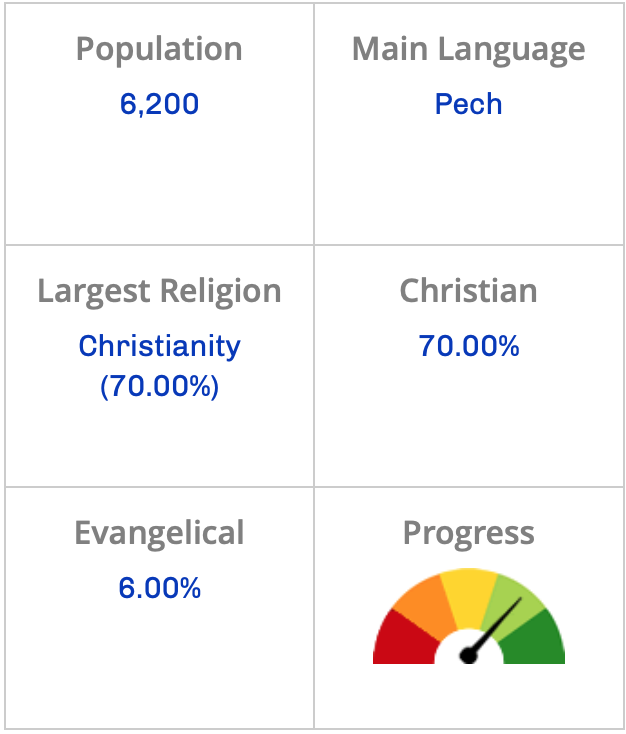
The Pech People Population and Religion

After doing some research on endangered cultures in Honduras, I did not find any that were in immediate danger of extinction, but I did find many cultures with very low population numbers. One websitedescribes some indigenous cultures in Honduras, and their legal issues with the Honduran government. I found an indigenous tribe named Pech with 3,848 people, and Tawahka with 2,463 people. It is possible that within the next century, one or both of these cultures may be extinct or close to being extinct. The website goes on to discuss how these cultures, and others, gained attention from the Honduran government to receive rights and territory for their people, along with education and other services. 

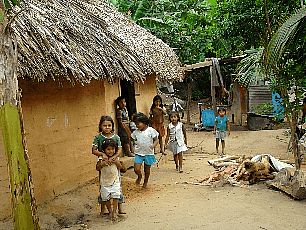
Pech Children

Eurocentrism, in the words of Farish Noor in Dealing with Human Rights, “…denotes the emerging perception within the European cultural, historical experience of European identity as good and all other forms as less good or less advanced”. Western societies tend to have an ethnocentric view on life, and it can become extremely toxic to think in this way. It is important to stop thinking about ourselves only, and consider the fact that there are way more people out there that have different cultures, views, ideas, and ways of life that are different from western culture. We have started thinking that there is a right and wrong way to view something, but in reality, this is not true. Many people can have different views on one thing, and they can all be right at the same time. 

Sources cited

http://unsr.vtaulicorpuz.org/site/index.php/documents/country-reports/148-report-honduras

https://joshuaproject.net/people_groups/14349/HO

Post #4

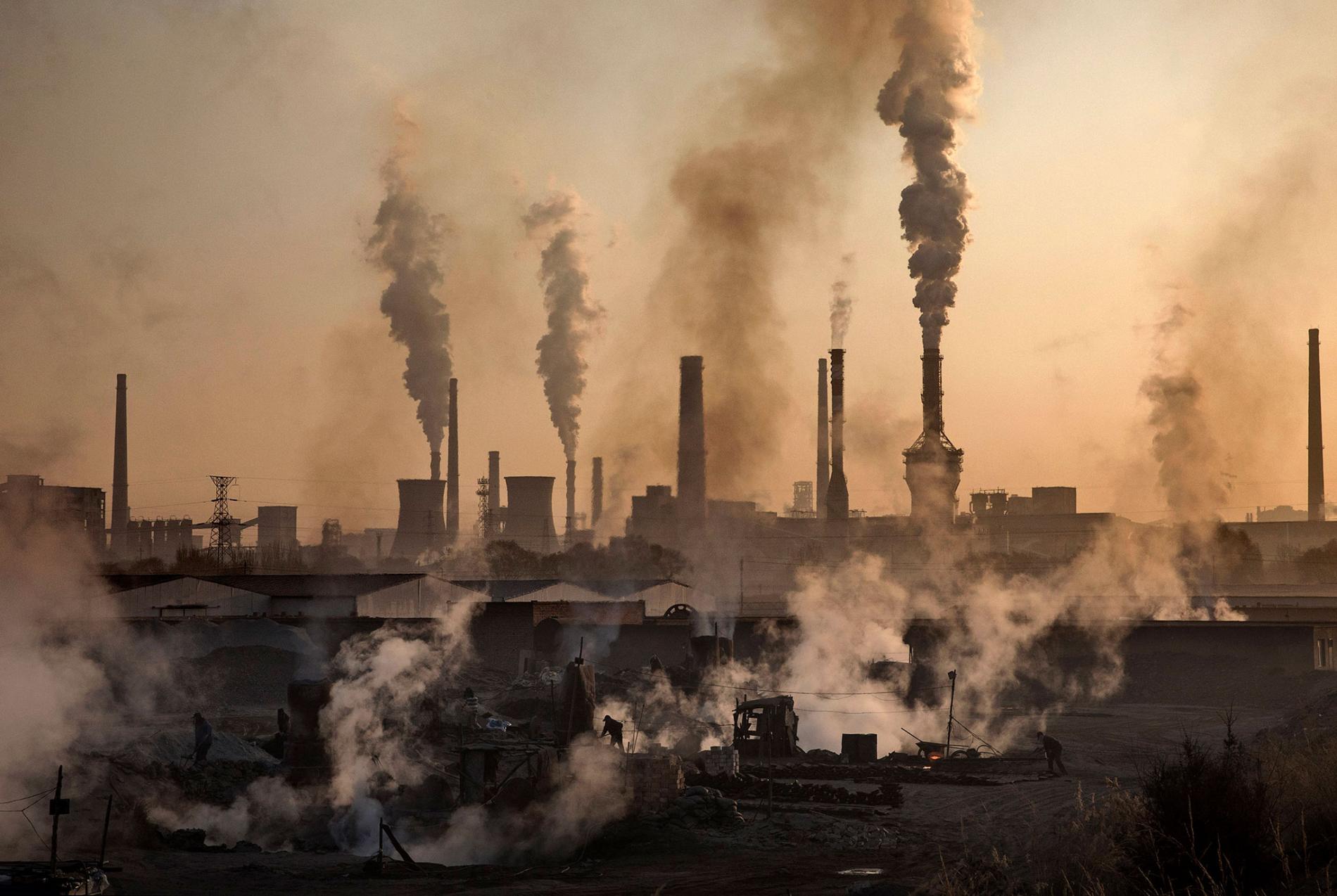
There are many ways that we could take action to protect our planet from climate change. If we assume that we agree to take action to protect our planet for future generations, we must start immediately to start reducing the pollution and carbon emissions from our planet.

 I think in order for this to happen on a global scale, people need to become educated on the issue. Some people have not accepted that climate change is a real, concerning thing that is happening, and if everyone does not accept it, we will get nowhere. We should start at a personal level and try to cut down our own waste and energy use before we go to a global scale. 

On a personal level, we could try to carpool more often, whether it is to work, school, or even the grocery store. We should try to recycle as much as we can, and cut down on the amount of food waste. Since our fresh water supply is drastically decreasing, we should all make an effort to cut down on our water use, like we learned last week. This would include things like taking shorter showers, not letting the sink run when you are not using it, or having fuller laundry loads. Some people won’t accept this, so we need to explain what is happening from a scientific view with studies and proven facts. 

From a bigger scale, with the government involved, we could make incentives for companies that are known for major pollution to decrease, and include more sustainable practices. This change would definitely take a while to put in place, especially getting the government involved and getting people to agree on certain things. 

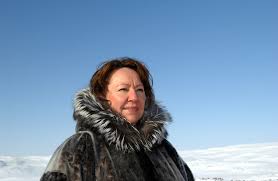
In the reading, the author Sheila Watt-Cloutier discussed what she did. She, along with others from her area, filed a legal complaint. She explains how they brought in the Human Rights aspects, and how the pollution is affecting the Inuit culture. They had little to no cause to the pollution, but they were burdened with the many consequences of it. 

“what we’re saying to the governments is, you must develop your economies using appropriate technologies that limit the pollution, that limit the greenhouse gases that are at the root of what is happening in the Arctic and the melting of the glaciers and the ice and the snow”

Sheila Watt-Cloutier

One of the better known attempts to help reduce climate change is the Paris Agreement. According to unfccc.int, the countries involved have agreed to help attempt to “combat climate change and adapt to its effects”. Many countries are involved with the Paris Agreement, but the United States is not one of them. According to the website, countries will meet every five years to discuss progress, or anything that may not be working.  

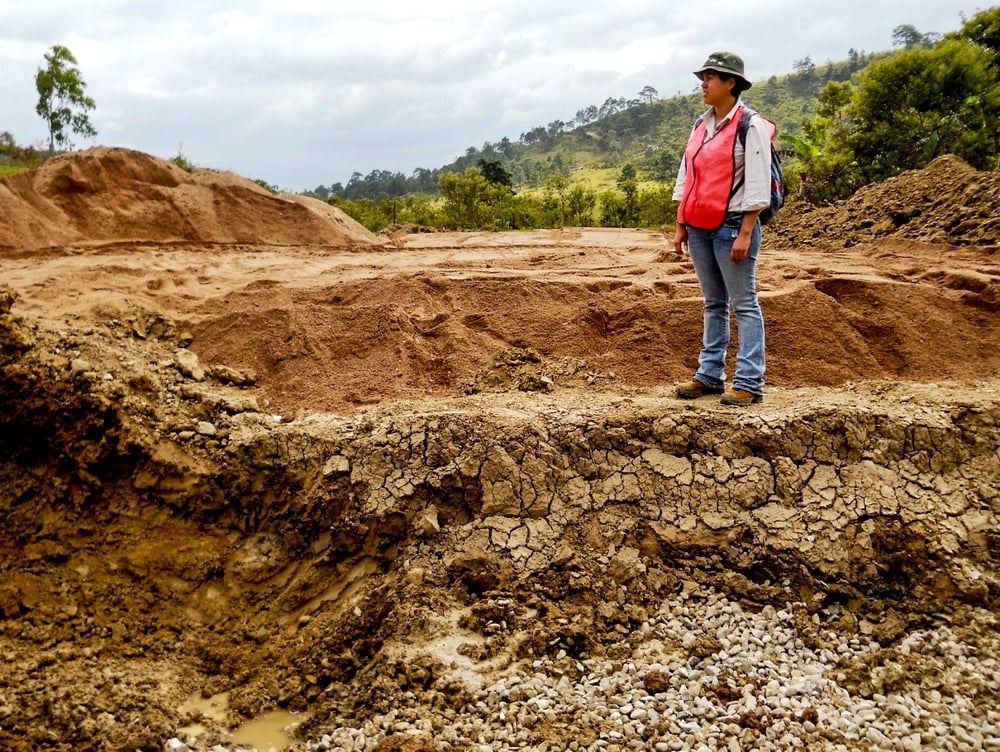
Because there is a lot of farming and lumber production in Honduras, its environmental issues stem from mainly these things. According to nationsencyclopedia.com, the two main issues are soil erosion and loss of soil fertility. They use slash-and-burn farming, which depletes soil nutrients over time. This has a major impact on the country, especially since the country is so small. 

Water.orgis very involved in Honduras, and increasing water access to people. According to the website, since they started working in Honduras in 1990, they have reached 14 thousand people. They also explain a project that they are currently working on, which will reach the people of Mejocote and Montaña Verde. 

One environmental group that I found in Honduras is Honduran Conservation Coalition. They are a smaller group based in Honduras and the United States whose goal is to “Help protect biodiversity and ecosystems through community-based conservation and sustainable development initiatives in mestizo and indigenous communities”. They mainly focus on conservation of dry forests, cloud forests, pine forests, and rain forests. It is also stated that they try to educate Hondurans on conservation and environmental concerns. 

Sources cited

https://www.redbubble.com/people/jcaladolopes/works/32297433-there-is-no-planet-b-t-shirt-for-kids-save-the-earth-shirt?cat_context=u-prints&grid_pos=4&p=poster&rbs=06c0681d-e287-482d-8e0e-cde1fd592cf8&ref=shop_grid&searchTerm=no%20pollution%20drawing%20posters

https://www.nationalgeographic.com/environment/2018/09/news-air-quality-brain-cognitive-function/

http://www.rightlivelihoodaward.org/laureates/sheila-watt-cloutier/

https://unfccc.int/process-and-meetings/the-paris-agreement/the-paris-agreement

https://www.nationsencyclopedia.com/Americas/Honduras-ENVIRONMENT.html

http://www.woodardcurranfoundation.org/ewb-honduras/

https://water.org/our-impact/honduras/

https://www.honduranconservationcoalition.com

Post #3

Nationalism can be defined as having pride in your own nation, taking an interest in it, or even excluding other nations and thinking them lesser than your own nation. This can be more intense or less intense for some people. 

I found a post onlinewritten by a Honduran, talking about how they view their country. Even though this post was written in 2011, from other sources that I have found on the internet this view of nationalistic pride towards their country is very strong.

“What seems very clear that we have is that this country is ours. We seldom think that Honduras is mine.”—Federico Alvarez

The author also talks about the many problems that are facing Hondurans at the time (and still), for example the political corruption, economic struggles, and more. He says that if they are to help with these problems, it is important to look at the country as a collective whole and see what you can do individually to make the situation better. He talks about his obligation to Honduras, and how he can personally improve the country. This is what nationalism is in a nutshell. He feels pride towards his country, but also acknowledges that there is a lot of work to be done to improve the state of the political and social climate. 

I think this is an interesting article to read because it does not talk solely about what is wrong with the country (which is mostly what you see when you search for Honduras) but why this citizen loves his country and why he is willing to work to improve the state of it. 

Zakaria, in The Rise of the Rest, sees the potential danger in the rise of nationalism because it is happening so rapidly around the world, and it is making citizens revert back to thinking their country is the best. This stems from the continued general improvement of welfare in most countries around the world compared to the past. Economies are improving and people are becoming more proud of their countries. While this is great to an extent, the author argues this has potential danger as well. 

One example of a conflict that I have seen a lot of in my country is between the government and the citizens. According to a timeline of the country’s history on bbc.com, there has been a series of human rights abuses by the government against the citizens. According to the timeline,in August of 1988, “Inter-American Court of Human Rights finds Honduran government guilty of “disappearances” of Honduran citizens between 1981 and 1984”. This is obviously not something that should be happening to citizens by their own government, and it is obvious that corruption was involved. To correct (at least some) of the corruption, they needed an outside source to come in and assist. Because the government is so powerful, they were able to sweep it under the rug, unnoticed, for so long before it became a big deal. After this there are other human rights abuses brought to light, one being against the military. 

This problem with human rights also goes hand in hand with inequality, which is a major issue in Honduras. 

“Despite the favorable economic outlook, the country faces the highest level of economic inequality in Latin America.”—Worldbank.com

This inequality stems from many different issues in Honduras, some being corruption and violence, as previously stated (many times).

As you can see in the above graph, most Latin American countries are facing a decrease in income inequality. But this, unfortunately, is not true for Honduras. Income inequality is rising by more than .5 percent each year, used by the Gini coefficient. The Gini coefficient, as we have learned from a previous reading, is used to measure inequality in countries. 

Because of the changes in presidency, there seems to be little to no attempt to change these inequality issues. Worldwide organizations are aware of the problems, but it is difficult to get an organization in the country without upsetting the leader or creating bigger issues. I believe to solve the inequality issues in Honduras, the issue of political corruption needs to be solved first. Inequality is a major issue, and there are many different reasons for the huge scale in this country. To decrease inequality, Honduras needs to fix the problems causing inequality first. 

Works Cited

http://www.freerepublic.com/focus/f-bloggers/2786852/posts

Zakaria The Rise of the Rest

https://www.bbc.com/news/world-latin-america-18974519

https://www.worldbank.org/en/country/honduras/overview

https://www.telesurenglish.net/news/Inequality-Increases-In-Honduras-With-300000-Added-to-Poverty-List-20171223-0029.html

https://www.cgdev.org/media/income-inequality-falling-most-latin-america-2000-2010-compared-select-other-countries

http://hdr.undp.org/en/content/income-gini-coefficient

https://en.wikipedia.org/wiki/President_of_Honduras

Post #2

According to worldatlas.com, the official state language is Spanish. This is because Honduras was a part of Spain’s conquest of the new world back in the 1400’s and 1500’s. Even though they speak Spanish, it is a different dialect than the Spanish that Spaniards speak. This is the only official language of Honduras, but there are also indigenous languages spoken throughout the country. According to Worldatlas.com, these are: Garifuana, Miskito, Sumo, Pech, and Jicaque. Garifuana is the language with the largest amount of people who speak it, about 100,000. This number is slightly different than the graph shows down below, but it shows generally the same ideas of how many people speak Spanish in relation to the indigenous languages. 

Because there are so many indigenous people and different cultures throughout Honduras, there are problems that many people face. 

“19 per cent of the indigenous population in Honduras is illiterate, compared to 13 per cent of the general population”. 

 —minorityrights.org

A good portion of the indigenous population is illiterate, which makes it harder for them in day to day life. These indigenous people not only face a language barrier if they travel other places in the country, but they may face stigmatization for not being able to read or write. Because of these high illiteracy rates, it can also be assumed that education is low in this country. 

Another issue discussed on this website is the discrimination and poverty that the indigenous people face. I believe this can be linked to the language barriers in the country. People in poverty probably do not have the means to get a proper education, leading to illiteracy which was discussed above. 

Honduras is a member of the UN, and the IMF, and became a member in 1945. Honduras also became a member of the WTO in 1995. The WTO, or the World Trade Organization, aids with trade with member countries, organizing rules, and being a general third party. There are rules in place that aid in making sure all trades are considered equal. 

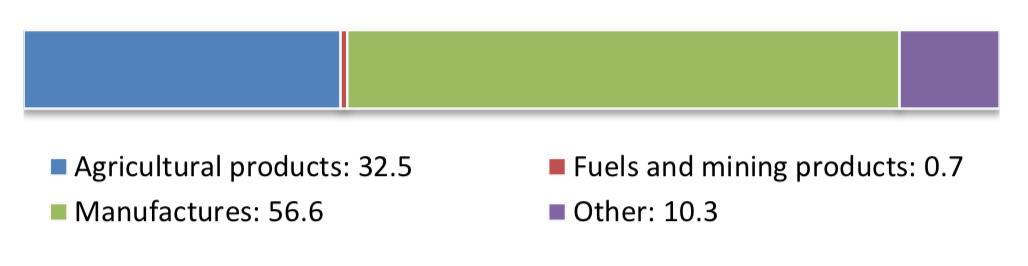
Honduras Exports

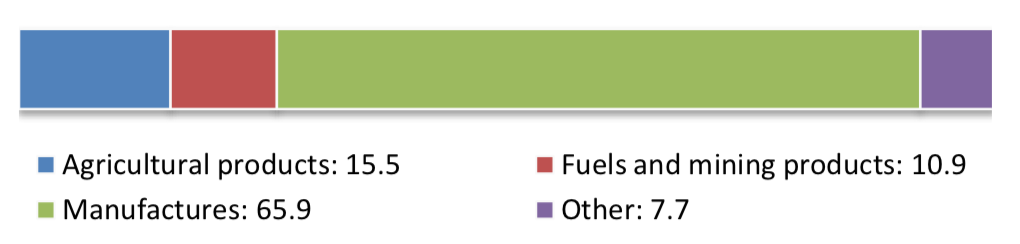
According to wto.org, Honduras’ main exports are agricultural products, and manufactures. Their main imports are also manufactures and agricultural products, with fuels and mining products closely following. Honduras mainly trades with the United States and the European Union, along with Guatemala, Nicaragua, and El Salvador. 

Honduras Imports

Trade is an important part of Honduras’ economy, which is why its membership in the WTO is extremely important as well. Without its’ membership and trade with other countries, the country’s economy would be far worse off. 

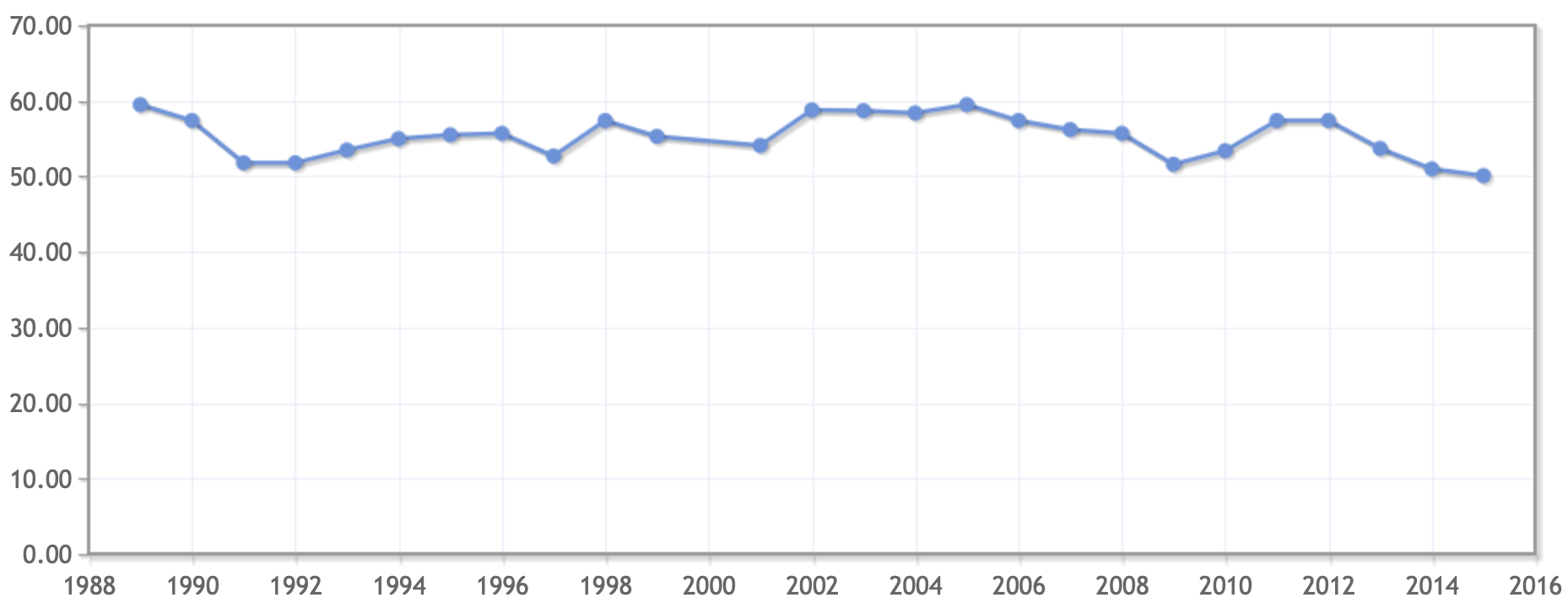
According to indexmundi.com, the GINI coefficient “measures the extent to which the distribution of income…among individuals or households within an economy deviates from a perfectly equal distribution”. A score of 0 measures perfect equality, and a score of 100 measures perfect inequality. Honduras’ GINI coefficient was 50.10 in 2015, which according to the graph, is the lowest it has been in at least 26 years.  Hopefully this number continues to decrease over time. 

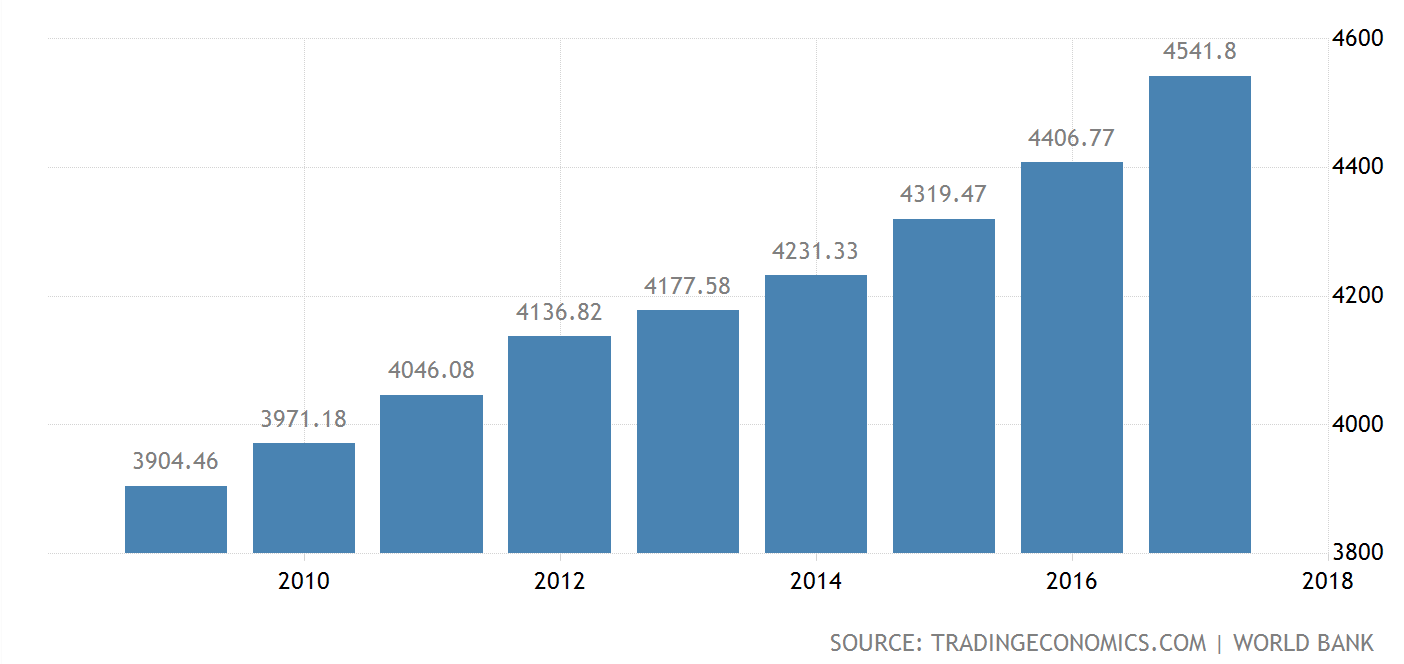
Honduras GDP PPP throughout the years

A country’s GDP based on PPP means dividing the GDP by the country’s total population. Above is a graphof Honduras’ GDP per capita PPP from 2009 through 2017. As you can see, it has increased steadily every year, and in 2017 it was 4541.8 US dollars. 

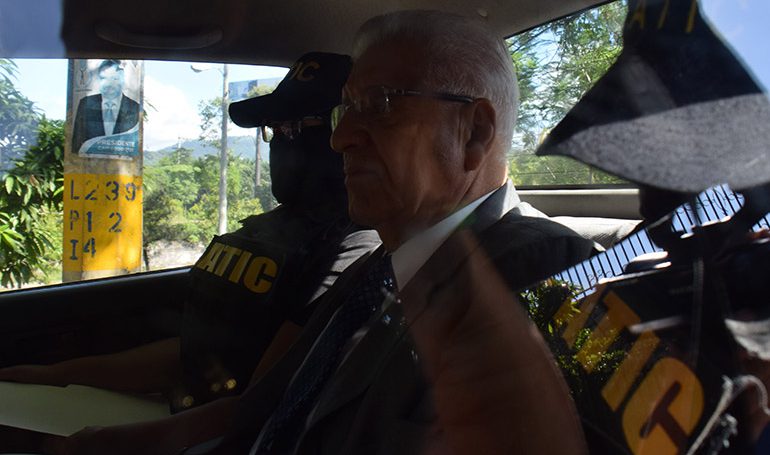
Upon looking at elpais.hn, and other news sources, it seems like nothing major was in the news this week. There were a lot of small articles about investigating and arresting people associated with political corruption, and gang violence. One article, with the picture below, discusses the trial of Wilfredo Cerrato Durón, who was accused of fraud and embezzlement. Two days ago a short article was written about a body of a cab driver found in El Progreso, Yoro, which is a neighborhood. It says they do not know how he died but it is an ongoing investigation. It is obvious that corruption and violence in general are still a major concern in the country. 

http://www.elpais.hn/2019/02/09/proximo-jueves-revision-de-medidas-para-wilfredo-cerrato/

Sources 

https://www.worldatlas.com/articles/what-languages-are-spoken-in-honduras.html

https://minorityrights.org/country/honduras/

https://www.wto.org/english/res_e/statis_e/daily_update_e/trade_profiles/HN_e.pdf

https://www.indexmundi.com/facts/honduras/indicator/SI.POV.GINI

https://tradingeconomics.com/honduras/gdp-per-capita-ppp

Post #1–Honduras

Honduras

Honduras is a relatively small country in Central America, and is also the second poorest country there. This is mainly because of a hurricane that tore through the country in 1998, which caused massive amounts of destruction and deaths throughout the country. Since then they have been able to slowly improve their economy, but not by much.

According to the CIAwebsite, the country faces high unemployment rates, lots of corruption issues, and drug trafficking problems. There is also a high risk of getting an infectious disease, and a poor quality of education which can lead to poor job quality. 

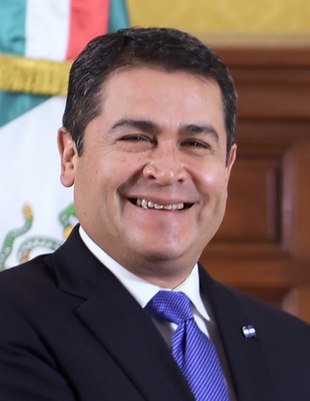
Juan Orlando Hernández

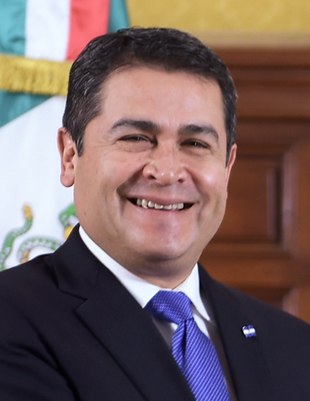
The president of Honduras is Juan Orlando Hernández, and he has been in office since January 2014. Like our political system, the president is in term for four years, but is able to renew for another four years.  

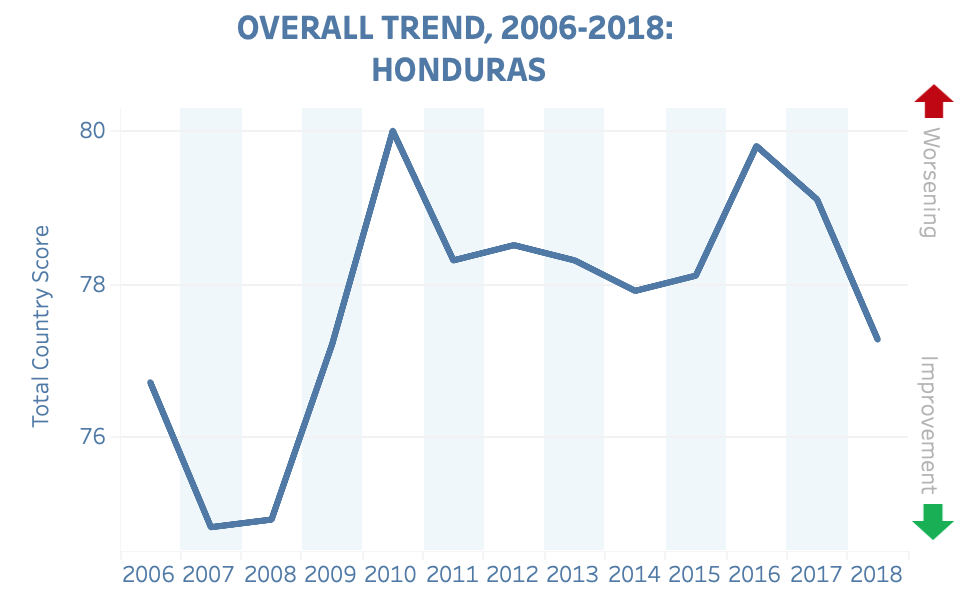
On the fragile state index, Honduras is ranked 68thout of 178 countries. The fragile state index score is 77.3, on a scale from 0.0 to 120.0. The higher the number, the higher risk the country is, and the more pressures it faces. According to the graph below, Honduras’ state has varied from 74-80 in the past 12 years. 

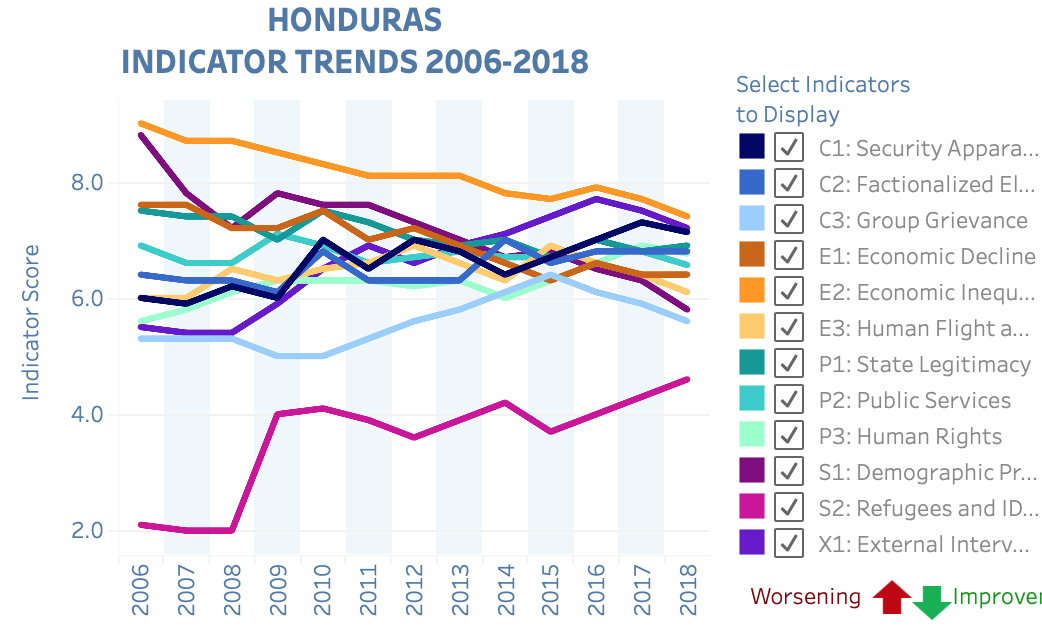
According to the website, and my research on the country, Honduras’ biggest problem is with economic inequality. This can most likely stem from the hurricane they experienced 21 years ago in 1998. It can also be explained because of poor education, corruption, along with other influences. The country’s least problematic indicator is refugees and IDP’s (Internally Displaced Persons). The graph can be seen below, different colors showing different indicators. 

On the Gini coefficient scale, which measures a country’s inequalities, in 2013 Honduras measured at 57, or 129thout of 187 countries. The Gini coefficient ranges from 0 to 100, zero being perfect equality and 100 being perfect inequality. 

Current Issues In Honduras

The main issue I have seen when looking up Honduras online is the new reforms being implemented. Apparently there have been many fraudulent elections in years past, and now they are trying to correct those wrongs. As stated above, Honduras has dealt with lots of corruption throughout the years, so maybe these new reforms will be beneficial to the country. 

“Las reformas “son una necesidad histórica por las malas experiencias que hemos tenido en las últimas tres elecciones, cuando se ha derrumbado el sistema electoral (…) y el presidente ha sido nombrado por la computadora”, sentenció.”

El País

According to elpais.hn, a news source directly from Honduras, the current president was elected because a computer system was manipulated to sway the results towards Hernández. There was also a dispute on whether or not Hernández was actually able to run for reelection on his second term, and if it was unconstitutional. 

These reforms include such things like having a council in place to make sure the ballots are counted fairly and correctly. This is so that one person is not able to hack the computer system and change the ballots. They are also getting the Registro Nacional de las Personas, or RNP, to check IDs to make sure nobody is using either a fake one, or one of the dead or migrants. These are important reforms that can help reduce corruption in the country if implemented correctly. They are also ones that we have here in the U.S., so we do not think of the importance of rules like these. 

In a more recent article that I read on El País’swebsite, there has been talk of “Operación Morazán II”, which is trying to reduce corruption and violence in the country. The article talks about the efforts of arresting gang members, and confiscating drugs, weapons, and other things to try to clean up the streets. So far the operation seems to be successful, because according to the article, in January alone, they captured more than 150 gang members. Hopefully this operation continues to be successful, and Honduras can improve their political and social problems. 

Works Cited

https://www.worldatlas.com/webimage/countrys/namerica/camerica/hn.htm

https://en.wikipedia.org/wiki/Honduras

https://www.cia.gov/library/publications/the-world-factbook/geos/ho.html

http://www.worldometers.info/world-population/honduras-population/

http://hdr.undp.org/en/content/income-gini-coefficient

https://en.wikipedia.org/wiki/President_of_Honduras

http://www.elpais.hn/2019/02/01/manuel-zelaya-celebra-nuevas-reformas-electorales/

http://www.elpais.hn/2019/02/03/mas-de-150-presuntos-pandilleros-capturados-reporta-operacion-morazan-ii/