Blog #8-Haiti

Image result for cherokee gmail
This is what the Cherokee Gmail looks like.

            Of the many presentations that we had in class, I would have to say that my two most memorable presentations was the digital storytelling by Joseph Erb. Mr. Erb told us about how he was brought into a tribe of the Cherokee Indians and learned their language, and in fact worked with Google to help incorporate their language. Now, you can change your language setting in the bottom right of your corner on Google’s homepage and in Gmail, and can even select the original Cherokee language. Joseph told us how originally worked will Google on this project because he wanted the younger generation to reconnect with the language of their elders, and didn’t really expect that the older adults and elders of the Cherokee tribe to also take part in this and voice their claim. Another story that Mr. Erb went into great detail was of how he was invited up to their Cherokee land to watch and observe an uncovering of a body. What had originally happened was that due to a damn being built by an old cemetery, the cemetery had become flooded with water, which started to erode the graves away. Joseph flew out to the area to document the excavation of what was thought to be just the legs of an women. However, the archaeologist would also unearth the rest of the body, including the skull. They also found the a ring and a necklace, indicating that this person was a well-respected elder, and therefore made the whole excavation more complicated, due to a new set of rules and things that had to be implemented now. I never thought that digital storytelling was a degree in which someone like Joseph would have so much leeway into his work and his choice of formatting.

Cloud services can be reached by any device, so long as you have the correct information to access the data.

            Another lecture that I found to be very good and memorable was the lecture given by Scott Christiansen, a professor of Management here at the college of business at Mizzou. Dr. Christiansen discussed the drivers of exponential growth, and how “Moore’s Law” affected the economy. Moore’s law is the observation that, “over the history of computing hardware, the number of transistors in a dense integrated circuit doubles approximately every two years”. Essentially Moore’s Law is a way to predict when the next big thing might come. He also discussed FPGA’s, field-programmable gate array, which are an integrated circuit designed to be configured by a customer or a designer after manufacturing- hence “field-programmable). He also discussed the technology behind cloud computing. Cloud computing is the practice of using a network of remote servers hosted on the internet to store, manage, and process data, rather than store on a local server or a personal computer. For Apple, they have iCloud, while Google has their very own Google Drive. However, each computer has RAM and a hard-drive, which are more commonly used local storage devices. The upside to using local storage devices is it is more easily applicable to being accessed, while the downside could be that if your hard-drive were to become corrupt (happened to me), you would instantly lose all of your files. Cloud services are reliable, and relatively cheap, or even free. Personally, I believe that this lecture was one of the better ones and more memorable because he connected to me with the passion of talking about computers, something of which I have a love for.

Image result for Haiti rebuild
Efforts to rebuild Haiti are currently underway, however help from other Nations would be appreciated.

            While doing research on Haiti, I was struck with the realization of just how poor the country truly is. After suffering such a heavy loss during and after the earthquake that struck the nation in 2010, I learned that Haiti did not and might not ever reach back to its full potential. Haiti, a nation with beautiful scenery and wildlife, is currently struck by a series of misfortunate events, including poverty and famine and lack of infrastructure. Buildings are very slowly being rebuilt, and people are starving every day, trying to rebuild their lives and provide for their families. I think the most important thing that I learned from doing my research on the country of Haiti is the fact that everything I have been given in life has been taken for granted, and I only recently started to see that people around the world are going through much more difficult times and trials. I am very grateful that I was given the opportunity to study and learn more about Haiti, as it is a very beautiful country and has much to offer the world, if it were given the chance and support to rebuild.

Blog #7-Haiti

Image result for human trafficking

            Sex trafficking and sex slavery is a very big problem in most developing countries. For Haiti specifically, sex trafficking and sex slavery is a very big problem that often goes unanswered or with very little attention. According to Lisa Cohen, a writer for CNN, she published a story on how traffickers exploit children in Haiti’s orphanages, of which there are many. As of March 2nd, 2018, there was an estimated 30,000 children living in orphanages in Haiti, and the Haitian government estimates that 8-% of the children that live in these orphanages have at least one living parent. The main reason they come to live in orphanages is because their parents aren’t able to afford to care for them. Ever since the 2010 earthquake that shook the country to its foundations, this kind of practice of leaving their kids because they cant afford to raise them has become popular. However, a study done showed that these orphanages would actually try and make money off the children, by forcing them to live in poor conditions and claim that they need financial help to sustain these kids. In June 2017, it was estimated that almost $100 million a year were being donated to orphanages in Haiti, most of which would be used for the wrong purposes or taken from the children. Not only does the money not reach these children, but there have been cases of child sexual exploitation and human trafficking happening inside of Haiti’s orphanages. While the Haitian government has worked hard to close five different orphanages that run like these, none of the orphanage owners have been arrested. Overall, not only is sex trafficking and sex slavery a continuing problem in Haiti, but so is the problem of orphanages and the mistreatment of orphans.

Image result for UN SDGs
List of Sustainable Development Goals, created by the UN

            Human trafficking is addressed by the Sustainable Development Goals (SDG), but lacks the capability to do what the UN Millennium Development Goals (MGDs) could do. A few bilateral development agencies, such as the U.S. Agency for International Development, and private philanthropies, including Humanity United, NoVo, the Oak Foundation, Walk Free, and the Freedom Fund, would claim to be working explicitly to end human trafficking. However, they would always answer with the phrase of “We are not interest in trafficking” or “We do not work on trafficking”. “If trafficking had been included in the MDGs back in 2000”, the writer claims, “many more development agencies would have dedicated staff to the issue and more foundations would be investing in solutions to human trafficking”. What needs to be done to combat human trafficking involves educating those around about the possible signs of someone who may look like a victim of trafficking. For instance, most airlines have trained their flight attendants to recognize the signs of human trafficking. Nurses are also trained on recognizing the signs of trafficking and trying to isolate the victim from the trafficker. If governments were to pursue more options like creating an entire division to human trafficking or even allocating some of what our defense budget is to fighting human trafficking, then we would see an immediate decrease in human trafficking.

Image result for AI

            Artificial Intelligence is a very gray area to many people, because the general public knows almost nothing. Everyone has seen the movie Avengers: Age of Ultron, and that’s the first thing that comes to mind when an individual mentions artificial intelligence. Its also an area that we’ve seen need more diversity. But why? Well, for one part, diversity is how we spread culture and how we acknowledge everyone. In terms of AI, they involve something called deep learning systems. These systems don’t read bias, but numbers instead. So, while the algorithms that drive AI are neutral to bias, the data and applications that shape the outcomes of these algorithms are not at all. Where diversity plays a key role is in the building of these data and applications. Without a diverse group of engineers, we could have biased algorithms making unfair loan applications decisions, or training a network of people only on white faces built on the AI- which would in fact create a model that would perform poorly on black AI.

Post #6-Haiti

Image result for the crisis caravan

            Some of the principle concerns that Linda Polman, writer of The Crisis Caravan, has an entire chapter dedicated simply to how the misuse of funds can aid a war. She gives many examples, talking about how warlord would force humanitarians to give them a certain percentage of their help that they came to give. Often times, groups of rebels or militia would hide out of the road every few miles and would lay out wooden planks with nails and wouldn’t let you by without some sort of donation, which could easily just be a loaf of uncut bread or a bag of rice. One of the principle concerns of Polman involves how the organizations that donate aid towards affected areas like Eastern Congo, Liberia, and Afghanistan would actually have to donate a certain amount of funds towards the tyrants in the area, or they would be killed. In certain cases where these organizations would try to setup a center for help, tyrants or warlords in the area would hike up prices to generate more revenue, so that any volunteers that would pay for say lodging and food and shopping would actually be helping the extremist forces that caused the mess the aid organizations were trying to help. The most alarming thing that comes about this can be related to what is known as the trickle-down effect, where something happens at the beginning may affect the end. The reason I bring it up is because it seems that anyone involved with the process of helping those who need it in aid organizations takes their own fair share of the money or supplies, including both warlords and the aides themselves. Whatever is left over is given to those who truly needed the original amount of supplies and help, because the rest was taken by those who don’t need it.

Image result for the crisis caravan

           The reason that Linda Polman says that “aid organizations are business dressed up like Mother Teresa” is because of the fact that these organizations are actually dressed up or made to look like they are using all the money that they have to help the people. For warlords who need to feed their soldiers with these food or supplies given by these organizations, the aid agencies will look like Mother Teresa more and more. Polman explains how journalists automatically approve of any aid organizations in developing or war-stricken countries, because the aid organizations are doing good work. But if there was an organization that was setup in say England or America or Netherlands, then journalist would question every single aspect of the organization, from whether or not the volunteers have certificates for their jobs to how much each person was going to be paid and whether or not any money was being siphoned by higher ups. The reason Polman says that aid organizations are dressed up like Mother Teresa is to make them look like everything that they have is being used the correct way, but in reality, most of what they have is not. Consider the previous part about warlords in Eastern Congo or Liberia, who would demand something close 30% or more of the organizations funds to even be allowed to setup and help the people they were there for. Aid organizations don’t outright say these things, and in fact refuse to acknowledge that they essentially have to pay their way into the zones that they are trying to help. As mentioned above, warlords and organizers take what they want before any help can be given out to those in need.

            What journalists, the public, and the government have to do to make humanitarian aid more successful is demand that they explain exactly just how and where all the money that they the spend goes, and to who it may benefit. At the same time, what we can do is ask the aid workers questions. Ask them who they help, and how exactly they benefit. Ask them if when they supply food to people, is it warlords, innocent victims, or maybe both of them? Ask them why is it that their funds and supplies and money often times goes “missing”. If they happen to mention how warlords take portions of all of the above, do they know that they are basically funding a war? If anything, these aid workers would eventually have to admit that it is near impossible for them to keep track what they end up giving to the warlords, in exchange for safety and permission to help those in their controlled area.

Blog Post #5-Haiti

Image result for climate change
China is the second biggest polluter in the world

            Climate change can be linked almost directly to human rights. For one part, without respecting one another, how are we supposed to respect the world we live in today? Dr. Elizabeth Lindsey talks about how certain cultures would use different attributes of the earth, like the winds and the rain and the ocean, to mend certain things. Even then, according to the Human Rights Office of the High Commissioner, they stated that “increasing frequency of extreme weather events and natural disasters, rising sea-levels, floods, heat waves, droughts, desertification, water shortages, and the spread of tropical and vector-borne diseases as some of the adverse impacts of climate change. These phenomena directly and indirectly threaten the full and effective enjoyment of a range of human rights by people throughout the world, including the rights to life, water and sanitation, food, health, housing, self-determination, culture and development.” The last part about the culture and development can be related back to what Dr. Elizabeth Lindsey was talking about during her TED speech. She spoke on the changing climate of the world would often take with it the cultures around it, and those could be lost forever if we don’t change. Some of the more stark things that are mentioned by the Human Rights Office of the High Commissioner include how the right to life, clean water, housing, food, which are all basic needs in life, can be infringed upon because of the climate change. Humans are used to devastating hurricanes and killer wildfires, or even just the over-fishing or pollution we cause.

Image result for haiti rubble

After World War II, almost all nations in the world came together to create a list of unalienable Human Rights, things guaranteed to each person. The list allows a person to live with dignity and freedom and allows equality and justice between all. Climate change can be a reason for some of the rights to excluded for some. Consider nations that are more prone to natural disasters, such as earthquakes, hurricanes, flash flooding, tsunamis, etc. These nations are at a constant disadvantage, because clean water, housing, and food are almost never available, even though these are basic human rights. Specifically, for my nation, Haiti, they are at a severe disadvantage because of being the poorest nation in the Western Hemisphere. Clean water and food are one of the most, if not the most, difficult thing for anyone to find. With just about half the population living off of $2 a day, most people are not able to afford clean water and food, let alone acceptable living conditions. The country is still recovering from the devastating earthquake in 2010, and the yearly hurricanes that ravage the nation do not help at all. Climate change is direct reason for all of these coming about.

Endangered cultures are becoming more common nowadays, because of multiple factors. Some cultures die out because of the use of a different language, and those who understand the language are no longer with us, and therefore we can’t pass on the culture to others. Some cultures die out because of climate change, because the elders of the culture may only know certain things based on ocean tides, and with the ocean changing so much as it is, those cultures are bound to disappear. Most of Haiti’s cultural heritage is now considered endangered.

Image result for eurocentrism

Eurocentrism is the idea that only the cultures present in Europe matter more. Farish Noor talks about going beyond eurocentrism. What does that mean though? What Farish Noor is talking about is that European cultures need to be more open minded about all of the cultures in the world, not just their own. With the eurocentrism being a real and true thing, it can bring about the death of cultures with this kind of thinking. It helps no one by thinking that one culture is better than all others in the world.

Post #4-Haiti

Image result for climate change

While there is a big need for the world to shape up and protect what matters the most, leaders of this world refuse to change anything. Why? Money. The public of each country will often agree that something, anything really, must be done to save this world. Scientist estimate that we have roughly 12 years to start making changes before reaching the no turning back point. Action suggested by scientist and anyone with common sense include reducing the amount of coal burning facilities and increasing the number of places that produce clean energy. Clean energy has many forms, from nuclear fission, to wind farms, to solar panels, to hydroelectric dams and underwater turbines. While building these kinds of facilities may cost a good sum of money in the beginning phase of construction, the costs of building these facilities will eventually pay for themselves by the amount of clean energy brought in and by the amount of CO2 we would not be releasing.

Image result for tesla model 3
Tesla’s Model 3

Another way to help clean up the earth is through using more energy efficient objects, like low-water toilets and electric cars. Car companies, like Tesla, are starting to focus on producing more cars that release less CO2 and require less fuel for a longer trip. Specifically for Tesla, they plan to increase their production of their newest series, the Model 3, while trying to make it more affordable. While these kinds of changing must be made by individuals, not countries, changes in the amount of Carbon Dioxide produced can be controlled by the nations and help reduce the global warming. What is currently being done by world leaders is almost nothing. The US has decided not to do much in order to save the world, while China, France, England, Canada, and more countries have pledged to try and reduce their CO2 production. While there was a consensus at the international meetings for climate change, the biggest producer of Carbon Dioxide in the world, the US, did not attend those meetings, and therefore basically refuses to make any changes, with the head of the government claiming that global warming being a myth. There is some sort of consensus, but only a few countries agree with and implement plans in coordination with the consensus.

According to the US AID (from the American People), the biggest and most prevalent problem in Haiti is the current environmental degradation, also known as deforestation. This posses a major health concern to Haitians, because trees can stop mass flooding, the dramatic rates of soil erosion, and declines in agricultural productivity. Not only is deforestation a problem, but sediment deposit into the ocean and over-fishing are some of the other causes that result in a loss in diversity. In the nation’s capital, Port-au-Prince, waste management is a big problem, with solid waste often clogging pipes and causing back-flow. With the depleting number of trees in Haiti, every hurricane that hits have a greater impact, often causing massive floods and millions of dollars of damage. Water.org, a non-profit organization aimed at helping people afford or gain access to safe and clean drinking water, entered into an agreement with Haitian outreach, to bring clean water to over 18,000 people by fixing old wells and drilling new ones.

Image result for friends of the earth

            Other environmental groups, such as Friends of the Earth Haiti, work to restore the forest and deserts to the way things were in the first place. They also work on maintaining a sustainable agriculture, and work on soil degradation, waste management, and overall awareness on many other issues. Another group, Yele Haiti, founded by musician Wyclef Jean, aims to help make a difference in areas of development, education, health, and environment. Their main goal is to create small projects that would eventually help Haiti in the long-term.

Blog #3- Haiti

Image result for nationalism in haiti

Nationalism, as explained by Fareed Zakaria, is the sense of being proud of your nation. It also may mean placing your country in front of others, which is unfortunately seen more often these days instead of cooperation between nations. Nations, as stated in our discussion class, is a group of people who share the same history, geography, language, customs, and sometimes religion. In the US, they call nationalism a “melting pot”. However, nationalism is considered universal in that every individual belongs to a nation, yet each nation is completely distinct from other nations, much like how nationalism is different in Haiti, compared to the rest of the world. As of right now, the feeling or sensation of nationalism within Haitians is at a low point, considering the protest that have turned deadly, because of a massive scandal following the 2010 earthquake. Zakaria sees the danger in the rise of nationalism because it incites violence. Zakaria gives the example of a Chinese businessman he had a conversation with, and the businessman said how China should invade Taiwan if it ever declared its independence, or how Japan is an “aggressor nation that could never be trusted” (pg 35). I would say that there almost no examples of conflict between nation-states and tribal, ethnic, or religious groups only because most of the conflict seen now a days is between the people as a whole and the government.

            Inequality is such a big problem in Haiti that it is now considered the most unequal country in Latin America and the Caribbean. Only because the richest 20% of its population holds more than almost 64% of its entire wealth, while the poorest 20% barely hold 1%. Inequality plays a very crucial role because it determines how people are treated in society. The poorest 20% are often seen on the crowded streets selling trinkets, clothes, bottled water, soda, etc., trying to make ends meet. Violence among the people of Haiti can often stem from inequality, because those who own all of the money don’t care for any of the poorest people. In 2012, Haiti’s GINI coefficient index stood at 41.10. While that isn’t the worst, it is certainly not the best at all. Considering the GINI coefficient for the United States is around 34.60, Haiti isn’t too far off from some first world countries. The results of inequality in Haiti can often be seen in the rural areas, where the roads aren’t paved, and there is a daily struggle to secure meals. Just in 2014, an extreme drought had increased food insecurity among the entire population of people living in rural areas. Of the 80% of extremely poor people that live in rural areas, 38% of those people aren’t able to satisfy their own nutritional needs. In July 17, 2018, President Jovenel Moïse’s administration decided to announce that the fuel prices in Haiti would be increasing. Unfortunately, the inequality seen is not being addressed correctly. Instead of investing money into the people and helping increase education efforts, the government decides to increase fuel prices. This does no good to the extreme poor in Haiti, who only make $1.30 a day. Not only the financial instability and low income, but the recurrent natural disasters that afflict Haiti do not help the poverty stricken become better.

Image result for nationalism in haiti
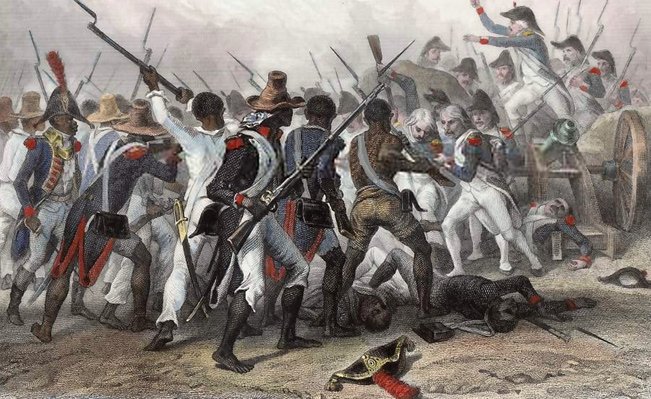
Black Haitian troops fight French troops for freedom from the French (1791-1804)

            In the Post-American World, written by Fareed Zakaria, he mentions how nationalism has always perplexed Americans, because they believe that when they get involved in international affairs, its for the greater good, however, that’s not what Haiti thinks. History tells the story of how Haitian’s fought against French colonialism, and won their freedom, which only worried the US at the time because of slavery and how the plantations may react. This is how nationalism can often be portrayed differently, based on the cultures originating in said country.

Post #2-Haiti

        Some of the languages spoken in Haiti are French and Creole. The state languages are also French and Creole. There is an indigenous language known as “Haitian Vodoun Culture Language”, also called Haitian VCL. It is also known as Langaj or Langay. However, according to Ethnologue, there are no known speakers of this language, and is now considered a second language only. This language consisted of a broad range of religious words, songs, or chants, drawing on multiple African languages. Because of the fact that there are no known speakers of Haitian VCL, it does not pose any kind of problems. It is, however, kind of sad to realize that another language that once held cultures and literacy among people is now considered extinct, and that because there is no one capable of reading or writing or even understanding Haitian VCL, any sort of sentimental value people may have will inevitably fade away.

        Haiti is one of the original 51 members of the United Nations and has been a member since October 24, 1945. Their mission within the United Nations is to “promote the governments philosophy of external action” which utilizes international peace, cooperation, and co-prosperity, all based on the highest level of dignity to all involved. Haiti is also a member of the International Monetary Fund; however, their last informal meeting was on December 24, 2018. They joined the IMF in September 8, 1953, with around 47.97 million in outstanding loans, total quotas of roughly 81.90 million. The IMF, created with the hope of unifying countries to create global monetary cooperation, financial stability, and monitor international trade. As for the WTO, or the World Trade Organization, Haiti has been a member since January 30, 1996, which aims at organizing the world’s trading nations together to work for a better goal. The WTO is the only global organization that deals with the rules of trade between countries. Their main goal is to “help producers of goods and services, exporters, and importers conduct their business”. The GINI coefficient index measures how income is distributed among households in a certain country’s economy. In 2012, the GINI coefficient index in Haiti measured at 41.1, meaning that while the wealth distribution is not as equal as should be, it is better than some countries. In fact, the highest 10% of people hold over 31.2% of all the nation’s wealth. As for PPP, also known as the Purchasing Power Parity, which measures and compares different countries currencies through a market basket, or a set group of items bought without looking at currency, to compare all currencies. Haiti’s Gross Domestic Product per capita was around 165.173 in 2017. When adjusted to the PPP, their GDP equated to roughly 9% of the world’s average.

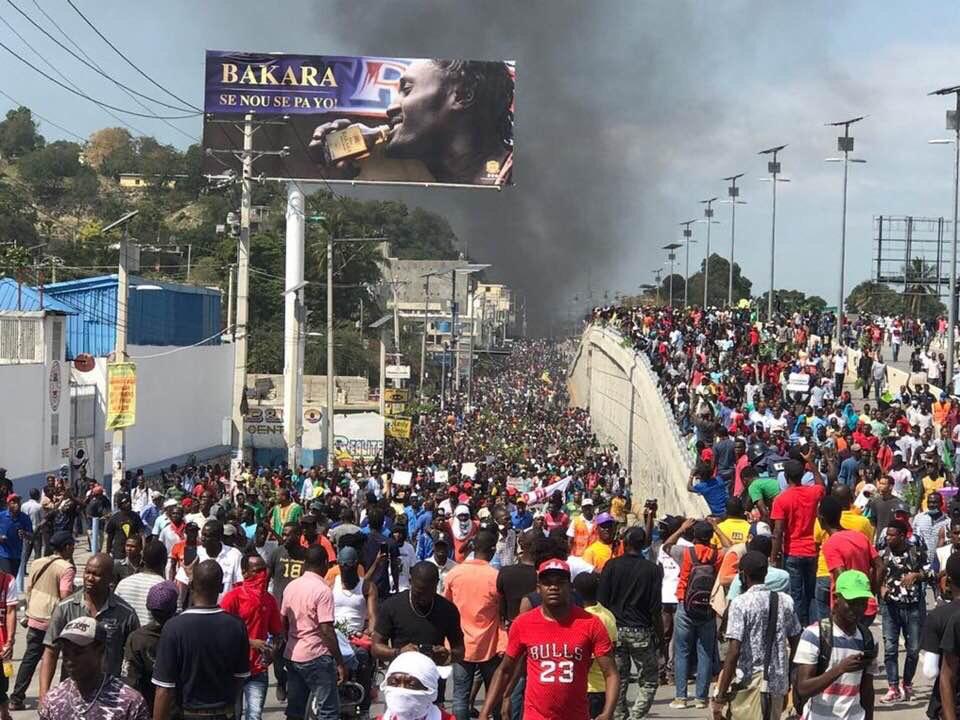
One of the biggest or main concerns for Haiti as a country is the ongoing protest that come about from a huge scandal concerning the 2010 earthquake in Haiti. In 2018, it was shown that the President at that time, Rene Preval, was able to take almost 2 billion dollars in donations from an oil reserve company, which was set up in hopes of providing oil and gasoline for a cheaper price to those in Haiti. Once again the protesters have taken to the streets, calling for an investigation into the missing money and condemn the ongoing corruption within the current government. Not only are they condemning the corruption, but they are also calling for the resignation of President Jovenel Moise. Jacqueline Charles, a reporter for Radio Mega, stated that at least one individual was killed just three days ago, along with roughly six other people being arrested. Tires and cars were set on fire, and the police in the area ran out of tear gas to fire at the people, which only added to the instability of the current situation inside of Haiti.

Post #1-Haiti

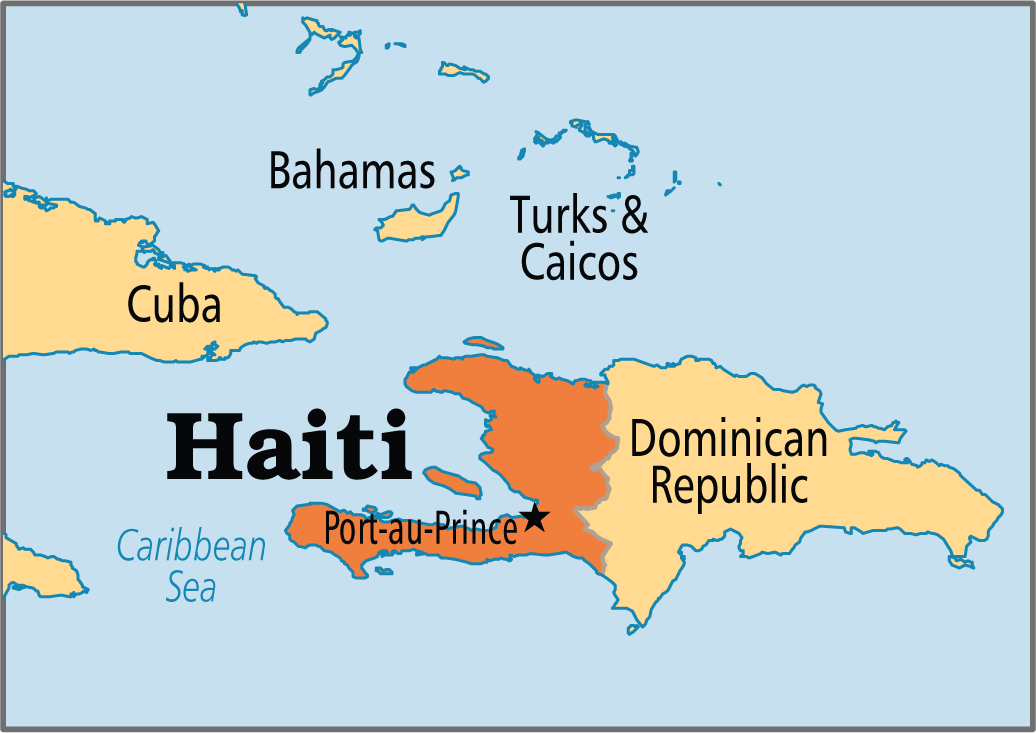
Haiti, or the Republic of Haiti, is a country located next to the Dominican Republic, with a population of roughly of 10.8 million people. Haiti, while known for its beautiful mountains and crystal blue water and breathtaking beaches, unfortunately has bad luck with natural disasters. In 2010, Haiti was ravaged by a 7.0 magnitude earthquake, which had killed over 220,000-300,000 people and left up to 1.6 million homeless. Even though this incident occurred in 2010, and gained international attention and help, the people of Haiti are still in the process of recovering, and a good chunk of their budget goes into rebuilding efforts. However, due to political trouble and international pressure, Haiti is not doing so well anymore.

As of 2013, Haiti has a score of 59.2 on the Gini Index, which measures the wealth distribution among all individuals within a country. On the Gini Index, a score of 0 would mean that wealth distribution is absolute equality, while a score of 100 means absolute inequality for wealth distribution. On the FSI Index (Fragile State Index), which looks at a country’s vulnerability to fall into chaos. On the FSI, Haiti ranks 12th out of 178 countries, proving to be a very unstable state. Their total at this time is 102 out of 120, which can only mean that Haiti is a state in which almost anything could change the country drastically.

As of right now, there is political unrest in the world because of Venezuela and their conflicting “presidents”. The conflict is between two different parties, one which claims that Juan Guaidó is the rightful president, while the other side claims that Nicolas Maduro is the rightfully elected president. Recently, Haiti joined the side of the US, Canada, and Colombia and other countries in condemning Maduro before he began his next six-year term. According to the Haitian Times, “19 OAS nations voted “not to recognize the legitimacy” of Maduro”, after being accused of conducting a sham election, through the regime-controlled National Electoral Council. Many accuse Haiti’s president, Jovenel Moïse, of succumbing to pressure from the US to join their side and support Juan Guaidó.

Recently, President Jovenel Moïse removed two top government officials who were involved in a recent corruption scandal. The cabinet Chief and the secretary general of presidency were both removed after being linked with Petrocaribe, along with 15 other government officials. This came after thousands of people protested outside of Port-au-Prince, which is the capital of Haiti. The protest comes after a demand for the accounting of nearly $2 billion, which have allegedly been misused by from an oil program, which was set-up to help rebuild Haiti’s economy after the 2010 earthquake.

More importantly, the Haitian government has asked for security agencies to seek out and arrest those who caused a two-day general strike, which was done in an effort to force President Jovenel Moïse out of office. The Democratic and Popular Movement (DPM), made up of 20 political parties that oppose the current party in charge. These public demonstrations call for President Moïse to step down after the Petrocaribe scandal, accusing him of “not investigating allegations of corruption in the previous government”. According to sources close to the President say that he has no plans to step down from these accusations, but rather find the sources of the accusations and bring them to justice.

            The country of Chile has repatriated almost 170 Haitians, who have volunteered to return home due to a humanitarian plan. So far, 677 Haitians have returned due to this humanitarian plan, with the help of Chile. Chilean Under-Secretary of the Interior, Rodrigo Ubilla, said that over 1,817 people have volunteered to return home, which includes 1,805 Haitians, 46 Colombians, 12 Venezuelans, and 5 Cubans. All those who have volunteered to return have been flown back on a Chilean Air Force plane.