Blog Post #8

Throughout the school year I’d say that guest speaker Joe Erb, in my opinion, gave one of the best presentations.  His story was fascinating and real and I really enjoy seeing people work hard towards something they care about, and in Joe’s case there was no financial motivation which I respect.  I feel that unlike most people, I saw this story as more motivational than informative on the Cherokee language. Joe’s resilience to give his culture it’s representation on the modern day media platforms is amazing.  Tech giants like Google and Apple essentially told Joe, “Why should we care about programming your language if only a small amount of people use it, there’s millions of people who speak a language in India and we don’t even have that, what’s the point?”  

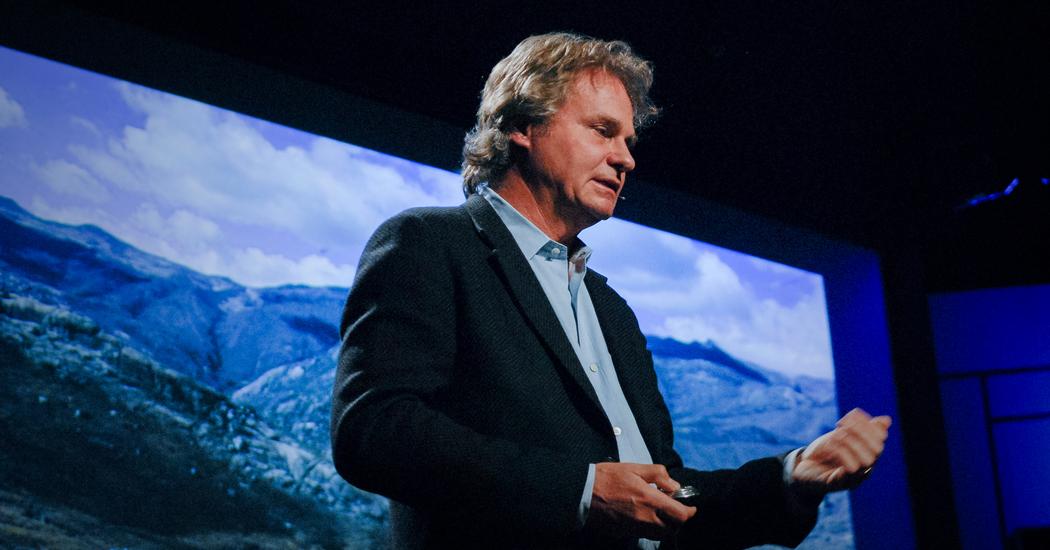
MU Professor Joe Erb

Even after being denied, Joe decided to take things into his own and taught himself how to code so he could program it himself. To corporations like Google and Apple adding new, smaller languages does not help their bottom line at the end of the day, therefore they have no reason to go out of their way to do such a thing.  Joe, on the other hand, had the motivation to go through all these hoops because he wanted to see his culture be represented in the modern era. Without that representation of his culture in the modern day, younger Cherokee generations would feel as if their culture did not matter and it would eventually die out all together.  Joe’s next step was to get Cherokee nation and other non state bound people on Google Maps. I’ve never seen someone so driven by their heritage to go that out of their way to accomplish something they believe in showing me that he has strong moral character. I someday wish to care about something that much, that I’m willing to do whatever it takes to accomplish it.

Image result for cherokee language
Chart of the Cherokee Language

The next lecture I’d like to touch on is Nick Monaco’s covering online bots and trolls.  Prior to the lecture I knew what bots and trolls were, but I never knew to what extent they could have effect on people.  I was aware that people could buy followers and likes on social media and my DMs have been bombarded by fake accounts posing as scantily clad women, but was not familiar with how bots could sway the political landscape.  

Image result for bots

Monaco’s presentation let me know how harmful bots really could be, I had previously just seen them as a nuisance and nothing more, but with the power to sway political elections I feel as if something needs to be done. The term ‘megaphoning’ was interesting as bots would replicate a message so it seemed like it was being talked about more than it actually was.  I saw this as “I’m yelling louder, so I’m right” kind of thought. Anyway, this was definitely one of the more informative lectures that we had.

After researching and writing over the country of El Salvador, I definitely gained some new insight on the country and the region.  I learned about the recent history of the country and civil war that is the underlying factor in the country’s political turmoil. Conveniently, I was assigned this country the week of their Presidential elections where for the first time since the Civil War a third party candidate was elected president, marking a truly historic moment in the country’s history.  I look forward to keeping up with news from El Salvador in the near future as President-elect Nayib Bukele (37) is set to take office starting June 1, 2019.
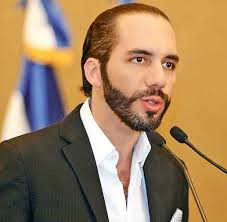
Under his leadership I hope to see the country thrive and disband the political corruption that has shackled the country for decades. Fixing the political system will open the floodgates to fixing other problems in the country such as equality, environmental concerns, and most importantly gang operations.  Gangs like MS-13 dominate the area and recruit boys at young ages and spread violence throughout the region. I really hope Bukele can help towards ending the gang violence as the images I’ve seen of the violence are quite horrific. On a positive note, I learned that El Salvador was the first country to ban metal mining in an attempt to decrease pollution, although they still have issues with clean water. It appears that the future looks bright for El Salvador as new leadership is about to take place, I hope to continue to see an upward trend in the country’s well being in the years to come.
Blog Post #7

In 2017, El Salvador authorities investigated 76 human trafficking cases, that was up from 2016’s 55 trafficking cases.  Out of the 76 only nine were prosecuted and out of that, only 6 were charged with sex trafficking. With only 11% of investigated instances being prosecuted it would be fair to say that more action needs to be taken.  It should also be taken into consideration that were definitely cases that weren’t reported, increasing the number of cases annually, making it an even greater problem than it already appears. Women being trafficked typically are shipped off to other Central American countries like Honduras and Guatemala.  The majority of sex trafficking can be related to the local gangs, like MS-13, who solicit young women and force them into prostitution. To make matter worse, El Salvador does not meet the minimum standards for the elimination of human trafficking. [1]  Legislation, however, is making significant efforts to do so.

 New offices have been opened to provide victim services and adopting the UN’s “Blue Heart” campaign have greatly helped towards awareness efforts [2].  Although there are laws in place, little is done about the crimes and to receive restitution, the victims must move the case to a civil court where restitution is seldom seen.  The Blue Heart is a global initiative to promote awareness of human trafficking and its negative effects on society. Here is a link to their website to learn more https://www.unodc.org/blueheart/ .  

There are 17 Sustainable Development Goals (SDGs) set out by the United Nations.  It acts as a blueprint for people to follow to promote peace and prosperity throughout the globe.  No Poverty, Zero Hunger, Gender Equality, and Climate Action are just a few of the goals listed out.  In regards to Human Trafficking I do not believe that just one goal addresses the need for trafficking to end, but multiple.  

Image result for sustainable development goals
List of the Goals along with their numbers corresponding to each goal.

In my opinion Human Trafficking violates/does not follow the goals of Good Health and Well Being, Gender Equality, Decent Work, Reduced Inequalities, and Peace, Justice, and Strong Institutions.  3 because it’s pretty difficult to be in good health when you’re a slave. 5 because an overwhelming majority of victims are women. 8 because being forced to sell your body is not decent work. 10 because equality is not being promoted as victims are robbed of their freedom to make their own decisions.  Finally, 16 because institutions have allowed human trafficking to go on for far too long and our robbing people of the peace and justice they deserve. [3]   Human trafficking is an interesting area to tackle, for the majority of history it has been illegal, but that has not stopped traffickers.  Passing laws and legislation can only do so much and it’s time for a new approach on the matter. Root causes of trafficking can be hard to pin down, with many looking at poverty and lack of education and jobs as a prime suspect.  Eliminating poverty and increasing education among the population would definitely help reduce trafficking, but the main driving force behind human trafficking is the traffickers themselves. Eliminating poverty can help, but if the trafficker wants to take you, they will take you.  Traffickers turn to this as it pays a pretty penny. Educating people at a young age will give them the mindset that it is not okay to kidnap and sell people. Most traffickers lack sympathy and being able to establish that everyone is equal to the upcoming generations could reduce the number of traffickers and number of people wanting those kinds of services.  Only time will tell at the moment. [4]  

In a completely different direction, equality is something we as a planet have been striving for in years.  An area that currently lacks diversity is the tech industry’s AI development. With the majority of programs being developed by white males, conscious and subconscious biases tend to appear in their final program, typically supporting more user interface for the look of a white male.  Change is something that needs to occur at an early level, educating minorities and women on the job opportunities in the tech industry. Diversity in the workplace is shown to lead to greater innovation as well as production. Change also needs to occur so not every Alexa and Siri in the world is made with the thoughts and biases of white men, but rather represent everyone.  Currently men occupy 76% of all technical jobs, with 95% of the tech workforce being white. For us to truly reach peak innovation we need to lower these percentages to a more even playing field. [5]

Image result for diversity in the tech industry
Silicon Valley employee gender demographic

Blog Post #6

In Crisis Caravan, Linda Polman criticizes humanitarian aid and how it “helps” individuals in need. Throughout the book she opens the eyes of the readers on how many “humanitarian aid” projects actually do quite the opposite of aiding those in need. When discussing humanitarian aid the two main perspectives of ‘help at all costs, some aid is better than no aid’ or ‘aid fails in its purpose when done improperly’. Many concerns Polman brings up revolve around people helping for the wrong reasons, misinformed journalism, and money being spent on things other than what it was intended for. All of these can be seen in the Rwanda crisis that occurred in the mid 90s. Looking back many people can agree that the support from humanitarian aid groups only prolonged and provided funds to the crisis going on in Rwanda. Outside help going to Rwanda was highly misinformed due to false journalism.

Image result for Crisis caravan

Many organizations went and advertised for donations because they believed the Hutus to be innocent victims of cholera. For this reason, money was misfunded and unknowingly went to the support the Hutus in their quest for the mass genocide of the Tutsis. However, this did not go unnoticed by every organization when they got there. MSF France decided to leave the humanitarian aid hub of Goma in 1994 and declared that “aid only perpetuates the situation in Goma”. They began to realize that at this point, no help was better than some help. I imagine this being a tough decision to make, but sometimes the best decisions are the hardest ones to make. However, MSF France’s decision to leave had little impact and if any hurt the company’s reputation with many countries criticizing the decision. This is where the humanitarian crises became much more political. The way these NGOs thrive is through increasing contracts. These contracts provide the funds for the organizations to provide aid and get their company name out there. No one would have paid to attention to organizations leaving due to protest and would have only hurt their contracts in the long run. Organizations also pose the risk of missing out on donor governments providing financing to their next aid project if they are seen backing out of a crises. At this point in Goma it became an issue of “feed the killers, or go under as an organization.” At the end of 1995 the camp in Goma boasted a 2324 bars, 450 restaurants, 590 shops, 60 hair salons, and many more amenities including 3 movie theatres and 2. In the case of the Rwanda crisis it is clear to see that humanitarian aid funded the Hutus, and without it, the war would have gone nowhere.
Another issue countries requesting aid face is dealing with unwanted but well intended gifts. These unwanted gifts can fill up logistic hubs and end up becoming more of a hassle than a benefit.

Image result for bad donations to africa
A mountain of clothes donated to Africa.

For example, what are African children going to do with 10,000 winter coats, that’s right, nothing. In these cases sending nothing would be a better alternative to not waste volunteers’ time sorting unusable goods. Everyone wants to have the reputation of donating goods to look to their consumers, however their good intentions can not be so good. A few examples of this include Cambodian refugees receiving food so old, even zoo animals wouldn’t eat it, a New Zealand manufacturer offering to send dog food to Kenyan children, and worst of all The European Commission sending radioactive contaminated food supplies to Africa. It may sound good to help, but in reality a lot more damage is done in these situations. This sends the message to refugees “Oh we care, but we don’t care that much.” Companies send out these offers to boost their own egos, but end up making fools of themselves in the process.
In the Afterward section of Polman’s book she describes aid organizations as if they are businesses dressed up as Mother Teresa. She says this because NGOs make decisions where to work primarily based on availability of contracts, not based on ethical considerations. The previous statements in this post back up why she believes they are businesses in disguise. At the end of the day these NGOs have their own agenda that they would like to fulfill and sometimes monetary gain comes over those who are truly in need.
Moving forward with upcoming humanitarian crises, the public needs to be well informed on where there dollars are going. Journalists owe it to the public to provide accurate reporting in situations going on across the world. We have enough “fake” news as it is, and we do not need inaccurate information being spread amongst the public.

Image result for fake news

If someone genuinely has a passion to help people they should do their research to make sure their money is actually helping those they intended it to, instead of going to a Somalian drug lord instead. Finally, it is up to the governments of the world to ensure that the amount of humanitarian crises that occur is kept to a minimum. When it does come down to the situations like Rwanda, actions, including force, may need to be taken to ensure stability in the long run. However, we have seen cases where doing nothing may have been for the better. So the role that the government must play is still fuzzy, but something needs to be done.

Polman, Linda, et al. The Crisis Caravan: Whats Wrong with Humanitarian Aid?Picador, 2011.

Blog Post #5

Dr. Elizabeth Lindsay’s Ted Talk on ancient wisdom definitely provided some good moral lessons on how we should view our lives.  On the other hand, I found the inclusion of this video with the question, “What does climate change have to do with human rights?”,  to be a poor pairing. The video ever so slightly hinted at climate change in the quote “to remember that we are enough, just as we are”.  In my own interpretation, I think it’s saying that we don’t need all these materialistic things to be happy, that the overproduction of these goods, that we as consumers love, is taking away from what it means to be human and is hurting our planet.  The video does not do justice in answering the question of what climate change has to do with human rights, so I will try my best to answer the question.

A simplified version of the 30 human rights according the UN can be found here  [1] .  Out of these 30, the ones that stood out to me that could be affected by climate change include the Right to Life, the Right to be free from Torture, and the Right to food, water, and shelter.  By disrespecting and not caring for our planet, we rob some of our global citizens of these rights.

Image result for 30 human rights

Due to rising sea levels, people’s right to life is being infringed upon as their homes are be swallowed by the oceans, just like the nation of Kiribati. The right to be free from Torture is also violated when communities have to watch their once beautiful environments be destroyed with pollution.  It can be psychologically damaging, especially for indigenous people, to witness the destruction of their land and waterways, to which many hold sacred. Finally, bringing it back to El Salvador, the right to water being violated. The greed of the country’s politicians blocking off one of the most basic human rights, water. If we could remember that we are enough just as we are, greed and that desire for more would not cloud our minds when it comes to the well being of each other and our planet.

Endangered cultures are cultures that are threatened by the rise of globalization and the power that the main contenders in the world have.  I believe Wade Davis said it best, and it was somewhere along the lines of “Power threatens the ethnosphere, not technology or change”.

Cultures have adapted to change before and have thrived.  As discussed in class lecture, native tribes don’t hate technology, they hate what it does to their culture. The Cherokee have embraced technology and are utilizing in ways that some could argue that brings more life to their culture in this modern era.  Globalization and the rise of the west have led to this sort of entitled power. The American way of “it works for us, so you have to do it too” has led to the destruction of cultures as the American “culture” has spread across the world. It was interesting to hear from Wade about how different tribes were wired differently based on their surroundings being raised, how some indigenous people would speak of plants whispering to them.  Growing up and living with these different mindsets and perspectives gives people the ability to live their lives in ways that seem unimaginable to many.

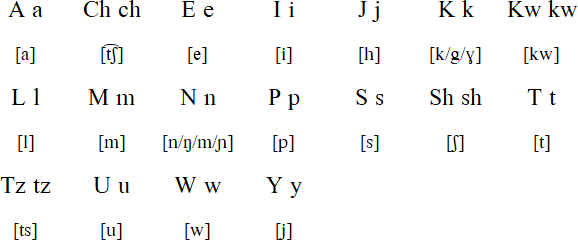
In El Salvador, one of the endangered cultures is connected to the Nawat language.  As of 2009 there were approximately 200 speakers left in El Salvador.

Image result for nawat language
Nawat Alphabet

One small elementary school in the town of Izalco, teachers took it upon themselves to begin teaching the Nawat language to students starting in 2002 in an effort to keep the language alive.  I think one of the most shocking things to hear is about all the culture that is lost when one of the few remaining elder speakers dies. When they die, not only does their physical body die, but a part of the history and culture die as well.

Eurocentrism is a worldview biased towards Western civilization.  The United States for example is very ethnocentric, which in Noor’s words are “tendency of individuals and cultures to view themselves as well as the environment around them from the perspective of their own culture, values, and beliefs”.  This is an issue I believe the majority of Americans have as from a young age we are told we are the greatest country in the world. Not until we are older do we realize that everyone’s life perspective is different from our own.

Blog Post #4

Image result for its cold outside so no global warming
Controversial Tweet from President Trump in late 2017

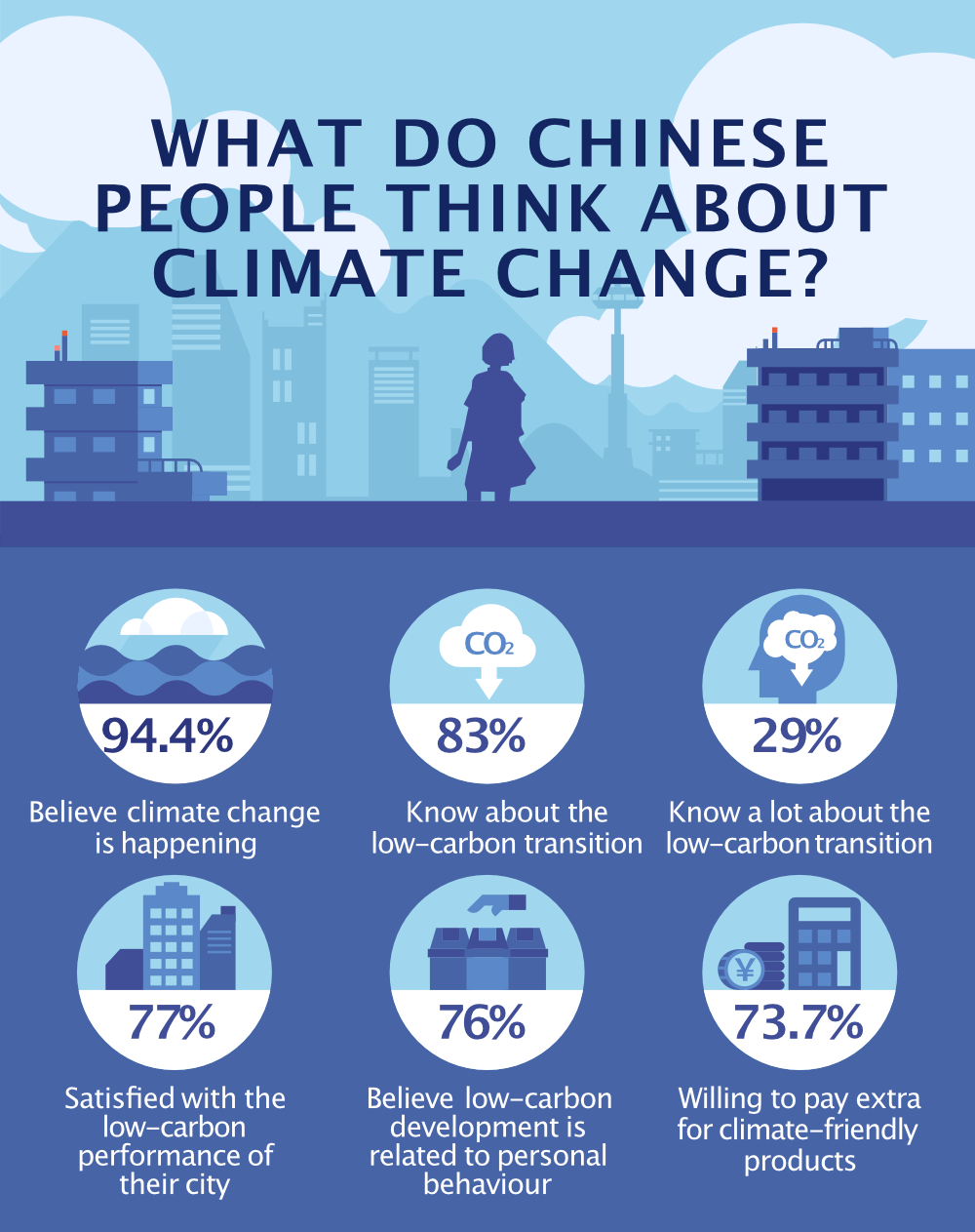
Finding a consensus about what needs to be done about the climate change crisis is difficult when there are many varying viewpoints.  This can be extra difficult when our President, leader of one of the world’s superpowers, does not even acknowledge climate change as real problem we are facing.  When leadership chooses to blatantly ignore concerns it can be frustrating and may feel as nothing can be done. Although the US isn’t a prime example of being environmentally superior, other countries are getting on board to make a change.  For example, China is making governmental changes to be more eco-friendly after a summer of typhoons, heatwaves, and flash floods. A 2017 national survey stated that 94.4% of respondents believed in climate change. Government led campaigns have started pushing for better energy consumption along with developments and low-carbon technologies.  It’s good to see that countries like China, who are notoriously known for bad air pollution, are making steps to help protect the environment.

In my opinion, future actions should include a summit of world leaders and world leading environmentalist to sit together in one room to make international standards countries should abide by. Whether that be CO2 emissions, waste disposal, fossil fuel use, whatever they see fit to make the world a better place.  Until we get a President who’s willing to acknowledge the threat climate change poses, we will just have to ride the bench as other countries fill our place to change the world. [1]

Now on to El Salvador.

In recent years, El Salvador’s greatest ongoing environmental issue has been clean drinking water.  Although nearly every Salvadoran has access to water, the water is not safe, often contaminated with feces and other undesirable waste products.  Before we dive into the water issue in El Salvador I would like to applaud one positive they’ve had in the environmental field. As of March 2017, mining for metals is banned nationwide in the country.  

Image result for el salvador pollution
Picture of what Mining water runoff would do to local streams.

Part of this ban was due to the side effects it had on the land and on the country’s water supply. “Mining is an industry whose primary and first victim is water . . . Today in El Salvador, water won out over gold [2]”.  It’s very interesting to see that a government was able to put aside economics and actually give priority to the safety to their citizens over the value of mining minerals.  They are currently the only nation in the world to ban mining of metallic minerals. When the government saw what was happening they decided to step in and make a change. This appears to be the opposite of Watt-Cloutier’s writing.  To think how nice it would have been for the Inuit people if the US would have done what El Salvador did for its people. Water purity is still an issue in El Salvador, but the ball has started rolling in the right direction.

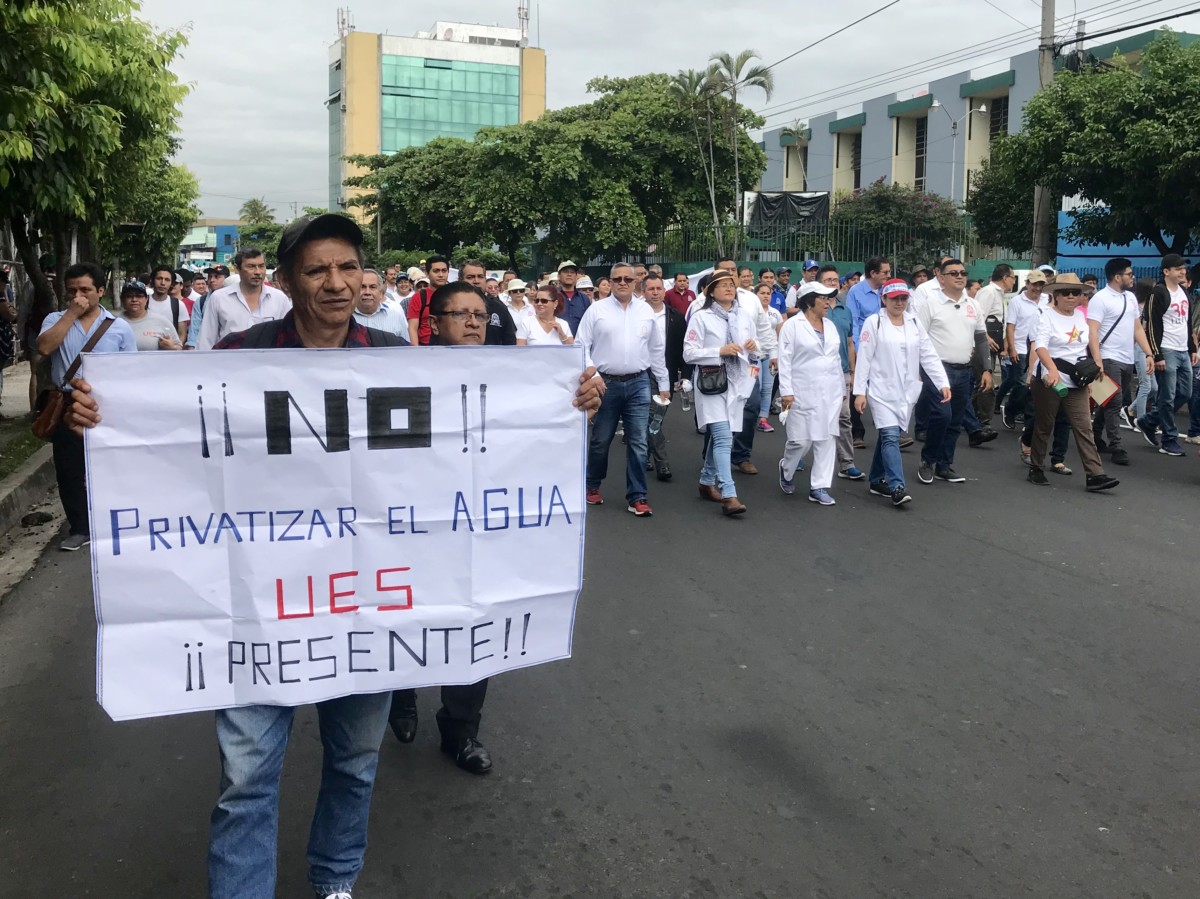
Aside from the banning of mining minerals there aren’t very many strict environmental laws.  Corporations still dump waste and untreated water back into the water sources. Around 90% of surface water is contaminated and unsafe to drink by other global standards  [3] .  The movement for safe drinking water can be seen throughout the country with worker strikes and marches for the cause.  In 2018, there was a “Battle for Water Rights”. The corruption of the Salvadoran politics were seen as members of the ARENA party stalled a bill that would protect the right to water in the constitution.

Activists from the University of El Salvador (UES) march for water rights in San Salvador. The sign reads: “Don’t privatize water! UES, present!” (Credit: Heather Gies)
Salvadoran holding a banner that says “Don’t Privatize Water” at a protest march.

 This conflicted with the party’s idea to have corporations privatize the water industry, to which many citizens were not happy. A bill once introduced in 2006 that had yet to pass, due to what I consider corruption, stated water that should be regulated as a public good.  The 2006 bill was passed after FMLM one a majority in the elections. Although it is now publicly regulated it is still poorly regulated. Prior to the privatization of water bill being killed, 1 million Salvadorans were without water after ‘damages’ to a pipe occurred. Private water providers than swooped in to provide water to the thirsty Salvadorans, but at a cost.  This instance was a big reason for the bill being killed as activists did not want to see this happen again [4].  

Another issue that the country faced was deforestation.  Since the 1960’s nearly 85% of the forest has been destroyed leaving around 5% of the nations area still covered in forest.  Soil erosion is a result of this deforestation and has left 50% of the soil as unusable for farming. This is a very difficult result to reverse and the country will be seeing fallout for this for years to come.  The damage has already been done in this area and reversal will only take and policy change, but it is currently not the country’s most pressing issue. [4]

As a closing note I’d like to say it was difficult to find Salvadoran news outlets reporting on environmental issues.  Direct searching “environmentalism” and “climate change” yielding only TWO results on the local news outlets, with one of them being about Trump’s view on climate change.  Besides the water crises, that locals are clearly passionate about, I’m interested in seeing how the rest of the country views other environmental issues. I might have to call my friend to see what she thinks.  

Blog Post #3

“Identification with one’s own nation and support for its interests, especially to the exclusion or detriment of the interests of other nations” – The definition of nationalism according to Dictionary.com.

According to Zakaria, nationalism is a relatively new phenomenon, with the basis of its origin coming into existence in the past 100-200 years.  Today, more than ever, we are starting to see more and more countries with this nationalism mindset. Britain had their Brexit and the United States (some parts) want their wall.  It appears as nations advance more and become more independent their overall nationalism also increases. The danger of this comes with the “me-first” mentality and I can understand the point some nations are giving.  A leader, like Trump, wants to put his priority into his citizens, economy, and general well being. However, if not done in the right manner, this can be problematic. Trump began banning travelers from the middle east as well as pissing off China with tariffs.  Actions like these can begin to stir up things on global scale and have repercussions that affect much more than the American people. A major downside to nationalism is the inability to tackle global issues in an affective manner. If 196 countries approach global warming in a different manner, nothing efficient or effective will get done unless everyone is on the same page.

Now onto El Salvador.

Image result for people holding el salvador flag


Nationalism is an interesting topic in El Salvador to say the least, but with recent election outcomes an increase may be on the way.  With 88% of the country being a mix of indigenous native and european descent, there isn’t much to disagree about when it comes to race. When it comes to sports, football (soccer), brings the nation together as a whole, and even started a physical war with Honduras in 1969.  

Image result for el salvador soccer war

On the other hand, the country is riddled with gang violence that contributes to the astonishingly high murder rate of 82.84 homicides per 100,000. As a comparison the U.S. murder rate is 5.35 per 100,000 ( Murder Rate ).  This violence may be a contribution to the 3.2 million Salvadorans living elsewhere, with the majority in the United States ( [1]  ).   My friend from El Salvador actually studies university in Mexico as she claims the opportunities are better abroad.  Interestingly enough, officials and economists are worried about the “impact to the deportation of criminals” [2]  after President Trump’s crackdown on illegal immigrants.  The sudden surge will most definitely lead to an increase in crime as well as more competition for jobs.  In a country where crime is an issue, adding even more criminals into the mix does anything, but help the problem.  Only time will tell how this sudden influx of deportees affects the nation.

https://www.youtube.com/watch?v=lbmXsNmwIng
Quick video covering gang warfare in El Salvador.

“Over 25 percent of children below the age of 5 experience extreme poverty in El Salvador and 36 percent of the rural population lives in poverty” [3] .  As the country begins to urbanize the rural communities are especially left out.  Medicine and advancements in technology are centered around the cities and the rural communities are inadvertently left out of the benefits.  The country is becoming more equal with a 5% decline in the Gini coefficient between 2007 and 2016 [4]   Crime and corruption are currently El Salvador’s biggest barriers from seeing an substantial growth in the economy.  The issue is that crime, violence, and corruption aren’t the most inviting when being looked at from a business standpoint.  MS13, Mara Salvatrucha, is one of the most prominent gangs in the country and actually originated in Los Angeles. Various accounts of homicide, extortion, and terrorism can be contributed to the gang [5] .   Besides these faults El Salvador has made strides in areas such as health care, water access, and most recently, education.  President Elect Nayib Bukele is looking into ways to redistribute government funds to rebuild the legislative building, 50 new schools, and 14 new libraries in a push to further fortify the growing education system.  This comes with backlash from the traditionalist and further solidifies his case for being the right candidate for the job. [6]

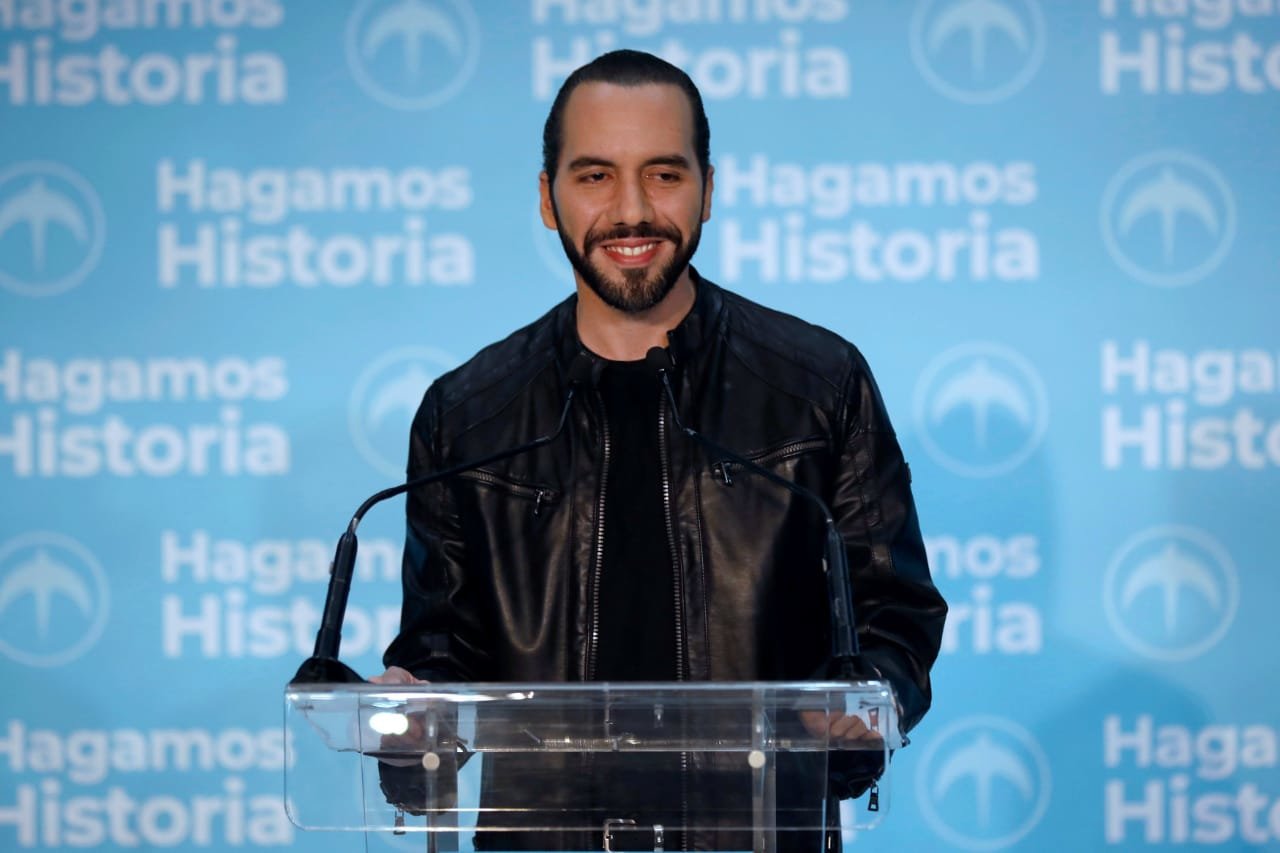
President-elect, Nayib Bukele


Post #2

Español es la lengua más hablado en el salvador.  Based off my four years of Spanish in high school this should roughly translate to “Spanish is the language spoken the most in El Salvador”.  Off the top of my head when thinking about the languages spoken in El Salvador I figured it would mainly be Spanish, as well as some English as my friend told me she grew up learning English and Spanish in school.  After researching I was able to confirm that Spanish was the official language of the Republic of El Salvador as well as discovering the use of multiple indigenous languages. Before we dive into the indigenous languages, I would like to start off by stating that the Spanish used in El Salvador is referred to as Salvadoran Spanish.  I like to think of this sort of an accent with the English language. Essentially they sometimes emphasize some letters over others or refrain from pronouncing them all together. Sort of like how a Boston accent uses broad ‘a’ sound. At the root it’s still Spanish and still understandable to Spanish speakers ( https://www.graphicmaps.com/el-salvador/languages )  Now onto the indigenous languages.  A quick list of the lesser known languages used in El Salvador include:  Nahuatl, Pipil (aka Nawat), Q’eqchi, and the now extinct languages of Lenca and Cacaopera.  For the most part these languages are remnants of the past and of the people that used to inhabit the area such as the Mayans or Aztecs.  Nahuatl is the language of the ancient Aztecs is spoken by about 1.5 million people worldwide and is seen throughout rural areas of El Salvador.  Pipil is another language derived from Nahuatl and came to existence when a group of Aztecs ran away to start anew. Q’eqchi has its roots from the ancient Maya civilization. Like Lenca and Cacaopera these lesser known/used languages may soon find themselves extinct. The benefit of learning these languages continues to dwindle and soon these languages, and more importantly, the culture connected with them, will fade into time. https://www.studycountry.com/guide/SV-language.htm

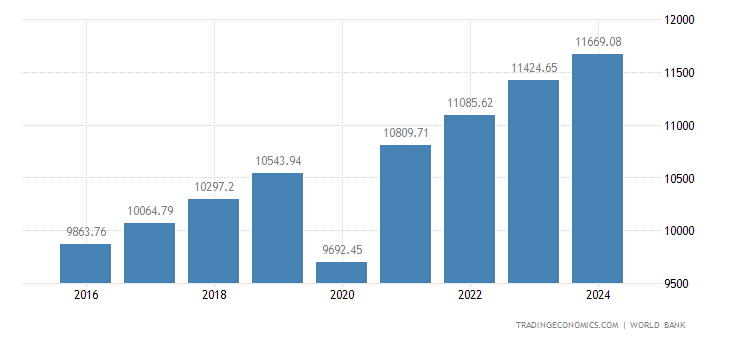
IMF, WTO, and the UN are all organizations that embody globalization and some way or form aim towards “expansion and intensification of social relations” (Steger 17).  Luckily for El Salvador they happen to be members of all three organizations. El Salvador became a member of the International Monetary Fund (IMF) on March 14, 1946, a member of the World Trade Organization (WTO) on May 7, 1995, and a member of the United Nations (UN) on October 24th, 1945.  UN , IMF , WTO .  El Salvador is a member state of the UN and is currently involved in four peacekeeping missions in Western Sahara, South Sudan, Liberia, and Coted’voire.  In regards to the WTO, I couldn’t necessarily find any roles, but something that I found interesting were PDF’s on their imports and exports. I found out that manufacturing makes up 77.7% of their exports with clothing manufacturing being the majority.  Along with this, the number one importer of their goods was the United States ( Imports/Exports ).  Since I’m on the topic of money moving around lets transition into a recap of the nation’s GDP (PPP) and GINI coefficient.  The countries nominal GDP sits at $24.81 billion while the purchasing power parity (PPP) per capita is $7292.46. PPP is used to make comparisons of prices across countries that help economists understand and measure global growth and productivity.  This link can go into greater to detail to explain PPP.  When looking at GDP based on PPP, El Salvador ranks 16th in Latin America and the Caribbean tradingeconomics.com.  The GINI coefficient for the nation, as of 2015, sits at 40.80.  A coefficient of 0 represents perfect equality and 100 represents perfect inequality for the distribution of wealth GINI.

El Salvador GDP per capita PPP
GDP per capita (PPP)

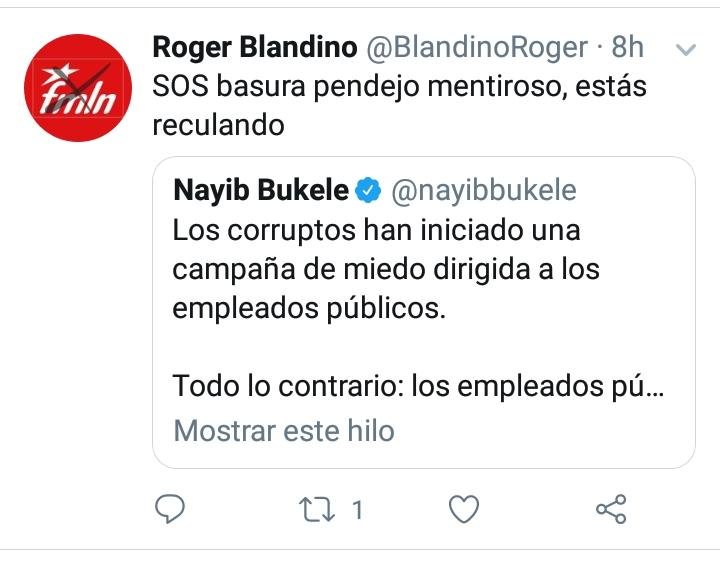
The El Salvador Times headlines are currently flooded with politics following the election of the President last Sunday. Former Mayor of San Salvador, Nayib Bukele, won the hearts of the country Sunday whilst running on the GANA party’s ticket. As with any election, the aftermath had its fair share of allegations of corruption and controversy. Immediately after elections, President-elect Bukele called for the prohibition of salary increases and hiring of government officials to prevent corruption. Along with this he claims that he will have all government officials audited as another corruption prevention. The best part is to see that the government is adhering to Bukele’s demands with the Ministry of Finance asking executives to back his decision. In response to this, FMLN affiliate Roger Alberto Blandino Neiro retaliated with comments calling Bukele an “imbecile, liar and asshole”. This complaint goes along with the “massive” dismissal of public employees as stated by Neiro himself. Bukele’s counter argument is that the positions were given in order to “shield” the government from the upcoming Bukele presidency. On the other side, Bukele is being applauded for upholding his promises made during his campaign. I am now heavily invested in Bukele’s presidency and I still look forward to see what he can do with the country. ElSalvadorTimes.com

WhatsApp Image 2019-02-10 at 9.10.22 AM
Nayib Bukele responding to offensive Tweets from Roger Blandino