
Honduras is a relatively small country in Central America, and is also the second poorest country there. This is mainly because of a hurricane that tore through the country in 1998, which caused massive amounts of destruction and deaths throughout the country. Since then they have been able to slowly improve their economy, but not by much.

According to the CIAwebsite, the country faces high unemployment rates, lots of corruption issues, and drug trafficking problems. There is also a high risk of getting an infectious disease, and a poor quality of education which can lead to poor job quality.
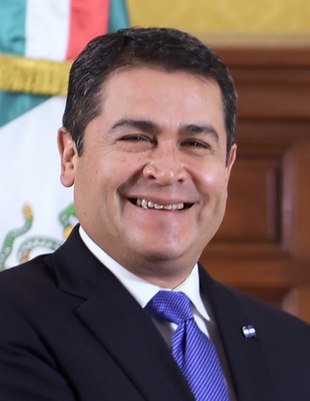
The president of Honduras is Juan Orlando Hernández, and he has been in office since January 2014. Like our political system, the president is in term for four years, but is able to renew for another four years.
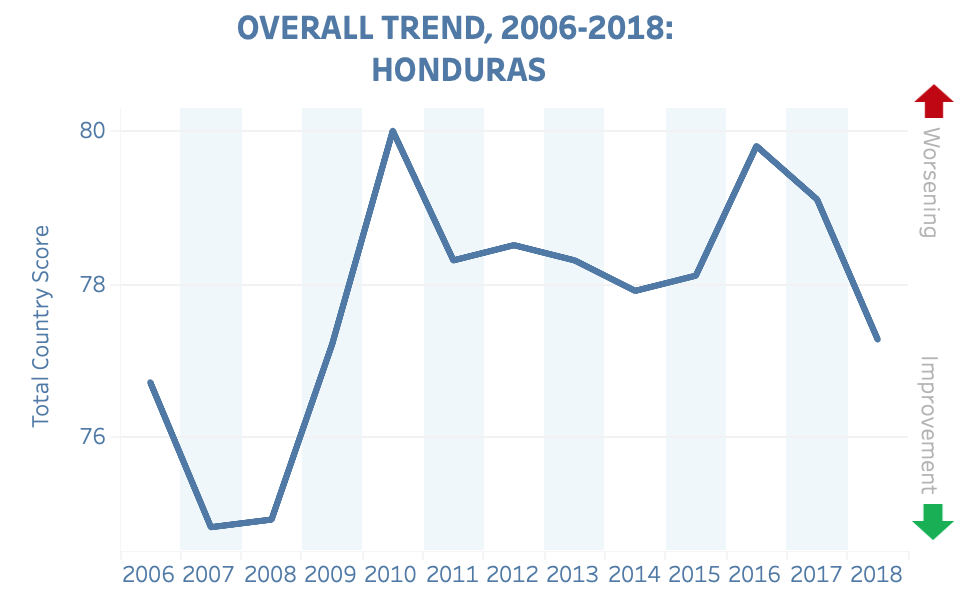
On the fragile state index, Honduras is ranked 68thout of 178 countries. The fragile state index score is 77.3, on a scale from 0.0 to 120.0. The higher the number, the higher risk the country is, and the more pressures it faces. According to the graph below, Honduras’ state has varied from 74-80 in the past 12 years.
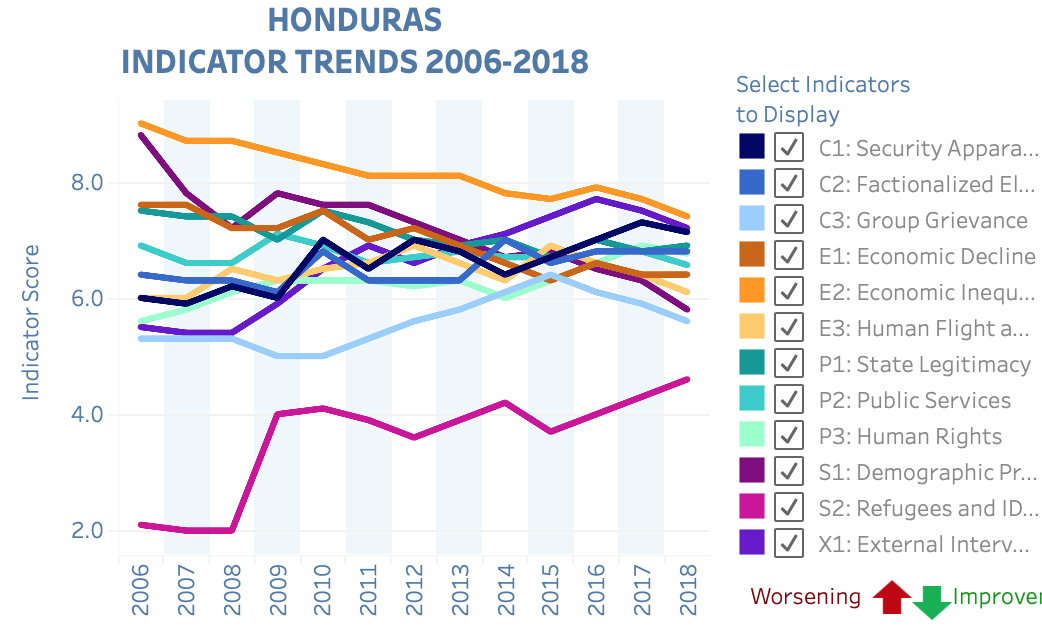
According to the website, and my research on the country, Honduras’ biggest problem is with economic inequality. This can most likely stem from the hurricane they experienced 21 years ago in 1998. It can also be explained because of poor education, corruption, along with other influences. The country’s least problematic indicator is refugees and IDP’s (Internally Displaced Persons). The graph can be seen below, different colors showing different indicators.
On the Gini coefficient scale, which measures a country’s inequalities, in 2013 Honduras measured at 57, or 129thout of 187 countries. The Gini coefficient ranges from 0 to 100, zero being perfect equality and 100 being perfect inequality.
Current Issues In Honduras
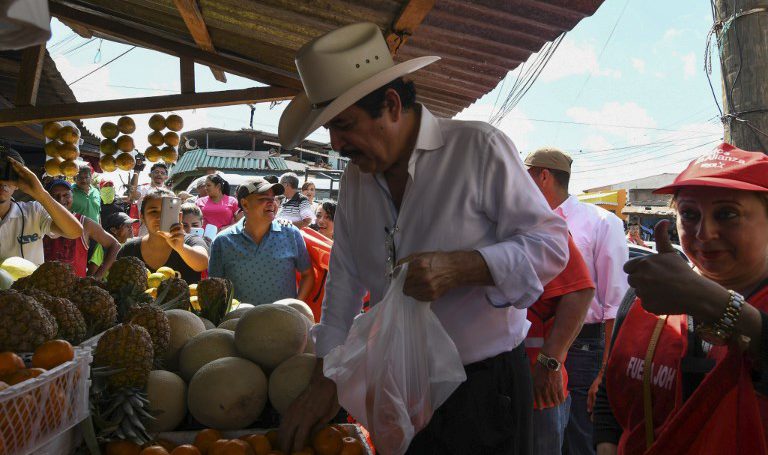
The main issue I have seen when looking up Honduras online is the new reforms being implemented. Apparently there have been many fraudulent elections in years past, and now they are trying to correct those wrongs. As stated above, Honduras has dealt with lots of corruption throughout the years, so maybe these new reforms will be beneficial to the country.
“Las reformas “son una necesidad histórica por las malas experiencias que hemos tenido en las últimas tres elecciones, cuando se ha derrumbado el sistema electoral (…) y el presidente ha sido nombrado por la computadora”, sentenció.”
El País
According to elpais.hn, a news source directly from Honduras, the current president was elected because a computer system was manipulated to sway the results towards Hernández. There was also a dispute on whether or not Hernández was actually able to run for reelection on his second term, and if it was unconstitutional.
These reforms include such things like having a council in place to make sure the ballots are counted fairly and correctly. This is so that one person is not able to hack the computer system and change the ballots. They are also getting the Registro Nacional de las Personas, or RNP, to check IDs to make sure nobody is using either a fake one, or one of the dead or migrants. These are important reforms that can help reduce corruption in the country if implemented correctly. They are also ones that we have here in the U.S., so we do not think of the importance of rules like these.
In a more recent article that I read on El País’swebsite, there has been talk of “Operación Morazán II”, which is trying to reduce corruption and violence in the country. The article talks about the efforts of arresting gang members, and confiscating drugs, weapons, and other things to try to clean up the streets. So far the operation seems to be successful, because according to the article, in January alone, they captured more than 150 gang members. Hopefully this operation continues to be successful, and Honduras can improve their political and social problems.
Works Cited
https://www.worldatlas.com/webimage/countrys/namerica/camerica/hn.htm
https://en.wikipedia.org/wiki/Honduras
https://www.cia.gov/library/publications/the-world-factbook/geos/ho.html
http://www.worldometers.info/world-population/honduras-population/
http://hdr.undp.org/en/content/income-gini-coefficient
https://en.wikipedia.org/wiki/President_of_Honduras
http://www.elpais.hn/2019/02/01/manuel-zelaya-celebra-nuevas-reformas-electorales/

 Peace Studies Blog