Español es la lengua más hablado en el salvador. Based off my four years of Spanish in high school this should roughly translate to “Spanish is the language spoken the most in El Salvador”. Off the top of my head when thinking about the languages spoken in El Salvador I figured it would mainly be Spanish, as well as some English as my friend told me she grew up learning English and Spanish in school. After researching I was able to confirm that Spanish was the official language of the Republic of El Salvador as well as discovering the use of multiple indigenous languages. Before we dive into the indigenous languages, I would like to start off by stating that the Spanish used in El Salvador is referred to as Salvadoran Spanish. I like to think of this sort of an accent with the English language. Essentially they sometimes emphasize some letters over others or refrain from pronouncing them all together. Sort of like how a Boston accent uses broad ‘a’ sound. At the root it’s still Spanish and still understandable to Spanish speakers ( https://www.graphicmaps.com/el-salvador/languages ) Now onto the indigenous languages. A quick list of the lesser known languages used in El Salvador include: Nahuatl, Pipil (aka Nawat), Q’eqchi, and the now extinct languages of Lenca and Cacaopera. For the most part these languages are remnants of the past and of the people that used to inhabit the area such as the Mayans or Aztecs. Nahuatl is the language of the ancient Aztecs is spoken by about 1.5 million people worldwide and is seen throughout rural areas of El Salvador. Pipil is another language derived from Nahuatl and came to existence when a group of Aztecs ran away to start anew. Q’eqchi has its roots from the ancient Maya civilization. Like Lenca and Cacaopera these lesser known/used languages may soon find themselves extinct. The benefit of learning these languages continues to dwindle and soon these languages, and more importantly, the culture connected with them, will fade into time. https://www.studycountry.com/guide/SV-language.htm

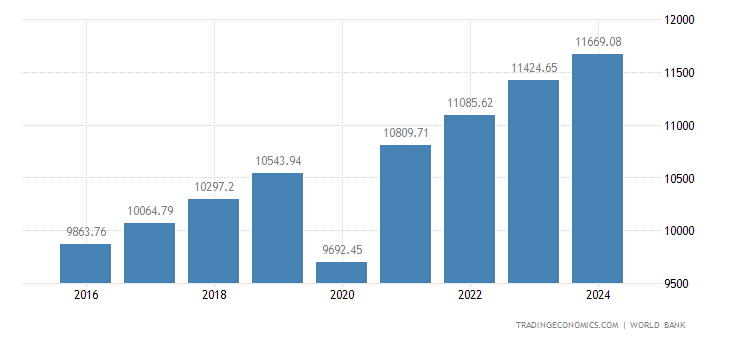
IMF, WTO, and the UN are all organizations that embody globalization and some way or form aim towards “expansion and intensification of social relations” (Steger 17). Luckily for El Salvador they happen to be members of all three organizations. El Salvador became a member of the International Monetary Fund (IMF) on March 14, 1946, a member of the World Trade Organization (WTO) on May 7, 1995, and a member of the United Nations (UN) on October 24th, 1945. UN , IMF , WTO . El Salvador is a member state of the UN and is currently involved in four peacekeeping missions in Western Sahara, South Sudan, Liberia, and Coted’voire. In regards to the WTO, I couldn’t necessarily find any roles, but something that I found interesting were PDF’s on their imports and exports. I found out that manufacturing makes up 77.7% of their exports with clothing manufacturing being the majority. Along with this, the number one importer of their goods was the United States ( Imports/Exports ). Since I’m on the topic of money moving around lets transition into a recap of the nation’s GDP (PPP) and GINI coefficient. The countries nominal GDP sits at $24.81 billion while the purchasing power parity (PPP) per capita is $7292.46. PPP is used to make comparisons of prices across countries that help economists understand and measure global growth and productivity. This link can go into greater to detail to explain PPP. When looking at GDP based on PPP, El Salvador ranks 16th in Latin America and the Caribbean tradingeconomics.com. The GINI coefficient for the nation, as of 2015, sits at 40.80. A coefficient of 0 represents perfect equality and 100 represents perfect inequality for the distribution of wealth GINI.
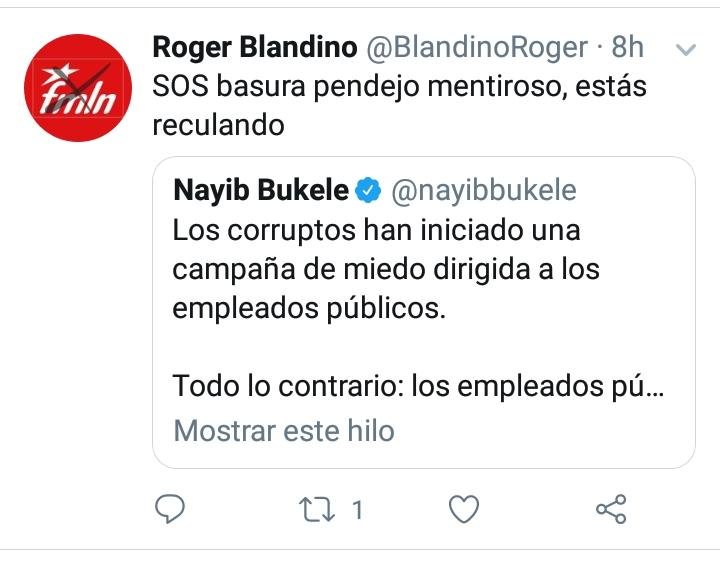
The El Salvador Times headlines are currently flooded with politics following the election of the President last Sunday. Former Mayor of San Salvador, Nayib Bukele, won the hearts of the country Sunday whilst running on the GANA party’s ticket. As with any election, the aftermath had its fair share of allegations of corruption and controversy. Immediately after elections, President-elect Bukele called for the prohibition of salary increases and hiring of government officials to prevent corruption. Along with this he claims that he will have all government officials audited as another corruption prevention. The best part is to see that the government is adhering to Bukele’s demands with the Ministry of Finance asking executives to back his decision. In response to this, FMLN affiliate Roger Alberto Blandino Neiro retaliated with comments calling Bukele an “imbecile, liar and asshole”. This complaint goes along with the “massive” dismissal of public employees as stated by Neiro himself. Bukele’s counter argument is that the positions were given in order to “shield” the government from the upcoming Bukele presidency. On the other side, Bukele is being applauded for upholding his promises made during his campaign. I am now heavily invested in Bukele’s presidency and I still look forward to see what he can do with the country. ElSalvadorTimes.com

 Peace Studies Blog