Post #8

Over the course of this semester I was introduced to many new ideas and information. Each week we had a guest lecturer come and speak about their area of expertise. Topics ranged from globalization, politics, and economics, to human rights, humanitarianism, and sustainability.

One lecture I was particularly interested in was given by Nick Monaco. Monaco is part of a social network analysis company called Graphika. He specializes in disinformation detection and analysis. An interesting example he gave was that during the 2016 US presidential election, they were able to detect that as many as one-third of pro Donald Trump Twitter accounts were bots, which are simply computer programs designed to post Donald Trump propaganda. What’s even more odd is that some of these they were able to tell originated in Russia. This is significant because these were used on a platform where anyone can speak their opinion. A large amount of information like that can be effective in swaying the public’s opinion. Would the election have had different results were these bots detected and removed?

Another point Monaco brought up was how some states are deploying disinformation campaigns to silence government critics. Some of this “state sponsored trolling” includes rape and death threats, bots used for attacks, spreading edited images, and spreading incriminating information about targets. My first reaction when learning about this was that it seems like a violation of free speech. That is not necessarily a right in every country, but this state sponsored trolling was going on in the US as well. If the US government would use resources to silence critics, does that mean they have something to hide?

The other guest lecturer I was most interested by was Scott Christiansen. He is a professor of management in the Trulaske College of Business. His lecture was about the exponential growth of technology, and the role that it will play in our developing society. An observation he demonstrated was Moore’s law, the trend that computer processing power doubles about every two years. He explained that this is because as we are able to fit more processing power into a smaller space, we can get more power out of a smaller and smaller amount of material as time goes on. This trend is expected to continue for a limited amount of time, due to physical limitations.
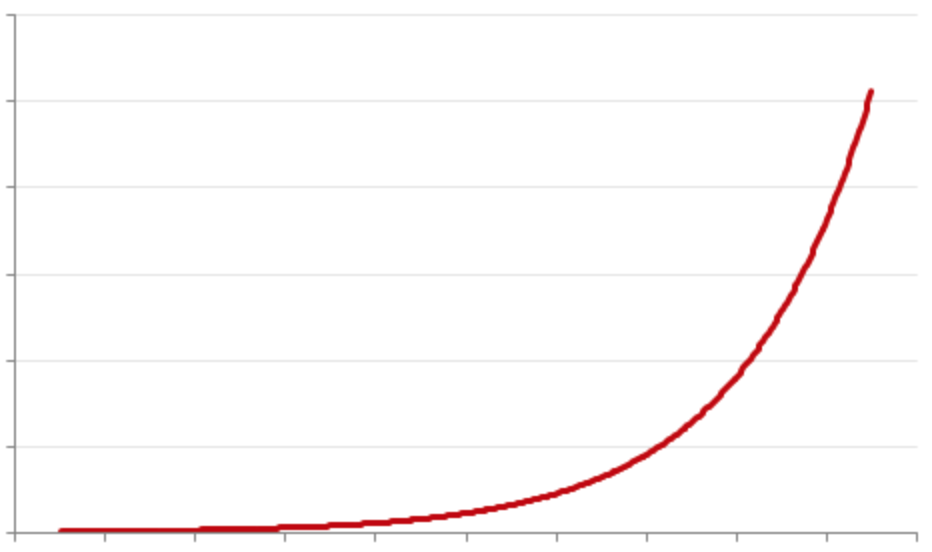
How will all of this affect our society? Christiansen then explained that every technology goes through stages of exponential growth. Once something becomes digitized, it can grow exponentially. Eventually it will become advanced enough to the point where it will become demonetized, dematerialized, and ultimately democratized. For example, we now have digital music, digital cameras, digital movies, and digital money. Every technology could become democratized, and made a public utility, and not just a luxury, such as the internet. The FCC is currently trying to end net neutrality, while many argue that the internet is so advanced and a necessary part of life, that it should be a public utility.
My focus this semester was on the Dominican Republic. Through my research, I have learned that it really is a beautiful country with many great people, but it is far from perfect. Before this project, I had never thought to deeply into societies other than my own. It made me realize that there are issues in the world greater than what I deal with day to day. What shook me the most is the Dominican issue with sex trafficking. It is one of the worst in the world, yet nobody seems to be talking about it. The government recently decided to illegally deport almost a quarter million citizens of Haitian descent, and I never would have known about it.

The biggest insight I gained from researching this country has nothing to do with the country itself. That insight is this: read the news. Not just news about your own town or country, but about the whole world. We we live in a society that is more connected than it ever has been, but it’s easy to feel like you’re only a citizen of the country in which you live. That is far from the truth, as we are all citizens of the world. The best insight I had is not to just learn about the place you’re in, but learn about the entire world.
Post #6

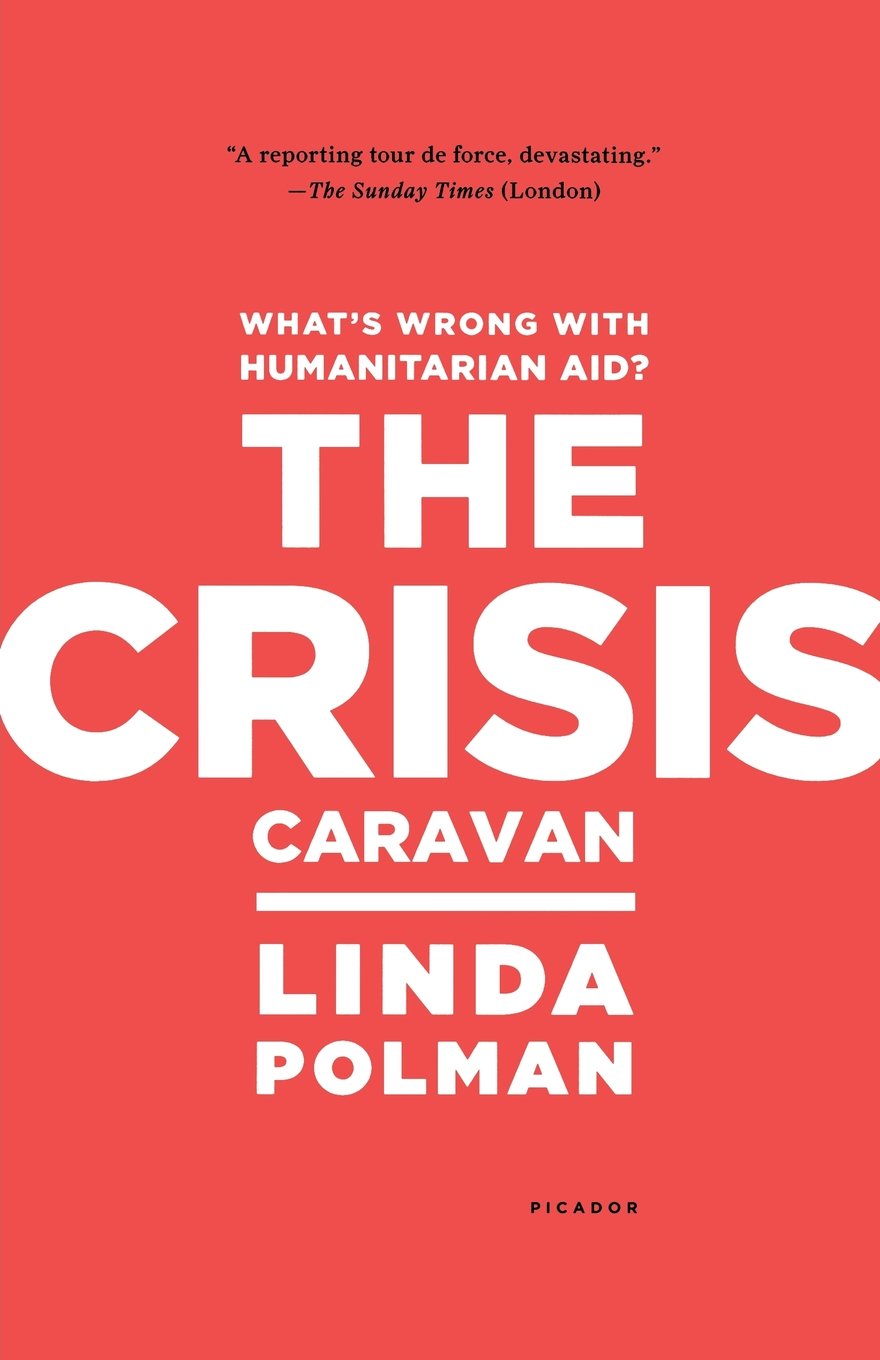
I recently read a chapter out of Linda Polman’s book, Crisis Caravan. The chapter was titled “Aid as Weapon of War,” and discusses what really happens to relief aid when you donate to an aid organization. It was new information to me. I am not usually one to donate to aid organizations, but if I was, I wish I would have learned this five years ago. Do you know dollar for dollar where your money is going when you give it to these organizations?

Polman begins the chapter with a story of when she was in Liberia, trying to access a warzone controlled by the Liberian rebel movement LURD (liberian United for Reconciliation and Democracy) in order to report as a journalist. Not only was she required to offer loaves of bread to pass through the roadblocks miles away, she then had to negotiate with a higher up to enter further into the warzone. She mentions some have outlandish requests, such as luxury shopping sprees, while others are merely food or cash. Here we already have a problem. If a journalist will have such a hard time getting into a warzone, how difficult will it be for humanitarian aid to reach as far as it needs to?

Polman continues to tell stories of how aid can be “taxed’ by warlords and other officials on its way to wherever it needs to go. In Somalia, some regimes would charge as much as 80 percent of what the aid supplies are worth. According to the UN, the Taliban claimed over one-third of food aid and agricultural support going through Uruzgan. In the Congo, leaders of the Hema people allowed international aid organizations in, on the condition that they gave their enemies nothing. After a tsunami in Sri Lanka, aid organizations could not step in to rebuild without negotiating with the rebel movement, the Tamil Tigers, who demanded a tax of 25 percent of the aid value, which was made up on the spot. I could go on, there are plenty of examples.

The issue with aid not reaching its intended destination, is that it could be doing more harm than good. Warlords have nothing stopping them from refusing to give access to aid organizations, this is why they negotiate and end up receiving a portion of the aid. With that in mind, do NGO’s who provide aid do anything other than prolong the conflict? It is not an easy debate, on one side, the argument is provide aid to the victims, only to have a significant portion of it go to the oppressors, which allows them to continue their activities. On the other side, the argument is to provide no aid at all, and allow victims to suffer even further.

Polman goes on to call out aid organizations as business dressed up as Mother Teresa. By this she means that they put on a facade of being helpful and caring, but that is just their way to earn money for executives. She mentions that journalists tend to stay away from aid agencies, giving them the automatic stamp of approval without research. Perhaps the image of being a helpful and caring agency deters journalists from really criticizing what they are up to. She makes the point that if an actual business was to provide aid, journalists would be all over it. I would have to agree, if a company that typically does not provide aid decides to do so, many people would believe it to be a cover of some plan to earn a profit.

The solution to this problem is not easy, because everyone’s opinion of aid agencies would have to change. A good start would be having journalists fully investigate these NGOs. All accounting records should be made public for organizations like these that are non-profit, to provide more transparency as to where the donor dollar ends up. This is something that can be easily implemented by a government.  For me, these changes would make me much more comfortable with donating money to aid organizations.

Post #7

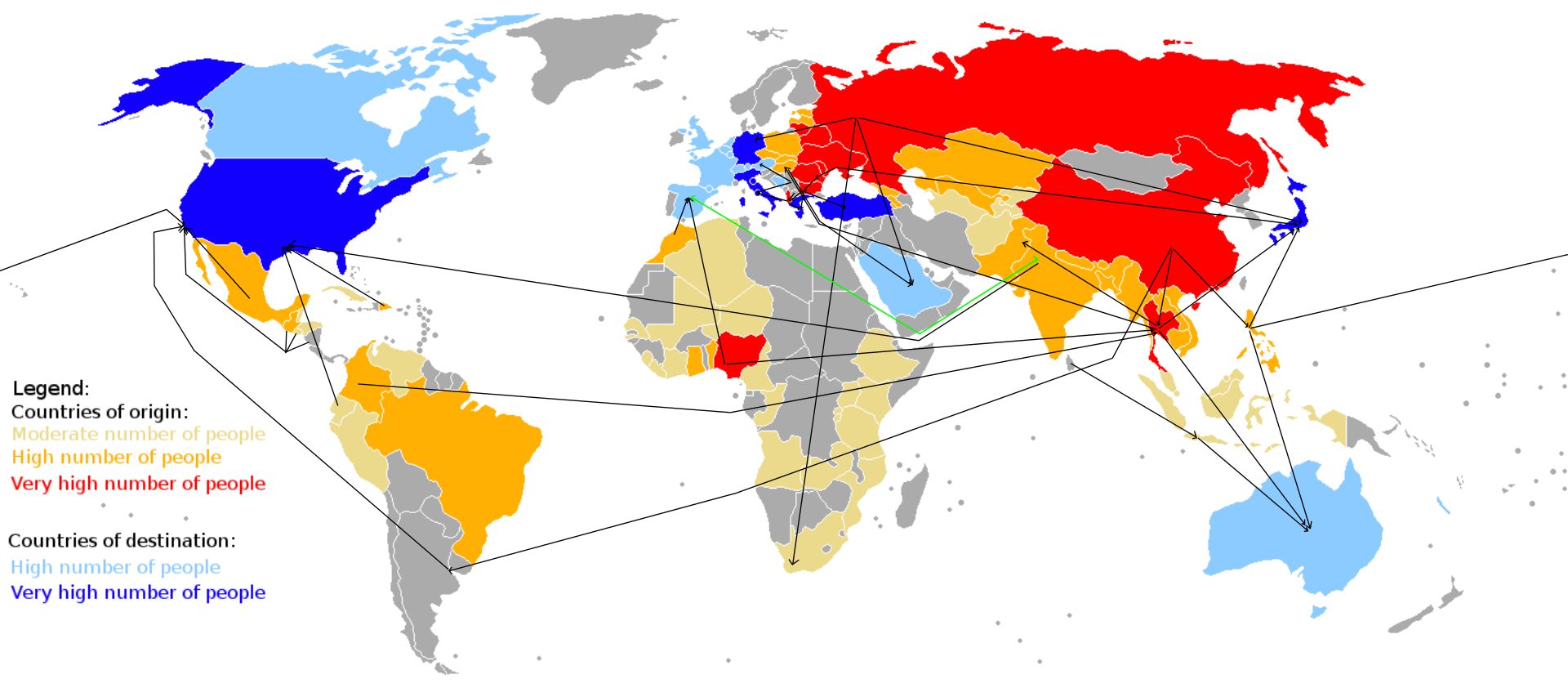
The Dominican Republic has a significant human trafficking issue. It is considered the third largest international crime industry in the Caribbean, generating an estimated 9.5 billion USD annually. Women from the Dominican Republic can be victims of violence, forced sex, and prostitution throughout the Caribbean, North and South America, and parts of Europe.

Anti Slavery defines human trafficking as activities that involve recruitment, harboring, or transporting people into a situation of exploitation through the use of violence, deception, or coercion and forcing them to work against their will. Sex trafficking is this same principle, but the victims are forced into commercial sex acts. I will let a commercial sex act be defined as prostitution, pornography, and sexual performance done in exchange for any item of value.

The United Nations Office for Drugs and Crime estimates the following statistics for 2016

  • 51% of identified victims of any type of trafficking were women, 21% men, and 28% children
  • 72% of victims trafficked into the sex industry were women
  • 63% of identified traffickers were men, 37% were women
  • 43% of trafficking victims are trafficked domestically within national borders

Focusing specifically on the Dominican Republic, the human trafficking epidemic is particularly pronounced. Many women are often trafficked to Costa Rica and Panama. Sex trafficking aside, a majority of these trafficked people will be forced into labor. The Ministry of Labor reported that certain agriculture industries, such as sugar farming, are popular destinations for trafficked laborers, especially children. Elizabeth Thomas-Hope, in her book “Human Trafficking in the Caribbean and the Human Rights of Migrants,” claims there are over 5,000 Dominican commercial sex workers across Western Europe. In coastal resort areas, child sex tourists will arrive year-round.

There are many factors that can help explain why human trafficking is such a profound problem in the Caribbean. Poverty, unemployment, illiteracy, drug use, and gang membership are all individual causes of the high human trafficking rate. It is common for traffickers to work along the Dominican-Haitian border, and trick or coerce families into letting their children come with them, promising a quality life, only to exploit them for personal gain. Immigrants make up a majority of those trafficked. They can often enter into more vulnerable states, and suffer from physical and emotional abuse as a result. The United Nations International Children’s Emergency Fund was unsuccessful in finding an exact number of people who are trafficked because there are no indicators or registers, no legal processes on the situation, and very few complaints or reports of trafficking.

Sarah E. Mendelson lays out in her book “Born Free: How to Prevent Human Trafficking” that human trafficking is not one of the explicit goals defined within the Sustainable Development Goals. However, human trafficking is a problem that will be addressed by several of the 17 sustainable development goals, such as gender equality, decent work and economic growth, as well as peace, justice, and strong institutions.

The Dominican government has shown little effort or initiative in solving this problem. In recent years, there has been no national public awareness campaigns for human trafficking, a lack of prosecution for arrested individuals, and a lack of funding to reduce the demand for commercial sex.

————————————– Read More ————————————–

Changing the topic now, artificial intelligence is an area that is lacking diversity. A report from the AI Now Institute claims that due to an larger proportion of white males in the field, the technology is at risk of perpetuating power imbalances and historical biases. An article by Rachel England, of Engadget, claims that consequences can range from hate speech-writing chat-bots to racial prejudice in facial recognition. The report also found that only 20% of professors in AI were female, and that less than 4% of large tech companies like Google, Facebook, and Microsoft’s employees, were black. It will take great effort at every stage of AI, from research, to development, to marketing and sales, in order to solve this diversity issue.

Post #5

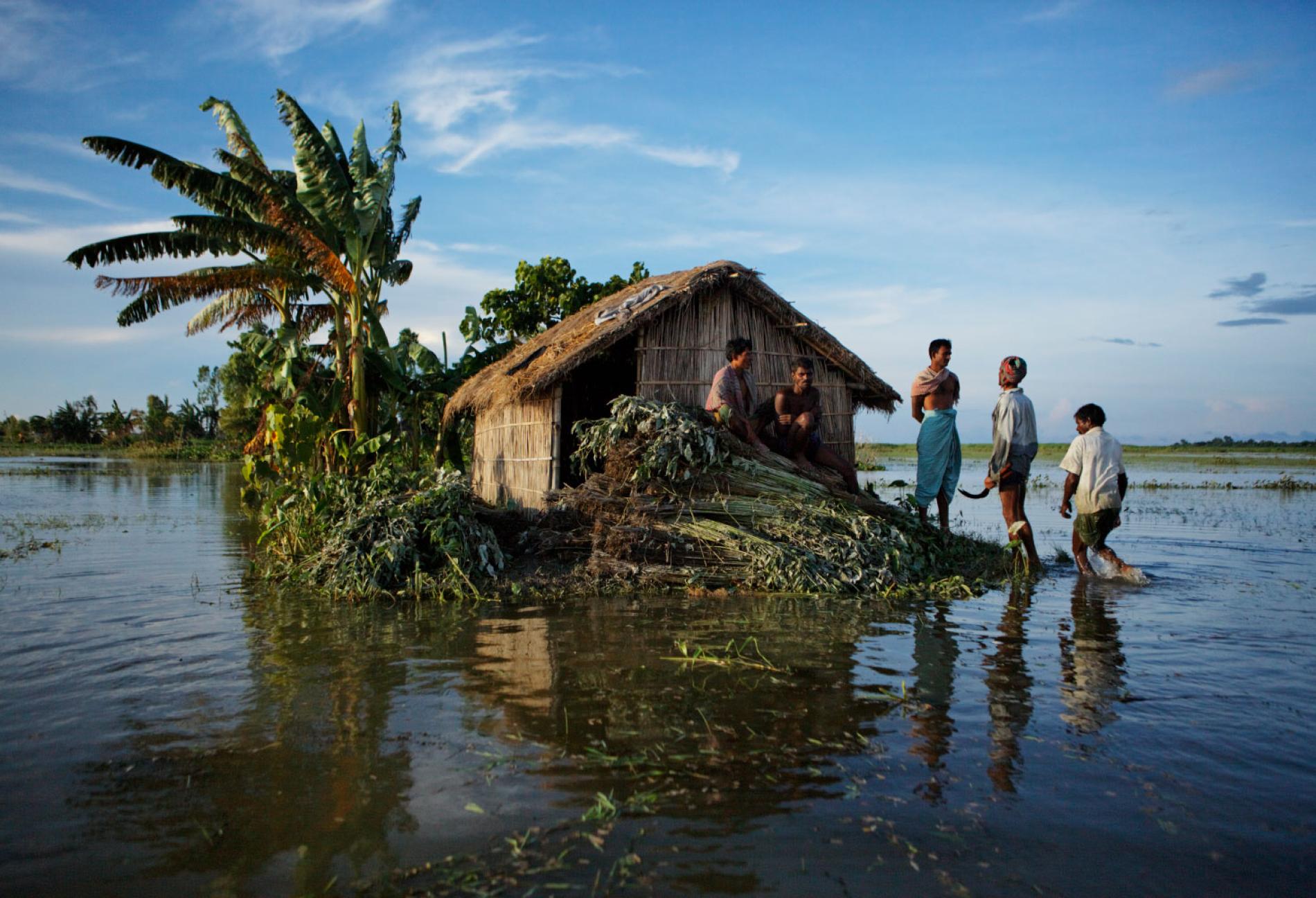
When it comes to the topic of climate change, one of the often overlooked consequences is that of the threat to human rights. As I discussed in last week’s post, the issues regarding climate change that seem to take center stage in today’s media are largely environmental. You will hear people protest about the damage that we are doing to our planet, but what about the people who are directly affected by those changes?

Which human rights are most affected by climate change? According to a report from the Office of the High Commissioner for Human Rights (OHCHR), there has been an increase in frequency of “extreme weather events and natural disasters, rising sea-levels, floods, heat waves, droughts, desertification, water shortages, and the spread of tropical and vector-borne diseases…” All of these byproducts of climate change have a profound effect on several human rights, such as “rights to life, water and sanitation, food, health, housing, self-determination, culture, and development.”

The right to life is laid out in the Universal Declaration of Human Rights as the “right to life, liberty, and security of person.” Nearly every nation state has committed to the International Covenant on Civil and Political Rights (ICCPR), which says that “every human being has the inherent right to life.” However, as the effects of climate change become more pronounced, they pose an increasing threat to the right to life. When large countries and large corporations are polluting the earth at a much higher rate than people who live on small island nations, and are responsible for the natural disasters caused by climate change that can kill so many, are they indirectly posing a threat to those people’s right to life? Along with this, as climate change can force certain populations to move from their native land, only out of the necessity of survival, it poses a direct threat to people’s right to self-determination.

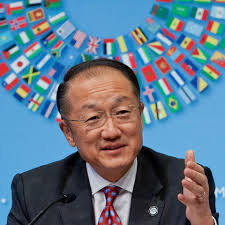
The right to human development is significantly hindered due to climate change as well. In the words of former World Bank President, Jim Yong Kim, “unless the world takes bold action now, a disastrously warming planet threatens to put prosperity out of reach of millions and roll back decades of development.”

Climate change will also affect many people’s right to food. The UN Declaration of Human Rights contains the right to be free from hunger. Rising temperatures across the globe expose vulnerable areas to the deadly conditions of famine. Many areas have experienced desertification, water shortages, and untenable soil making it difficult to produce enough food for everyone. According to the Intergovernmental Panel on Climate Change, “climate change is projected to reduce renewable surface water and groundwater resources in most dry subtropical regions… intensifying competition for water.” According to a World Bank report, a 2 degree celsius rise in average global temperatures could result in one to two billion people no longer having a sufficient supply of water.

The range of human rights that climate change threaten expands to include the rights to health, housing, education, and the rights of future generations.

We will be most impacted as a species when climate change becomes such an issue that entire cultures will go extinct. When a species as a whole loses a culture, we don’t just lose individuals, we lose a way of life, ideas, languages, and diversity. Cultures that become endangered are on average more likely to be located in areas that are most affected by climate change. Some of these cultures include: Siberian indigenous groups in Russia, the Innu in Canada and parts of the arctic circle, the Guarani in Brazil, the Maasai in Kenya, and the San people, who roam the Kalahari in Botswana. Losses of cultures are a loss to all of humanity.

Post #4

Recently I read an excerpt from Moral Ground: Ethical Action for a Planet in Peril, by an Inuit woman, Sheila Watt-Cloutier. The premise of the book is to bring light to the human rights issue of climate change. Specifically, circumstances due to climate change that put certain people, communities, and cultures at risk. If you search google for issues associated with climate change you will almost exclusively get results that mention degradation of environments, extinction of species, changes in weather patterns, and rising temperatures. As climate change has become an increasingly pressing issue, it has become even more interconnected with politics. As long as there is money to be made somewhere, there will be someone doing something to make that money, regardless of what it does to the environment. This is why businesses with deep pockets can lobby governments to not implement new policies, or even to deny climate change all together. The center argument that humans are ruining the planet is not the argument that needs to be made anymore. No matter how badly we treat Earth, it will be able to recover. Planet Earth can survive without humans, but humans cannot survive without Planet Earth. The argument that needs to be made is how climate change affects people.

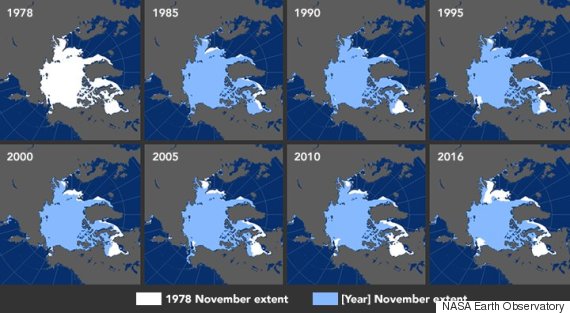
Sheila Watt-Cloutier goes into detail about the effects that climate change have had on her home environment. The Inuit live in the arctic circle, in parts of Alaska, Canada, Greenland, and Russia. Primarily dwelling on frozen ocean and permafrost, their main method of transportation is dog sled. This is the only area in the world where ice and snow can be used to travel efficiently on. Even within her lifetime, Cloutier has noticed such a rapid change in climate that she can no longer use the ice to travel, forcing some Inuit communities to relocate. “…eroded landscape, contaminated drinking water, longer sea-ice-free seasons, melting permafrost, (irregular snowfall), and new species of birds and fish…” are just some of the issues due to climate change that she lists.

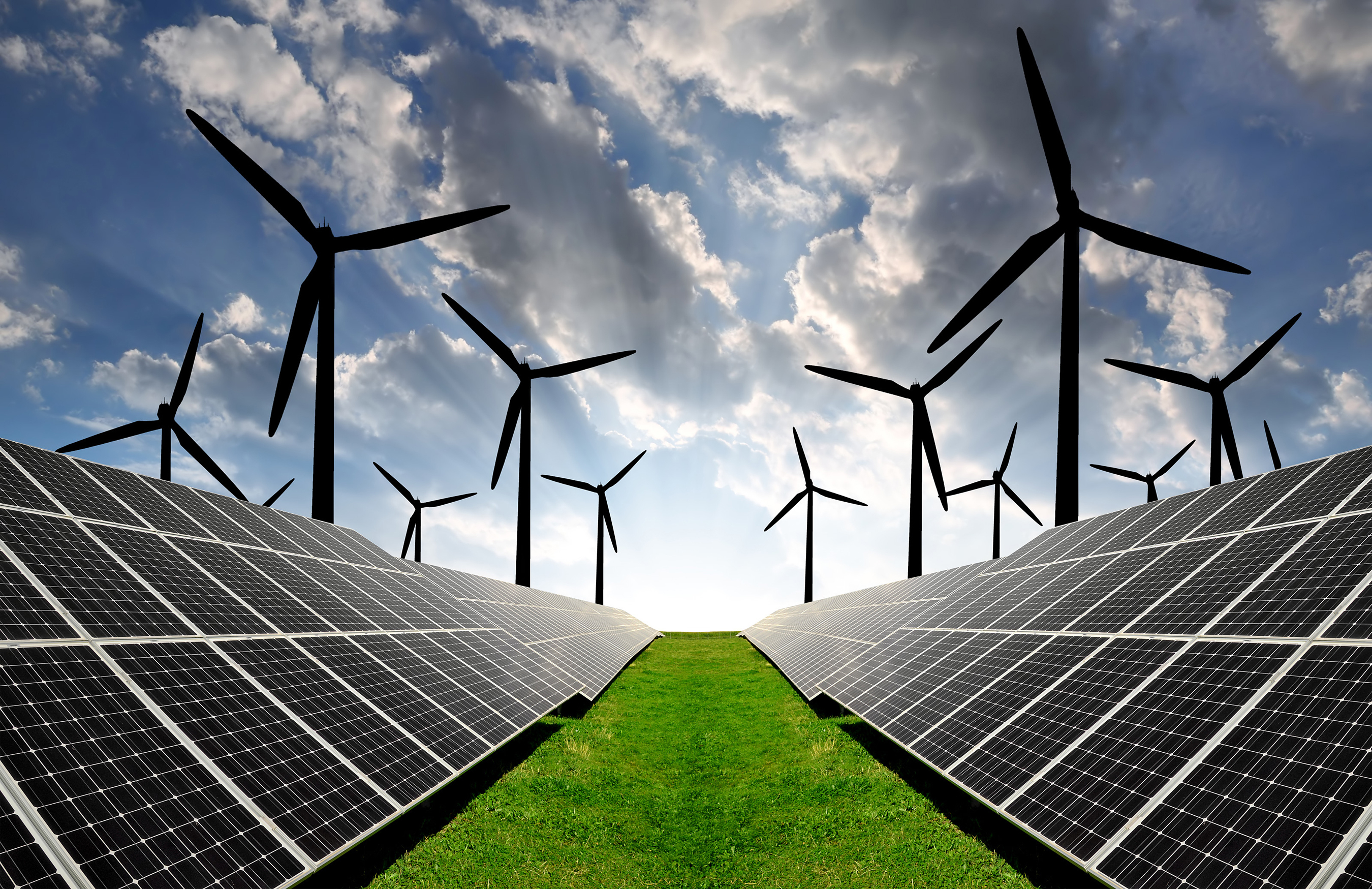
What is currently being done to combat climate change? As more and more pressure is put on executives to use there pedestal to do something about climate change, changes will start to happen. However, worldwide protests and brute force are not the main driving force that will cause change. Now that new methods of clean energy are coming around and becoming just as profitable as traditional fossil fuels, large companies and governments are shifting focus. According to a report by Jessica Lowrey, some of the largest wealth management companies such as Vanguard, BlackRock, and Fidelity voted in favor of climate resolutions for the first time. Along with this, multiple oil giants, such as ExxonMobil, were forced by shareholders to disclose risks associated with climate change. Entire nations are pledging to no longer invest in fossil fuels. Countries such as Sweden and France are planning to phase out all greenhouse gas emissions by 2045, and many worldwide companies have committed to sourcing from 100% renewable energy.

More so today than ever, sustainability requires innovation. With innovation, comes the opportunity to make money from investment. When governments, investors, and energy companies have ways of making money from renewable energy, they will not hesitate in doing so.

The Dominican Republic has its share of environmental issues. Its major issues include deforestation, water supply, and soil erosion. Because of the soil erosion, the coral reefs surrounding the island are being damaged as well, decreasing biodiversity. According to the UN, as of 1993, 20,000 hectares of forest (1 hectare = 100 acres) were being cut down each year due to commercial interests.

The Nature Conservancy is one of many environmental groups that works within the Dominican Republic to “protect its nature, preserve its life.” Some of the work they do includes protecting freshwater sources, protecting marine and coastal environments, and promoting sustainable fishing practices. Fundemar is another environmental organization working in the Dominican Republic to promote the sustainable use or marine resources and ecosystems. Overall, there seems to be a moderate amount of action being taken in the Dominican Republic to preserve the environment, but there is only so much can be done with limited resources.

Post #3

Nationalism the sense of pride that one feels as a member of a nation state. The term is used often today in the media and is often used very loosely to refer to any opposition to globalization based on a feeling of connection to a national identity. Not to be confused with patriotism, nationalism is often a more radical form of political and militaristic movements. Nationalism is focused around a country’s language, culture, and sometimes race. Nationalist countries are less likely to join world organizations, maintain a higher view of themselves, and promote themselves at the expense of others. According to Fareed Zakaria, nationalism is a danger to the world because it promotes violence. He gives examples of average, everyday people who can have a sense of hate toward other nations for no apparent reason. Nationalism a positive view of taking control of other nations, seeing themselves as the superior nation. In its most extreme forms, nationalism has led to war, genocide, and other horrific tragedies.

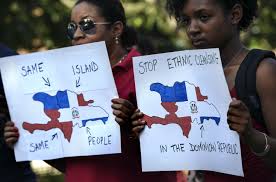
One long standing theme of nationalism in the Dominican Republic is their hatred toward their neighboring country, Haiti, with whom they share the island of Hispaniola. In 2013, the highest court in the Dominican Republic ruled that anyone with parents who entered the country illegally would not be considered legal. Until 2010, anyone born on Dominican Republic soil was considered a legal citizen. In fact, it was declared that anyone born between 1929 and 2010 who had foreign ancestry were “not true Dominican Nationals.” The result of this ruling was a mass deportation of those who did not meet legal immigration status, a majority of which were Dominicans of Haitian parents who entered the country illegally.

According to the Michigan State University College of Law, the plan was promoted by the Dominican government as a way to “…reform its immigration system and erase the statelessness within the country.” The government even claimed that “no person born in the Dominican Republic will be expelled from our territory.” This turned out to be a false claim as more than 200,000 people of Haitian descent have either been deported to or fled to Haiti. The tragedy here is that these people of Haitian descent are being deported for something they had no control over.

This is not a new idea in the Dominican Republic, the country has long been in a struggle with Haitians and has committed atrocities against them before. One of these events includes the Parsley Massacre. Dominican dictator Rafael Trujillo made his intentions clear in a speech he delivered on October 2nd, 1937. He claimed that “Three hundred Haitians are now dead in Bancia. This remedy will continue.” The remedy, killing Haitians along the border between it and the Dominican Republic who were reportedly stealing crops, provisions, etc. from borderland residents, lasted for a mere 6 days. Estimated for the number of deaths range from 12,000 to 20,000.

The Dominican Republic has experienced above average economic growth. According to a 2013 United Nations Development Program report, its average annual growth rate was 5.4%. Due to a more diversified economy, and strong trade agreements internationally, its GDP rose 50% from 2000 to 2011. Despite these economic advances, income inequality has increased as well as poverty. According to a World Bank report from 2014, the poverty level was 32%, and by 2011 had risen to 40.4%. The report states that income inequality is a larger issue in urban areas. It is difficult for the poor to bring themselves out of their situation. Between 2000 and 2009, 41% of the Latin American and Caribbean population were able to move into a higher income group, while in the Dominican Republic only 2% was able to move up. When there is a large gap between the rich and the poor, a relentless cycle of poverty persists. The Dominican Republic ranks 146th in the world by the GINI coefficient, making it one of the most unequal countries in the world.

Post #2

Spanish is the official language of The Dominican Republic. In different parts of the country, you can find different dialects being spoken. The most common of these is known as Dominican Spanish, a subset of Caribbean Spanish based on Andalusian and Canarian dialects of Spain. Dominican Spanish includes a lot of pieces of other languages and dialects, it borrows words from Arawak, Spanish words that are no longer used in modern Spanish, and even includes words from African languages spoken by those who immigrated to the island of Hispaniola, on which The Dominican Republic sits, after the Taino extinction.

The Dominican Republic also has minority languages, such as Haitian Creole. It is spoken by an estimated 160,000 people, or about 1.5% of the population, of which a majority are of Haitian descent. Haitian Creole is largely based on French, and is influenced by Spanish and West African Languages. A majority of the Haitian Creole speakers in the Dominican Republic are bilingual, with most having Spanish as a second language. The language is sometimes considered a foreign language in the Dominican Republic, and has not been given official recognition.

Another minority language spoken in the Dominican Republic is Samana English. It is spoken by around only 12,000 people who reside in the northeastern part of the country. Most individuals who speak this language are descendants of black immigrants from the United States, known as the Samana Americans. It is similar to Creole English and Caribbean English Creole. Due to government policy, Samana English is in decline in the Dominican Republic and is now considered an endangered language.

The Dominican Republic was a founding member of the United Nations, joining in its formation on October 24, 1945. According to its website, the Dominican Republic has been involved in numerous initiatives, especially those relating to women’s rights, elderly rights, and domestic violence. The Dominican Republic played a pivotal role in the creation of the International Day for the Elimination of Violence against Woman, which is observed on November 25.

On December 28, 1945, the Dominican Republic became a member of the International Monetary Fund, where they have had little lending and borrowing activity. Since their membership began, they have drawn just over 1.6 billion SDR, with close to half of that amount outstanding. The Dominican Republic has been a member of the World Trade Organization since March 9, 1995.

The Dominican Republic has a GINI index of 45.3, as of 2016. This measures the extent of much the wealth and consumption distribution deviates from an equal distribution. A score of 0 means perfectly equal distribution, while a score of 100 means perfectly unequal distribution. When looking at GDP based on PPP, or purchasing power parity, The Dominican Republic ranks 70th in the world, according to World Bank. GDP (PPP) is a measure of a country’s GDP relative to purchasing power. In other words, it is a measure of “how many goods can that much money buy you” in any given country.

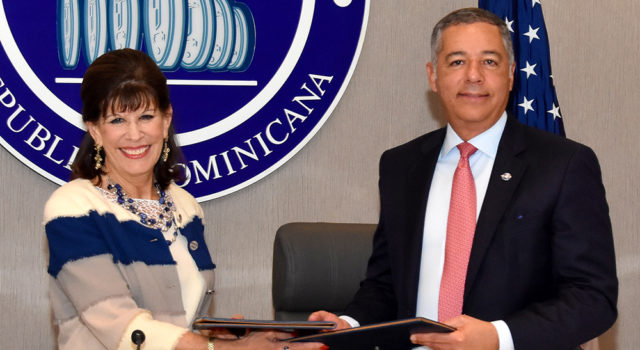
This week, the governments of the United States and the Dominican Republic made a pact to facilitate the investments of US companies in the Dominican, via the financial entity, Overseas Private Investment Corporation, or OPIC. This simplifies and streamlines the approval process for US companies to invest in Dominican companies.

Post #1

Sunday, February 3rd

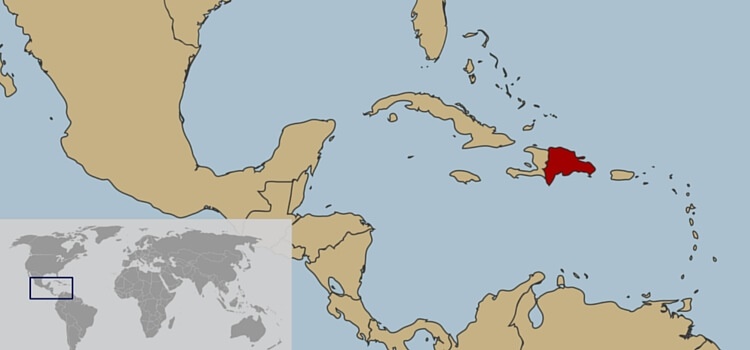
  The Dominican Republic is a Central American country sharing an island with the Republic of Haiti. Originally inhabited by native Taino people, it would be colonized by Europeans in the late fifteenth century, with the colony of Santo Domingo becoming the first European settlement in the Americas. Today, the Dominican Republic has an estimated population of 10.7 million, is known for its agriculture, mining, and tourism industries, and ranks ninth in economy size among Latin American countries.

The Dominican Republic within Central America

The Dominican Republic has a Gini index score of 45.3. This is a measure of income or wealth inequality, where a zero represents maximum equality, and a one represents maximum inequality. Its fragile state index score is 69.2 out of 120, down from 77.7 ten years ago. The higher this score, the more fragile the state is, indicating an increased risk that the state falls into chaos

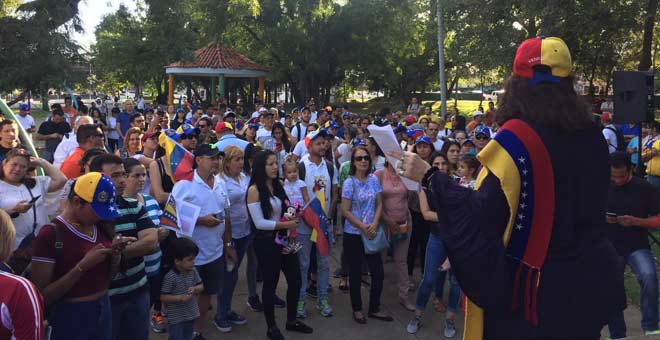
Over the weekend, groups of Venezuelans residing in the Dominican Republic gathered in a park in Santo Domingo to protest Nicolas Maduro. They are demanding that Maduro steps down from his presidency, either to give way to self-appointed interim president Juan Guaido, or re-hold an election. The protesters received the support of Dominican legislator Rafael Bisono. The Venezuelans abroad claim to be pleased with the political movement happening in their home country, emphasizing their hope that this situation brings about changes for the better.

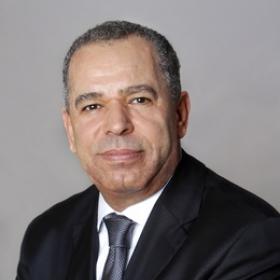
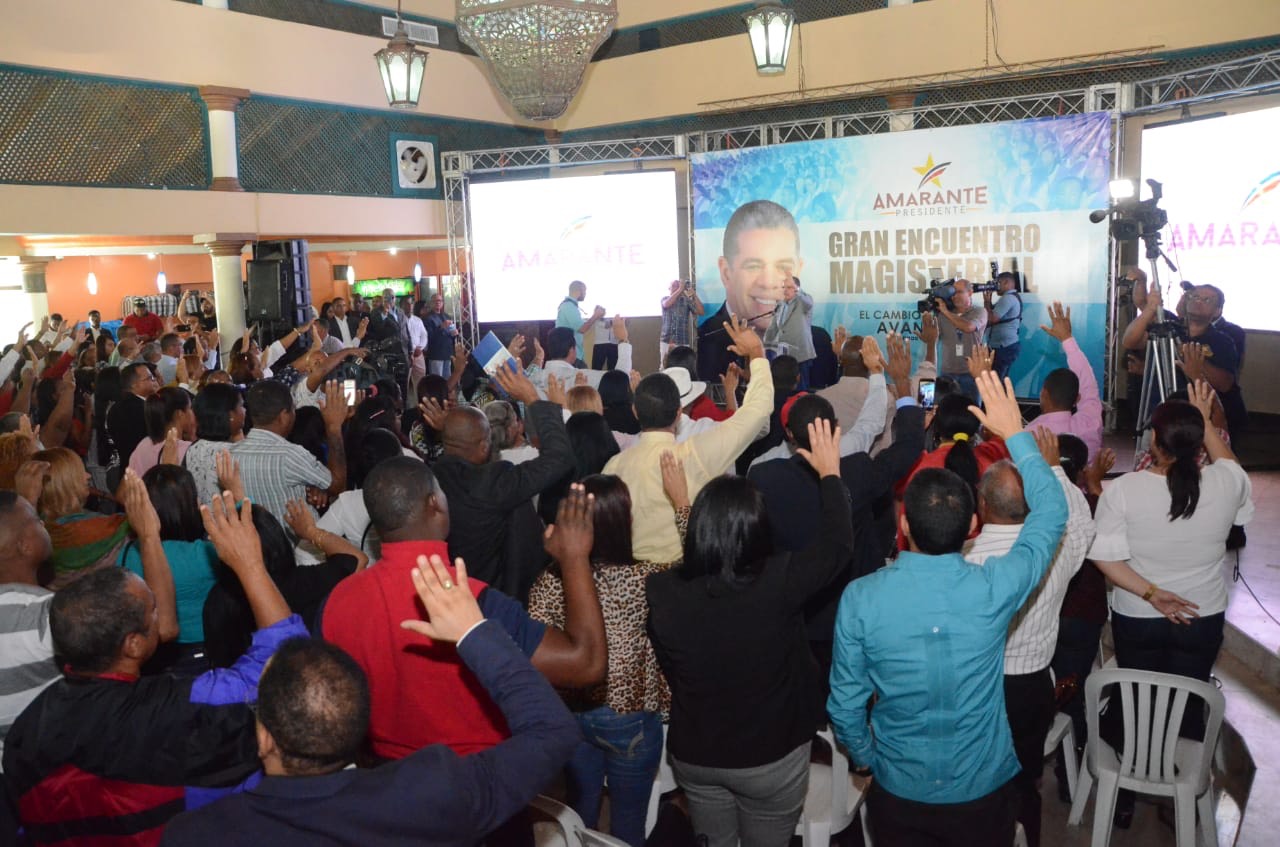
Presidential candidate Carlos Amarante Baret claimed today that he will take over the presidency in 2020 from Danilo Medina, and per Almomento, “…continue consolidating the economic and social transformations, the Educational Revolution and the living conditions of the professors.” Amarante Baret has a background in education, formerly serving as the Minister of Education, he initiated the Educational Revolution. Amarante Baret has gained notable support, today he spoke before thousands of teachers at a Grand Magisterial Encounter at the Club de Legisladores in Santo Domingo Este. He has stressed the facts that during his tenure as the Minister of Education, teachers’ salaries increased, and they received scholarships for preparation and training courses.

Amarante Baret confidently assures he will be the successor to Danilo Medina

Renewable energy is on the rise, as authorities have approved of steps to be taken to improve and increase the amount of energy coming from renewable sources. Per EFE, “Authorities in the electricity sector approved short-term action lines to promote renewable energy in an organized, planned and transparent manner, prepared by the inter-institutional commission that evaluated the impact of that area on the electricity system.” This information comes from a press release sent today from the Ministry of Energy and Mines. Certain areas of interest include wind and solar power. Currently in the Dominican Republic, only 5.7% of energy consumed comes from renewable sources, while more than 80% comes from fossil fuels.

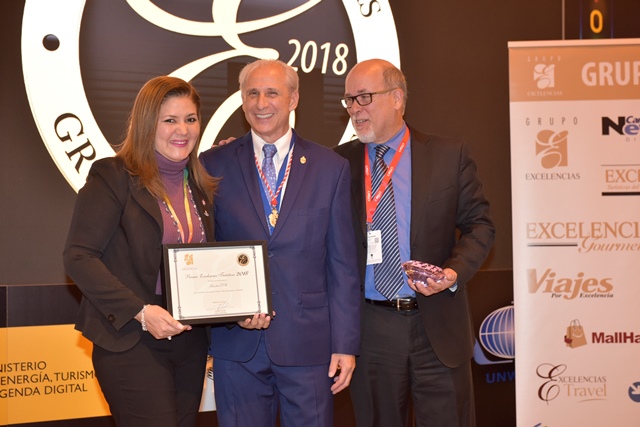
Teddy De Lara and Diana Toribio accepting the awards

The Dominican Ministry of Tourism announced on Tuesday that the Dominican Republic won two prizes related to tourism at the International Tourism Fair. According to EFE, Dominican Republic Scooters were “recognized for the growth of inclusive tourism in favor of vulnerable segments, thus consolidating the company with the greatest potential for growth in the accessibility sector.”

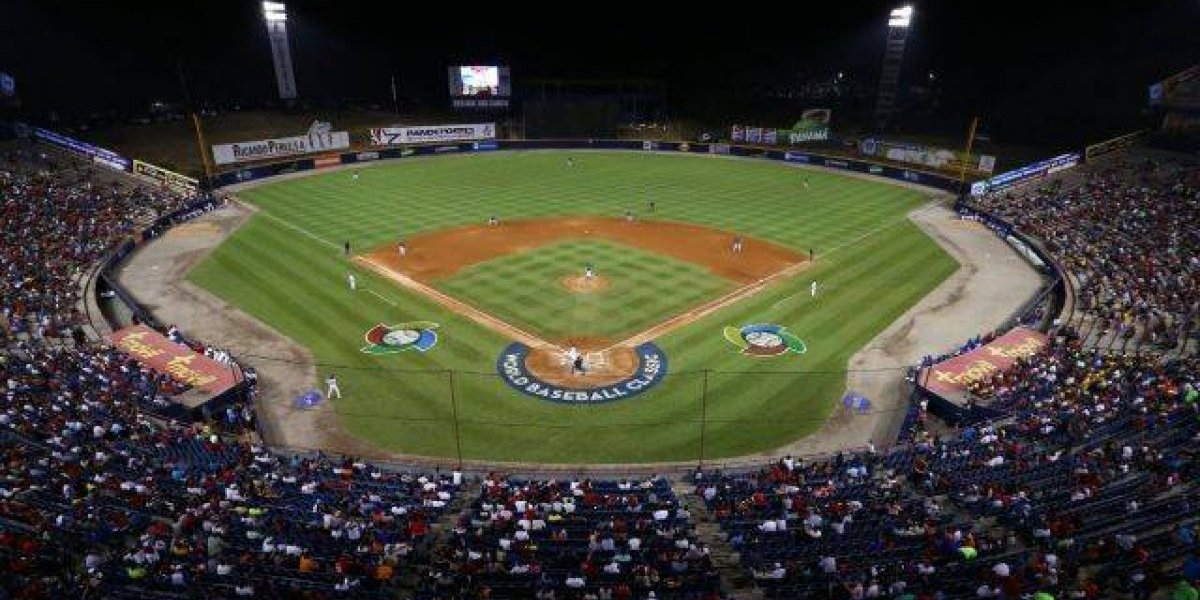
On Monday, February 4th, the Eastern Stars of the Dominican Republic will play Cangrejeros de Santurce, from Puerto Rico, beginning the 61st Caribbean Series, a baseball tournament held in Panama. This year is the first time a new tournament format will be used. Teams will have to play each other twice in the preliminary rounds before entering the elimination round. The tournament will close on Sunday, February 10th, at Rod Carew Stadium in Panama City.

Rod Carew Stadium