Post #8

Guest lecturer 1- Jung Ha-Brookshire

She stuck out to me first, because my roommate is a TAM student, so she has had Jung Ha-Brookshire in class before and has said how interesting her lectures are. She discussed how she traveled to South America to see a factory that a guy started to reduce the amount of gang activity in the area. I thought it was interesting because I never would have thought that this sort of thing would work. I would have thought the gangs would have gone for the factory owner, or tried to get people on the inside. But it was amazing to see how the actions of one man changed the lives of almost everyone around him by them not having to worry about gang activity anymore. 

I also thought her lecture was interesting because she has done so many different things throughout her life, and traveled to many different places in the world. You could tell she was passionate about what she was talking about, and she definitely knew a lot, as well. 
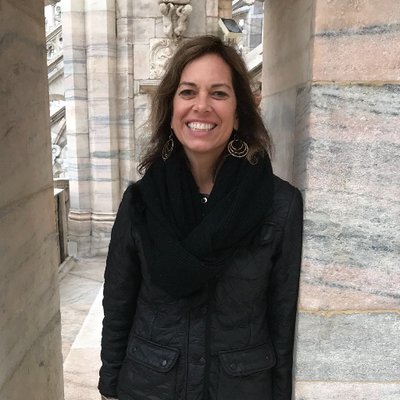
Guest lecturer 2- Lisa Palmer

Lisa’s lecture really stuck out to me because, like Jung Ha-Brookshire, she seemed extremely knowledgeable on the topic she was talking about, as well as enthusiastic about the issues brought up. I liked how even though she is a journalist, speaking from that perspective, she was able to bring up other topics from previous experiences so that we were all more interested, and not speaking solely to journalism students. 

I also found it fascinating how many people she has talked to and interviewed, just for her book alone, and how easily she was able to keep track of everyone she has ever talked to. She mentioned her book quite a few times, and some background on how she wrote it, which I thought was interesting as well. I got curious what her book is like, so I plan on ordering it after the school year ends, and I have time to read it. 

Before this class, I did not know much about Honduras besides the big stories in the news. After this semester, I know so much more about this country, and the region in general. I learned that there are large amounts of violence and corruption, which affects the whole country socially, economically, politically, etc. I learned that there are massive caravans of people trying to escape the country (and that region in general) because of the corruption and poverty, and trying to move further north to escape to a better life. Looking at this and the instability in the country, It is obvious that major changes need to occur politically and socially. They definitely need to change leaders and go towards a more democratic government to reduce corruption. I also think education needs to be increased in the country, and seen as more important than it is. 
The NGO that I researched for this last paper, beca, focused on education in the country, as well as shared success stories of individuals on the website where they said where previous students were working currently. Some students even came back to teach at these schools as adults, which I thought was important. I thought this was important because it all stemmed from someone who visited the country and decided there needed to be a change, so she took action. 

Researching this country, as well as hearing about different countries in class made me more aware of what is going on around the world, because sometimes the mass media does not cover it. I think it is important to be more critical about what is going on in the world, and to understand why things happen the way they do, and this class greatly helped in doing this. 

Sources

https://muckrack.com/lisa-palmer-8

http://tam.missouri.edu/faculty_brookshire.html

Blog Post #8

Throughout the school year I’d say that guest speaker Joe Erb, in my opinion, gave one of the best presentations.  His story was fascinating and real and I really enjoy seeing people work hard towards something they care about, and in Joe’s case there was no financial motivation which I respect.  I feel that unlike most people, I saw this story as more motivational than informative on the Cherokee language. Joe’s resilience to give his culture it’s representation on the modern day media platforms is amazing.  Tech giants like Google and Apple essentially told Joe, “Why should we care about programming your language if only a small amount of people use it, there’s millions of people who speak a language in India and we don’t even have that, what’s the point?”  

MU Professor Joe Erb

Even after being denied, Joe decided to take things into his own and taught himself how to code so he could program it himself. To corporations like Google and Apple adding new, smaller languages does not help their bottom line at the end of the day, therefore they have no reason to go out of their way to do such a thing.  Joe, on the other hand, had the motivation to go through all these hoops because he wanted to see his culture be represented in the modern era. Without that representation of his culture in the modern day, younger Cherokee generations would feel as if their culture did not matter and it would eventually die out all together.  Joe’s next step was to get Cherokee nation and other non state bound people on Google Maps. I’ve never seen someone so driven by their heritage to go that out of their way to accomplish something they believe in showing me that he has strong moral character. I someday wish to care about something that much, that I’m willing to do whatever it takes to accomplish it.

Image result for cherokee language
Chart of the Cherokee Language

The next lecture I’d like to touch on is Nick Monaco’s covering online bots and trolls.  Prior to the lecture I knew what bots and trolls were, but I never knew to what extent they could have effect on people.  I was aware that people could buy followers and likes on social media and my DMs have been bombarded by fake accounts posing as scantily clad women, but was not familiar with how bots could sway the political landscape.  

Image result for bots

Monaco’s presentation let me know how harmful bots really could be, I had previously just seen them as a nuisance and nothing more, but with the power to sway political elections I feel as if something needs to be done. The term ‘megaphoning’ was interesting as bots would replicate a message so it seemed like it was being talked about more than it actually was.  I saw this as “I’m yelling louder, so I’m right” kind of thought. Anyway, this was definitely one of the more informative lectures that we had.

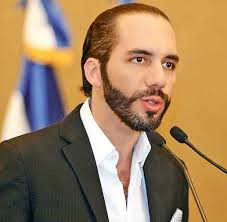
After researching and writing over the country of El Salvador, I definitely gained some new insight on the country and the region.  I learned about the recent history of the country and civil war that is the underlying factor in the country’s political turmoil. Conveniently, I was assigned this country the week of their Presidential elections where for the first time since the Civil War a third party candidate was elected president, marking a truly historic moment in the country’s history.  I look forward to keeping up with news from El Salvador in the near future as President-elect Nayib Bukele (37) is set to take office starting June 1, 2019.

Under his leadership I hope to see the country thrive and disband the political corruption that has shackled the country for decades. Fixing the political system will open the floodgates to fixing other problems in the country such as equality, environmental concerns, and most importantly gang operations.  Gangs like MS-13 dominate the area and recruit boys at young ages and spread violence throughout the region. I really hope Bukele can help towards ending the gang violence as the images I’ve seen of the violence are quite horrific. On a positive note, I learned that El Salvador was the first country to ban metal mining in an attempt to decrease pollution, although they still have issues with clean water. It appears that the future looks bright for El Salvador as new leadership is about to take place, I hope to continue to see an upward trend in the country’s well being in the years to come.


Blog #8-Haiti

Image result for cherokee gmail
This is what the Cherokee Gmail looks like.

            Of the many presentations that we had in class, I would have to say that my two most memorable presentations was the digital storytelling by Joseph Erb. Mr. Erb told us about how he was brought into a tribe of the Cherokee Indians and learned their language, and in fact worked with Google to help incorporate their language. Now, you can change your language setting in the bottom right of your corner on Google’s homepage and in Gmail, and can even select the original Cherokee language. Joseph told us how originally worked will Google on this project because he wanted the younger generation to reconnect with the language of their elders, and didn’t really expect that the older adults and elders of the Cherokee tribe to also take part in this and voice their claim. Another story that Mr. Erb went into great detail was of how he was invited up to their Cherokee land to watch and observe an uncovering of a body. What had originally happened was that due to a damn being built by an old cemetery, the cemetery had become flooded with water, which started to erode the graves away. Joseph flew out to the area to document the excavation of what was thought to be just the legs of an women. However, the archaeologist would also unearth the rest of the body, including the skull. They also found the a ring and a necklace, indicating that this person was a well-respected elder, and therefore made the whole excavation more complicated, due to a new set of rules and things that had to be implemented now. I never thought that digital storytelling was a degree in which someone like Joseph would have so much leeway into his work and his choice of formatting.

Cloud services can be reached by any device, so long as you have the correct information to access the data.

            Another lecture that I found to be very good and memorable was the lecture given by Scott Christiansen, a professor of Management here at the college of business at Mizzou. Dr. Christiansen discussed the drivers of exponential growth, and how “Moore’s Law” affected the economy. Moore’s law is the observation that, “over the history of computing hardware, the number of transistors in a dense integrated circuit doubles approximately every two years”. Essentially Moore’s Law is a way to predict when the next big thing might come. He also discussed FPGA’s, field-programmable gate array, which are an integrated circuit designed to be configured by a customer or a designer after manufacturing- hence “field-programmable). He also discussed the technology behind cloud computing. Cloud computing is the practice of using a network of remote servers hosted on the internet to store, manage, and process data, rather than store on a local server or a personal computer. For Apple, they have iCloud, while Google has their very own Google Drive. However, each computer has RAM and a hard-drive, which are more commonly used local storage devices. The upside to using local storage devices is it is more easily applicable to being accessed, while the downside could be that if your hard-drive were to become corrupt (happened to me), you would instantly lose all of your files. Cloud services are reliable, and relatively cheap, or even free. Personally, I believe that this lecture was one of the better ones and more memorable because he connected to me with the passion of talking about computers, something of which I have a love for.

Image result for Haiti rebuild
Efforts to rebuild Haiti are currently underway, however help from other Nations would be appreciated.

            While doing research on Haiti, I was struck with the realization of just how poor the country truly is. After suffering such a heavy loss during and after the earthquake that struck the nation in 2010, I learned that Haiti did not and might not ever reach back to its full potential. Haiti, a nation with beautiful scenery and wildlife, is currently struck by a series of misfortunate events, including poverty and famine and lack of infrastructure. Buildings are very slowly being rebuilt, and people are starving every day, trying to rebuild their lives and provide for their families. I think the most important thing that I learned from doing my research on the country of Haiti is the fact that everything I have been given in life has been taken for granted, and I only recently started to see that people around the world are going through much more difficult times and trials. I am very grateful that I was given the opportunity to study and learn more about Haiti, as it is a very beautiful country and has much to offer the world, if it were given the chance and support to rebuild.

Post #8

Over the course of this semester I was introduced to many new ideas and information. Each week we had a guest lecturer come and speak about their area of expertise. Topics ranged from globalization, politics, and economics, to human rights, humanitarianism, and sustainability.

One lecture I was particularly interested in was given by Nick Monaco. Monaco is part of a social network analysis company called Graphika. He specializes in disinformation detection and analysis. An interesting example he gave was that during the 2016 US presidential election, they were able to detect that as many as one-third of pro Donald Trump Twitter accounts were bots, which are simply computer programs designed to post Donald Trump propaganda. What’s even more odd is that some of these they were able to tell originated in Russia. This is significant because these were used on a platform where anyone can speak their opinion. A large amount of information like that can be effective in swaying the public’s opinion. Would the election have had different results were these bots detected and removed?

Another point Monaco brought up was how some states are deploying disinformation campaigns to silence government critics. Some of this “state sponsored trolling” includes rape and death threats, bots used for attacks, spreading edited images, and spreading incriminating information about targets. My first reaction when learning about this was that it seems like a violation of free speech. That is not necessarily a right in every country, but this state sponsored trolling was going on in the US as well. If the US government would use resources to silence critics, does that mean they have something to hide?

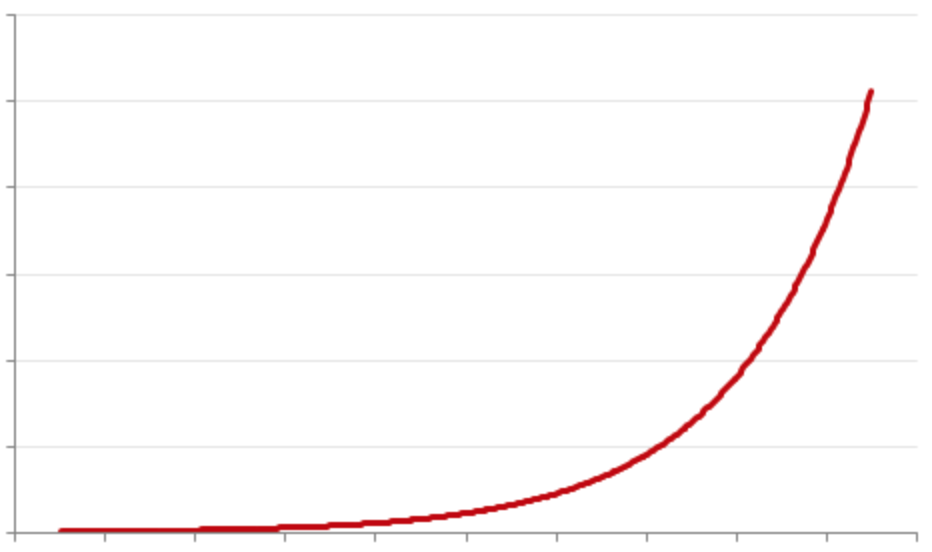
The other guest lecturer I was most interested by was Scott Christiansen. He is a professor of management in the Trulaske College of Business. His lecture was about the exponential growth of technology, and the role that it will play in our developing society. An observation he demonstrated was Moore’s law, the trend that computer processing power doubles about every two years. He explained that this is because as we are able to fit more processing power into a smaller space, we can get more power out of a smaller and smaller amount of material as time goes on. This trend is expected to continue for a limited amount of time, due to physical limitations.

How will all of this affect our society? Christiansen then explained that every technology goes through stages of exponential growth. Once something becomes digitized, it can grow exponentially. Eventually it will become advanced enough to the point where it will become demonetized, dematerialized, and ultimately democratized. For example, we now have digital music, digital cameras, digital movies, and digital money. Every technology could become democratized, and made a public utility, and not just a luxury, such as the internet. The FCC is currently trying to end net neutrality, while many argue that the internet is so advanced and a necessary part of life, that it should be a public utility.

My focus this semester was on the Dominican Republic. Through my research, I have learned that it really is a beautiful country with many great people, but it is far from perfect. Before this project, I had never thought to deeply into societies other than my own. It made me realize that there are issues in the world greater than what I deal with day to day. What shook me the most is the Dominican issue with sex trafficking. It is one of the worst in the world, yet nobody seems to be talking about it. The government recently decided to illegally deport almost a quarter million citizens of Haitian descent, and I never would have known about it.

The biggest insight I gained from researching this country has nothing to do with the country itself. That insight is this: read the news. Not just news about your own town or country, but about the whole world. We we live in a society that is more connected than it ever has been, but it’s easy to feel like you’re only a citizen of the country in which you live. That is far from the truth, as we are all citizens of the world. The best insight I had is not to just learn about the place you’re in, but learn about the entire world.

Post #6

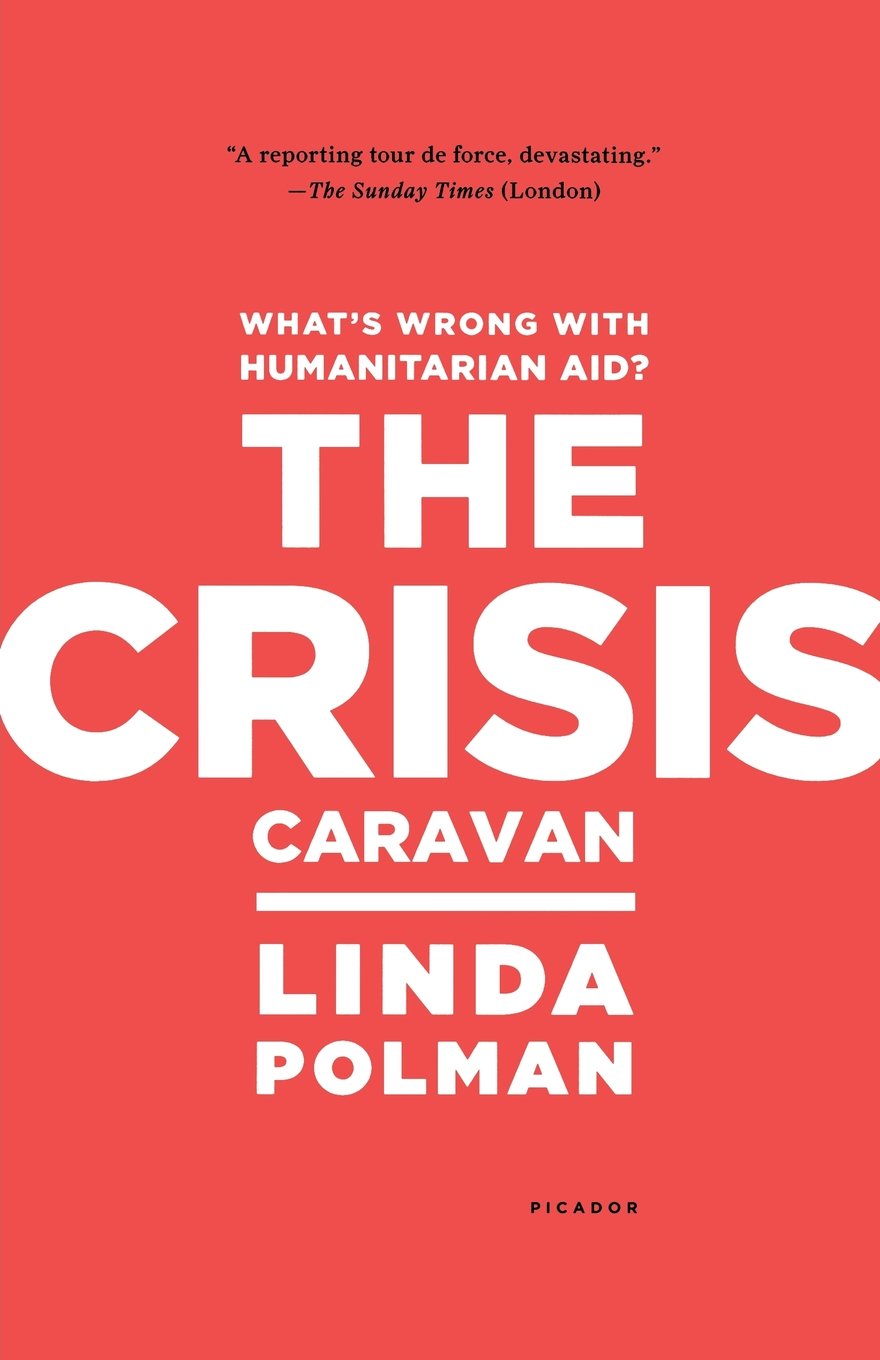
I recently read a chapter out of Linda Polman’s book, Crisis Caravan. The chapter was titled “Aid as Weapon of War,” and discusses what really happens to relief aid when you donate to an aid organization. It was new information to me. I am not usually one to donate to aid organizations, but if I was, I wish I would have learned this five years ago. Do you know dollar for dollar where your money is going when you give it to these organizations?

Polman begins the chapter with a story of when she was in Liberia, trying to access a warzone controlled by the Liberian rebel movement LURD (liberian United for Reconciliation and Democracy) in order to report as a journalist. Not only was she required to offer loaves of bread to pass through the roadblocks miles away, she then had to negotiate with a higher up to enter further into the warzone. She mentions some have outlandish requests, such as luxury shopping sprees, while others are merely food or cash. Here we already have a problem. If a journalist will have such a hard time getting into a warzone, how difficult will it be for humanitarian aid to reach as far as it needs to?

Polman continues to tell stories of how aid can be “taxed’ by warlords and other officials on its way to wherever it needs to go. In Somalia, some regimes would charge as much as 80 percent of what the aid supplies are worth. According to the UN, the Taliban claimed over one-third of food aid and agricultural support going through Uruzgan. In the Congo, leaders of the Hema people allowed international aid organizations in, on the condition that they gave their enemies nothing. After a tsunami in Sri Lanka, aid organizations could not step in to rebuild without negotiating with the rebel movement, the Tamil Tigers, who demanded a tax of 25 percent of the aid value, which was made up on the spot. I could go on, there are plenty of examples.

The issue with aid not reaching its intended destination, is that it could be doing more harm than good. Warlords have nothing stopping them from refusing to give access to aid organizations, this is why they negotiate and end up receiving a portion of the aid. With that in mind, do NGO’s who provide aid do anything other than prolong the conflict? It is not an easy debate, on one side, the argument is provide aid to the victims, only to have a significant portion of it go to the oppressors, which allows them to continue their activities. On the other side, the argument is to provide no aid at all, and allow victims to suffer even further.

Polman goes on to call out aid organizations as business dressed up as Mother Teresa. By this she means that they put on a facade of being helpful and caring, but that is just their way to earn money for executives. She mentions that journalists tend to stay away from aid agencies, giving them the automatic stamp of approval without research. Perhaps the image of being a helpful and caring agency deters journalists from really criticizing what they are up to. She makes the point that if an actual business was to provide aid, journalists would be all over it. I would have to agree, if a company that typically does not provide aid decides to do so, many people would believe it to be a cover of some plan to earn a profit.

The solution to this problem is not easy, because everyone’s opinion of aid agencies would have to change. A good start would be having journalists fully investigate these NGOs. All accounting records should be made public for organizations like these that are non-profit, to provide more transparency as to where the donor dollar ends up. This is something that can be easily implemented by a government.  For me, these changes would make me much more comfortable with donating money to aid organizations.

Blog Post #7

There is definitely a sex trafficking and sex slavery issue in Honduras. According to the US embassy website, Honduras Is a transit country, as well as a source for sex slavery. Everyone is affected by it, whether it’s men, women or children. Because it is an agricultural based country, there is also a lot of slave labor involved with physical work as well, which does not help the situation at all. According to usembassy.gov, “Honduras is a destination for child sex tourists from Canada and the United States”. The fact that people come from that far away to see that kind of thing makes me sick to my stomach, along with many other people, and there needs to be a way to stop it. The government, as well as many NGOs in Honduras and other countries are working hard to improve the situation. 

According to the article Born Free, by Sarah E. Mendelson, human trafficking is not one of the SDGs. She argues why it should be, but says every time she brings it up, it gets pushed back to the corner, or gets told that it does not matter as much, and other things matter more. People do not make human trafficking a priority unfortunately. I think if people were better educated on the subject, and it was talked about more, this would be different. I think people say it does not matter as much because they do not know fully all of the details and are not properly educated on the issue. If it was their daughter, wife, or someone that they knew who was personally affected by the issue, they would have something different to say. But because human trafficking is viewed to be a problem in majorly other poorer countries, it does not matter as much to some people. 

Sarah E. Mendelson

If we want to better combat human trafficking and decrease the amount of people affected, we need to improve education on the matter, like stated above. After people are properly educated on the subject, there needs to be more funding allocated to the victims, and improving the situation in general. We also need to educate the people who are buying the victims and who think that this is okay, because obviously it is not. It is dangerous for the people being sold obviously, and anyone else who gets involved. There are many survivors from human trafficking, but unfortunately, there are also many, many people who do not survive, and we need to improve the situation so that there are more survivors and less victims. 

There are always places that need more diversity, because I think that is an area that we are working on in general and not solely in one place. There could definitely be more diversity when it comes to resources and solutions to human trafficking. If there was more funding there could be more resources in helping the people affected from human trafficking, and we might be able to save more people as a result. 

Sources Cited

Trafficking in Persons

https://harriman.columbia.edu/event/learning-while-serving-reflections-five-years-working-international-development-and-diplomacy

https://www.un.org/development/desa/disabilities/envision2030.html

Blog Post #7

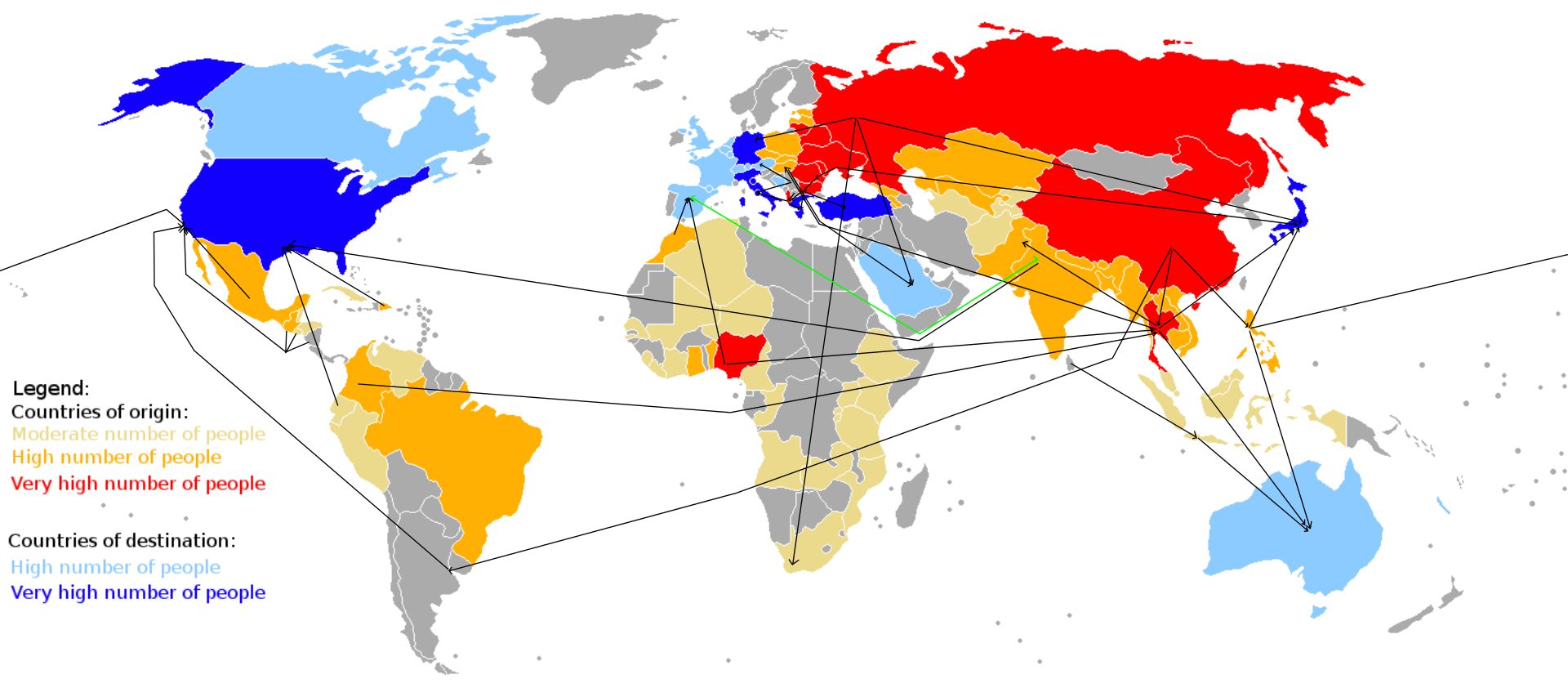
In 2017, El Salvador authorities investigated 76 human trafficking cases, that was up from 2016’s 55 trafficking cases.  Out of the 76 only nine were prosecuted and out of that, only 6 were charged with sex trafficking. With only 11% of investigated instances being prosecuted it would be fair to say that more action needs to be taken.  It should also be taken into consideration that were definitely cases that weren’t reported, increasing the number of cases annually, making it an even greater problem than it already appears. Women being trafficked typically are shipped off to other Central American countries like Honduras and Guatemala.  The majority of sex trafficking can be related to the local gangs, like MS-13, who solicit young women and force them into prostitution. To make matter worse, El Salvador does not meet the minimum standards for the elimination of human trafficking. [1]  Legislation, however, is making significant efforts to do so.

 New offices have been opened to provide victim services and adopting the UN’s “Blue Heart” campaign have greatly helped towards awareness efforts [2].  Although there are laws in place, little is done about the crimes and to receive restitution, the victims must move the case to a civil court where restitution is seldom seen.  The Blue Heart is a global initiative to promote awareness of human trafficking and its negative effects on society. Here is a link to their website to learn more https://www.unodc.org/blueheart/ .  

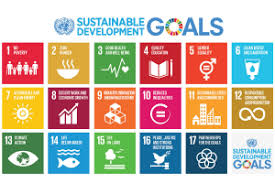
There are 17 Sustainable Development Goals (SDGs) set out by the United Nations.  It acts as a blueprint for people to follow to promote peace and prosperity throughout the globe.  No Poverty, Zero Hunger, Gender Equality, and Climate Action are just a few of the goals listed out.  In regards to Human Trafficking I do not believe that just one goal addresses the need for trafficking to end, but multiple.  

Image result for sustainable development goals
List of the Goals along with their numbers corresponding to each goal.

In my opinion Human Trafficking violates/does not follow the goals of Good Health and Well Being, Gender Equality, Decent Work, Reduced Inequalities, and Peace, Justice, and Strong Institutions.  3 because it’s pretty difficult to be in good health when you’re a slave. 5 because an overwhelming majority of victims are women. 8 because being forced to sell your body is not decent work. 10 because equality is not being promoted as victims are robbed of their freedom to make their own decisions.  Finally, 16 because institutions have allowed human trafficking to go on for far too long and our robbing people of the peace and justice they deserve. [3]   Human trafficking is an interesting area to tackle, for the majority of history it has been illegal, but that has not stopped traffickers.  Passing laws and legislation can only do so much and it’s time for a new approach on the matter. Root causes of trafficking can be hard to pin down, with many looking at poverty and lack of education and jobs as a prime suspect.  Eliminating poverty and increasing education among the population would definitely help reduce trafficking, but the main driving force behind human trafficking is the traffickers themselves. Eliminating poverty can help, but if the trafficker wants to take you, they will take you.  Traffickers turn to this as it pays a pretty penny. Educating people at a young age will give them the mindset that it is not okay to kidnap and sell people. Most traffickers lack sympathy and being able to establish that everyone is equal to the upcoming generations could reduce the number of traffickers and number of people wanting those kinds of services.  Only time will tell at the moment. [4]  

In a completely different direction, equality is something we as a planet have been striving for in years.  An area that currently lacks diversity is the tech industry’s AI development. With the majority of programs being developed by white males, conscious and subconscious biases tend to appear in their final program, typically supporting more user interface for the look of a white male.  Change is something that needs to occur at an early level, educating minorities and women on the job opportunities in the tech industry. Diversity in the workplace is shown to lead to greater innovation as well as production. Change also needs to occur so not every Alexa and Siri in the world is made with the thoughts and biases of white men, but rather represent everyone.  Currently men occupy 76% of all technical jobs, with 95% of the tech workforce being white. For us to truly reach peak innovation we need to lower these percentages to a more even playing field. [5]

Image result for diversity in the tech industry
Silicon Valley employee gender demographic

Blog #7-Haiti

Image result for human trafficking

            Sex trafficking and sex slavery is a very big problem in most developing countries. For Haiti specifically, sex trafficking and sex slavery is a very big problem that often goes unanswered or with very little attention. According to Lisa Cohen, a writer for CNN, she published a story on how traffickers exploit children in Haiti’s orphanages, of which there are many. As of March 2nd, 2018, there was an estimated 30,000 children living in orphanages in Haiti, and the Haitian government estimates that 8-% of the children that live in these orphanages have at least one living parent. The main reason they come to live in orphanages is because their parents aren’t able to afford to care for them. Ever since the 2010 earthquake that shook the country to its foundations, this kind of practice of leaving their kids because they cant afford to raise them has become popular. However, a study done showed that these orphanages would actually try and make money off the children, by forcing them to live in poor conditions and claim that they need financial help to sustain these kids. In June 2017, it was estimated that almost $100 million a year were being donated to orphanages in Haiti, most of which would be used for the wrong purposes or taken from the children. Not only does the money not reach these children, but there have been cases of child sexual exploitation and human trafficking happening inside of Haiti’s orphanages. While the Haitian government has worked hard to close five different orphanages that run like these, none of the orphanage owners have been arrested. Overall, not only is sex trafficking and sex slavery a continuing problem in Haiti, but so is the problem of orphanages and the mistreatment of orphans.

Image result for UN SDGs
List of Sustainable Development Goals, created by the UN

            Human trafficking is addressed by the Sustainable Development Goals (SDG), but lacks the capability to do what the UN Millennium Development Goals (MGDs) could do. A few bilateral development agencies, such as the U.S. Agency for International Development, and private philanthropies, including Humanity United, NoVo, the Oak Foundation, Walk Free, and the Freedom Fund, would claim to be working explicitly to end human trafficking. However, they would always answer with the phrase of “We are not interest in trafficking” or “We do not work on trafficking”. “If trafficking had been included in the MDGs back in 2000”, the writer claims, “many more development agencies would have dedicated staff to the issue and more foundations would be investing in solutions to human trafficking”. What needs to be done to combat human trafficking involves educating those around about the possible signs of someone who may look like a victim of trafficking. For instance, most airlines have trained their flight attendants to recognize the signs of human trafficking. Nurses are also trained on recognizing the signs of trafficking and trying to isolate the victim from the trafficker. If governments were to pursue more options like creating an entire division to human trafficking or even allocating some of what our defense budget is to fighting human trafficking, then we would see an immediate decrease in human trafficking.

Image result for AI

            Artificial Intelligence is a very gray area to many people, because the general public knows almost nothing. Everyone has seen the movie Avengers: Age of Ultron, and that’s the first thing that comes to mind when an individual mentions artificial intelligence. Its also an area that we’ve seen need more diversity. But why? Well, for one part, diversity is how we spread culture and how we acknowledge everyone. In terms of AI, they involve something called deep learning systems. These systems don’t read bias, but numbers instead. So, while the algorithms that drive AI are neutral to bias, the data and applications that shape the outcomes of these algorithms are not at all. Where diversity plays a key role is in the building of these data and applications. Without a diverse group of engineers, we could have biased algorithms making unfair loan applications decisions, or training a network of people only on white faces built on the AI- which would in fact create a model that would perform poorly on black AI.

Post #7

The Dominican Republic has a significant human trafficking issue. It is considered the third largest international crime industry in the Caribbean, generating an estimated 9.5 billion USD annually. Women from the Dominican Republic can be victims of violence, forced sex, and prostitution throughout the Caribbean, North and South America, and parts of Europe.

Anti Slavery defines human trafficking as activities that involve recruitment, harboring, or transporting people into a situation of exploitation through the use of violence, deception, or coercion and forcing them to work against their will. Sex trafficking is this same principle, but the victims are forced into commercial sex acts. I will let a commercial sex act be defined as prostitution, pornography, and sexual performance done in exchange for any item of value.

The United Nations Office for Drugs and Crime estimates the following statistics for 2016

  • 51% of identified victims of any type of trafficking were women, 21% men, and 28% children
  • 72% of victims trafficked into the sex industry were women
  • 63% of identified traffickers were men, 37% were women
  • 43% of trafficking victims are trafficked domestically within national borders

Focusing specifically on the Dominican Republic, the human trafficking epidemic is particularly pronounced. Many women are often trafficked to Costa Rica and Panama. Sex trafficking aside, a majority of these trafficked people will be forced into labor. The Ministry of Labor reported that certain agriculture industries, such as sugar farming, are popular destinations for trafficked laborers, especially children. Elizabeth Thomas-Hope, in her book “Human Trafficking in the Caribbean and the Human Rights of Migrants,” claims there are over 5,000 Dominican commercial sex workers across Western Europe. In coastal resort areas, child sex tourists will arrive year-round.

There are many factors that can help explain why human trafficking is such a profound problem in the Caribbean. Poverty, unemployment, illiteracy, drug use, and gang membership are all individual causes of the high human trafficking rate. It is common for traffickers to work along the Dominican-Haitian border, and trick or coerce families into letting their children come with them, promising a quality life, only to exploit them for personal gain. Immigrants make up a majority of those trafficked. They can often enter into more vulnerable states, and suffer from physical and emotional abuse as a result. The United Nations International Children’s Emergency Fund was unsuccessful in finding an exact number of people who are trafficked because there are no indicators or registers, no legal processes on the situation, and very few complaints or reports of trafficking.

Sarah E. Mendelson lays out in her book “Born Free: How to Prevent Human Trafficking” that human trafficking is not one of the explicit goals defined within the Sustainable Development Goals. However, human trafficking is a problem that will be addressed by several of the 17 sustainable development goals, such as gender equality, decent work and economic growth, as well as peace, justice, and strong institutions.

The Dominican government has shown little effort or initiative in solving this problem. In recent years, there has been no national public awareness campaigns for human trafficking, a lack of prosecution for arrested individuals, and a lack of funding to reduce the demand for commercial sex.

————————————– Read More ————————————–

Changing the topic now, artificial intelligence is an area that is lacking diversity. A report from the AI Now Institute claims that due to an larger proportion of white males in the field, the technology is at risk of perpetuating power imbalances and historical biases. An article by Rachel England, of Engadget, claims that consequences can range from hate speech-writing chat-bots to racial prejudice in facial recognition. The report also found that only 20% of professors in AI were female, and that less than 4% of large tech companies like Google, Facebook, and Microsoft’s employees, were black. It will take great effort at every stage of AI, from research, to development, to marketing and sales, in order to solve this diversity issue.

Post #6

In Linda Polman’s book read for class, she discusses aid from NGOs, where that money comes from, where it goes to, and how people get that money. She also discusses how much money goes to leaders, and the shady things that go along with this. Reading this chapter, Aid as Weapon of War, really opened my eyes to what aid could potentially be doing to countries and how not all of it could be helpful. Some of the aid we send could actually be doing more harm than good which is something we do not normally think about when we think of aid. We like to sit in our safe houses in the west, and believe that we are doing good by sending money or some other form of aid to a war stricken country.

 This may not be the reality, though. We never know fully where our money that we donate goes to, and it may very well be fueling the fire we actually want to try and put out. She even goes further to discuss how much the salaries are for local politicians and ministers in Sierra Leone. She discusses how these politicians try to get more aid out of NGOs and the mind games they play to talk to specific people and how to get around talking to others that they know they will not get money from. 

Mother Teresa

            Linda Polman compares aid organizations to “businesses dressed up like Mother Teresa” (177) because many times these aid organizations are only trying to get money out of people so the top dogs of the organization can earn money. She discusses that if insurance companies did the same things that these NGOs were doing, the journalists would go crazy and it would be major news. But because NGOs are doing it and they are seen as the “good guys” with good intentions, it is seen as okay to do these things. They are just as manipulative as other businesses, if not more, and they have similar intentions as they do too. Their business models would look completely different if they had different intentions. If they were in the “business” solely to help the needy and poor out, they would not be paying those politicians and ministers as much as they are. She discusses that the warlords are being helped just as much, if not more, by these aid organizations because they get part of the cut. They have business deals with the aid organization officials that allow them to get a portion of the share. 

            When discussing aid, and handling it in general, it is important to try to eliminate corruption as much as possible. The more money that can go directly to aid and where it needs to go the more beneficial it is, which should be an obvious statement, but some people do not see it as such. The people involved who are getting paychecks, only want bigger and bigger paychecks. This would potentially increase corruption involved in these organizations, and less money would actually be going to a good cause. Journalists should make more information readily available to the public and make it more eye opening as to what is really going on behind closed doors. Even if they cannot do that because of security issues, if they just made the public aware that this sort of thing was going on, the public may be more careful about where they donate their money. The public should do more research before they make donations to NGOs, and where their money is going to. The money they donate could potentially be aiding the “bad guys” instead, making whatever they are fighting against rage on stronger. Finally, governments have the power to regulate what is happening more strictly what is happening, and where money is going. Especially the governments of the countries that need aid can help to reduce corruption. 

Works cited

https://www.foreignaffairs.com/reviews/capsule-review/2010-11-01/crisis-caravan-what-s-wrong-humanitarian-aid

https://www.indianfolk.com/ngos-effective-nivedha/

https://www.britannica.com/biography/Mother-Teresa

https://zeenews.india.com/news/india/demonetisation-will-help-eliminate-corruption-fight-terror-indian-americans_1960731.html