Some of the languages spoken in Haiti are French and Creole. The state languages are also French and Creole. There is an indigenous language known as “Haitian Vodoun Culture Language”, also called Haitian VCL. It is also known as Langaj or Langay. However, according to Ethnologue, there are no known speakers of this language, and is now considered a second language only. This language consisted of a broad range of religious words, songs, or chants, drawing on multiple African languages. Because of the fact that there are no known speakers of Haitian VCL, it does not pose any kind of problems. It is, however, kind of sad to realize that another language that once held cultures and literacy among people is now considered extinct, and that because there is no one capable of reading or writing or even understanding Haitian VCL, any sort of sentimental value people may have will inevitably fade away.
Haiti is one of the original 51 members of the United Nations and has been a member since October 24, 1945. Their mission within the United Nations is to “promote the governments philosophy of external action” which utilizes international peace, cooperation, and co-prosperity, all based on the highest level of dignity to all involved. Haiti is also a member of the International Monetary Fund; however, their last informal meeting was on December 24, 2018. They joined the IMF in September 8, 1953, with around 47.97 million in outstanding loans, total quotas of roughly 81.90 million. The IMF, created with the hope of unifying countries to create global monetary cooperation, financial stability, and monitor international trade. As for the WTO, or the World Trade Organization, Haiti has been a member since January 30, 1996, which aims at organizing the world’s trading nations together to work for a better goal. The WTO is the only global organization that deals with the rules of trade between countries. Their main goal is to “help producers of goods and services, exporters, and importers conduct their business”. The GINI coefficient index measures how income is distributed among households in a certain country’s economy. In 2012, the GINI coefficient index in Haiti measured at 41.1, meaning that while the wealth distribution is not as equal as should be, it is better than some countries. In fact, the highest 10% of people hold over 31.2% of all the nation’s wealth. As for PPP, also known as the Purchasing Power Parity, which measures and compares different countries currencies through a market basket, or a set group of items bought without looking at currency, to compare all currencies. Haiti’s Gross Domestic Product per capita was around 165.173 in 2017. When adjusted to the PPP, their GDP equated to roughly 9% of the world’s average.
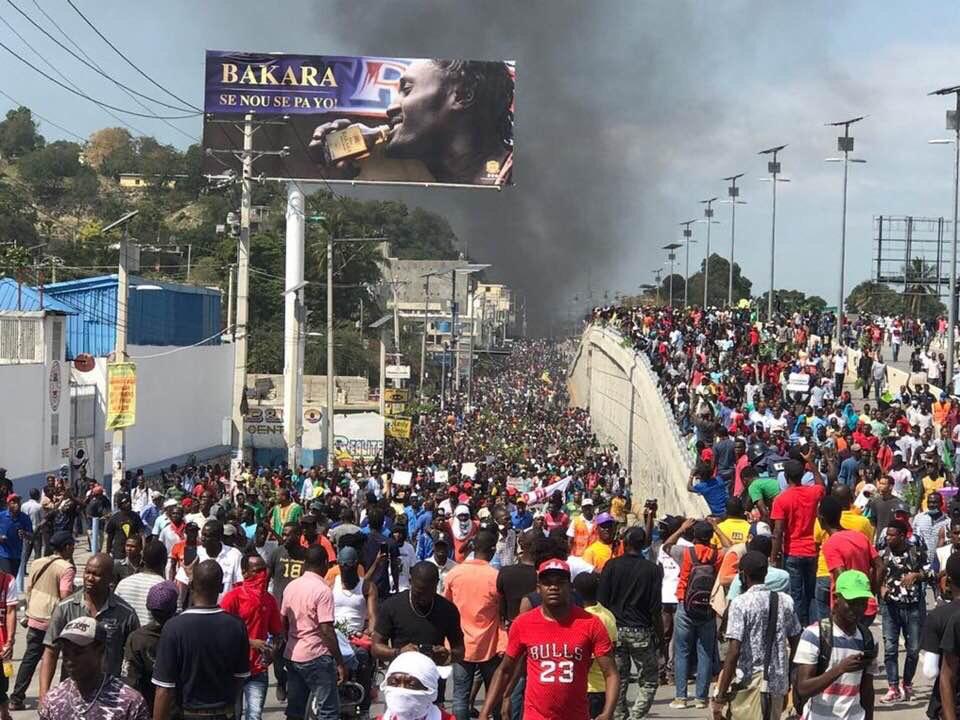
One of the biggest or main concerns for Haiti as a country is the ongoing protest that come about from a huge scandal concerning the 2010 earthquake in Haiti. In 2018, it was shown that the President at that time, Rene Preval, was able to take almost 2 billion dollars in donations from an oil reserve company, which was set up in hopes of providing oil and gasoline for a cheaper price to those in Haiti. Once again the protesters have taken to the streets, calling for an investigation into the missing money and condemn the ongoing corruption within the current government. Not only are they condemning the corruption, but they are also calling for the resignation of President Jovenel Moise. Jacqueline Charles, a reporter for Radio Mega, stated that at least one individual was killed just three days ago, along with roughly six other people being arrested. Tires and cars were set on fire, and the police in the area ran out of tear gas to fire at the people, which only added to the instability of the current situation inside of Haiti.

 Peace Studies Blog