Nationalism can be defined as having pride in your own nation, taking an interest in it, or even excluding other nations and thinking them lesser than your own nation. This can be more intense or less intense for some people.
I found a post onlinewritten by a Honduran, talking about how they view their country. Even though this post was written in 2011, from other sources that I have found on the internet this view of nationalistic pride towards their country is very strong.
“What seems very clear that we have is that this country is ours. We seldom think that Honduras is mine.”—Federico Alvarez
The author also talks about the many problems that are facing Hondurans at the time (and still), for example the political corruption, economic struggles, and more. He says that if they are to help with these problems, it is important to look at the country as a collective whole and see what you can do individually to make the situation better. He talks about his obligation to Honduras, and how he can personally improve the country. This is what nationalism is in a nutshell. He feels pride towards his country, but also acknowledges that there is a lot of work to be done to improve the state of the political and social climate.
I think this is an interesting article to read because it does not talk solely about what is wrong with the country (which is mostly what you see when you search for Honduras) but why this citizen loves his country and why he is willing to work to improve the state of it.
Zakaria, in The Rise of the Rest, sees the potential danger in the rise of nationalism because it is happening so rapidly around the world, and it is making citizens revert back to thinking their country is the best. This stems from the continued general improvement of welfare in most countries around the world compared to the past. Economies are improving and people are becoming more proud of their countries. While this is great to an extent, the author argues this has potential danger as well.
One example of a conflict that I have seen a lot of in my country is between the government and the citizens. According to a timeline of the country’s history on bbc.com, there has been a series of human rights abuses by the government against the citizens. According to the timeline,in August of 1988, “Inter-American Court of Human Rights finds Honduran government guilty of “disappearances” of Honduran citizens between 1981 and 1984”. This is obviously not something that should be happening to citizens by their own government, and it is obvious that corruption was involved. To correct (at least some) of the corruption, they needed an outside source to come in and assist. Because the government is so powerful, they were able to sweep it under the rug, unnoticed, for so long before it became a big deal. After this there are other human rights abuses brought to light, one being against the military.
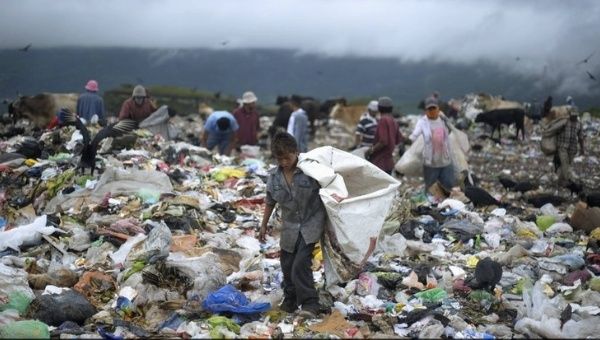
This problem with human rights also goes hand in hand with inequality, which is a major issue in Honduras.
“Despite the favorable economic outlook, the country faces the highest level of economic inequality in Latin America.”—Worldbank.com
This inequality stems from many different issues in Honduras, some being corruption and violence, as previously stated (many times).

As you can see in the above graph, most Latin American countries are facing a decrease in income inequality. But this, unfortunately, is not true for Honduras. Income inequality is rising by more than .5 percent each year, used by the Gini coefficient. The Gini coefficient, as we have learned from a previous reading, is used to measure inequality in countries.
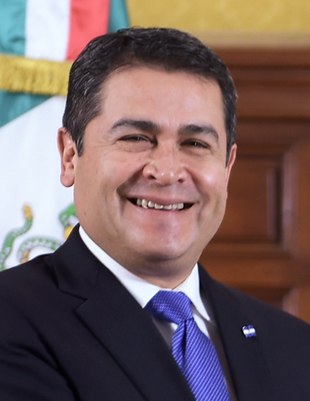
Because of the changes in presidency, there seems to be little to no attempt to change these inequality issues. Worldwide organizations are aware of the problems, but it is difficult to get an organization in the country without upsetting the leader or creating bigger issues. I believe to solve the inequality issues in Honduras, the issue of political corruption needs to be solved first. Inequality is a major issue, and there are many different reasons for the huge scale in this country. To decrease inequality, Honduras needs to fix the problems causing inequality first.
Works Cited
http://www.freerepublic.com/focus/f-bloggers/2786852/posts
Zakaria The Rise of the Rest
https://www.bbc.com/news/world-latin-america-18974519
https://www.worldbank.org/en/country/honduras/overview

 Peace Studies Blog