Spanish is the official language of The Dominican Republic. In different parts of the country, you can find different dialects being spoken. The most common of these is known as Dominican Spanish, a subset of Caribbean Spanish based on Andalusian and Canarian dialects of Spain. Dominican Spanish includes a lot of pieces of other languages and dialects, it borrows words from Arawak, Spanish words that are no longer used in modern Spanish, and even includes words from African languages spoken by those who immigrated to the island of Hispaniola, on which The Dominican Republic sits, after the Taino extinction.
The Dominican Republic also has minority languages, such as Haitian Creole. It is spoken by an estimated 160,000 people, or about 1.5% of the population, of which a majority are of Haitian descent. Haitian Creole is largely based on French, and is influenced by Spanish and West African Languages. A majority of the Haitian Creole speakers in the Dominican Republic are bilingual, with most having Spanish as a second language. The language is sometimes considered a foreign language in the Dominican Republic, and has not been given official recognition.
Another minority language spoken in the Dominican Republic is Samana English. It is spoken by around only 12,000 people who reside in the northeastern part of the country. Most individuals who speak this language are descendants of black immigrants from the United States, known as the Samana Americans. It is similar to Creole English and Caribbean English Creole. Due to government policy, Samana English is in decline in the Dominican Republic and is now considered an endangered language.
The Dominican Republic was a founding member of the United Nations, joining in its formation on October 24, 1945. According to its website, the Dominican Republic has been involved in numerous initiatives, especially those relating to women’s rights, elderly rights, and domestic violence. The Dominican Republic played a pivotal role in the creation of the International Day for the Elimination of Violence against Woman, which is observed on November 25.
On December 28, 1945, the Dominican Republic became a member of the International Monetary Fund, where they have had little lending and borrowing activity. Since their membership began, they have drawn just over 1.6 billion SDR, with close to half of that amount outstanding. The Dominican Republic has been a member of the World Trade Organization since March 9, 1995.
The Dominican Republic has a GINI index of 45.3, as of 2016. This measures the extent of much the wealth and consumption distribution deviates from an equal distribution. A score of 0 means perfectly equal distribution, while a score of 100 means perfectly unequal distribution. When looking at GDP based on PPP, or purchasing power parity, The Dominican Republic ranks 70th in the world, according to World Bank. GDP (PPP) is a measure of a country’s GDP relative to purchasing power. In other words, it is a measure of “how many goods can that much money buy you” in any given country.
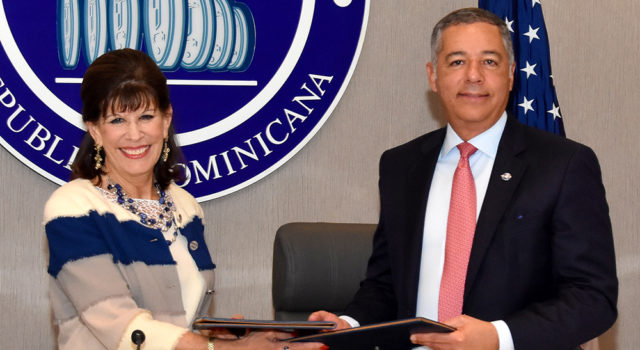
This week, the governments of the United States and the Dominican Republic made a pact to facilitate the investments of US companies in the Dominican, via the financial entity, Overseas Private Investment Corporation, or OPIC. This simplifies and streamlines the approval process for US companies to invest in Dominican companies.

 Peace Studies Blog