Over the course of this semester I was introduced to many new ideas and information. Each week we had a guest lecturer come and speak about their area of expertise. Topics ranged from globalization, politics, and economics, to human rights, humanitarianism, and sustainability.
One lecture I was particularly interested in was given by Nick Monaco. Monaco is part of a social network analysis company called Graphika. He specializes in disinformation detection and analysis. An interesting example he gave was that during the 2016 US presidential election, they were able to detect that as many as one-third of pro Donald Trump Twitter accounts were bots, which are simply computer programs designed to post Donald Trump propaganda. What’s even more odd is that some of these they were able to tell originated in Russia. This is significant because these were used on a platform where anyone can speak their opinion. A large amount of information like that can be effective in swaying the public’s opinion. Would the election have had different results were these bots detected and removed?

Another point Monaco brought up was how some states are deploying disinformation campaigns to silence government critics. Some of this “state sponsored trolling” includes rape and death threats, bots used for attacks, spreading edited images, and spreading incriminating information about targets. My first reaction when learning about this was that it seems like a violation of free speech. That is not necessarily a right in every country, but this state sponsored trolling was going on in the US as well. If the US government would use resources to silence critics, does that mean they have something to hide?
The other guest lecturer I was most interested by was Scott Christiansen. He is a professor of management in the Trulaske College of Business. His lecture was about the exponential growth of technology, and the role that it will play in our developing society. An observation he demonstrated was Moore’s law, the trend that computer processing power doubles about every two years. He explained that this is because as we are able to fit more processing power into a smaller space, we can get more power out of a smaller and smaller amount of material as time goes on. This trend is expected to continue for a limited amount of time, due to physical limitations.
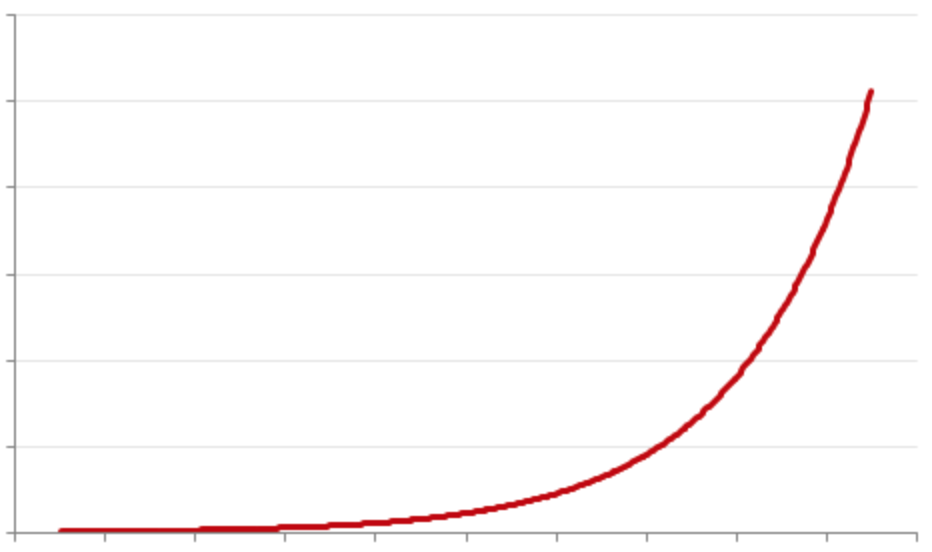
How will all of this affect our society? Christiansen then explained that every technology goes through stages of exponential growth. Once something becomes digitized, it can grow exponentially. Eventually it will become advanced enough to the point where it will become demonetized, dematerialized, and ultimately democratized. For example, we now have digital music, digital cameras, digital movies, and digital money. Every technology could become democratized, and made a public utility, and not just a luxury, such as the internet. The FCC is currently trying to end net neutrality, while many argue that the internet is so advanced and a necessary part of life, that it should be a public utility.

My focus this semester was on the Dominican Republic. Through my research, I have learned that it really is a beautiful country with many great people, but it is far from perfect. Before this project, I had never thought to deeply into societies other than my own. It made me realize that there are issues in the world greater than what I deal with day to day. What shook me the most is the Dominican issue with sex trafficking. It is one of the worst in the world, yet nobody seems to be talking about it. The government recently decided to illegally deport almost a quarter million citizens of Haitian descent, and I never would have known about it.
The biggest insight I gained from researching this country has nothing to do with the country itself. That insight is this: read the news. Not just news about your own town or country, but about the whole world. We we live in a society that is more connected than it ever has been, but it’s easy to feel like you’re only a citizen of the country in which you live. That is far from the truth, as we are all citizens of the world. The best insight I had is not to just learn about the place you’re in, but learn about the entire world.

 Peace Studies Blog