
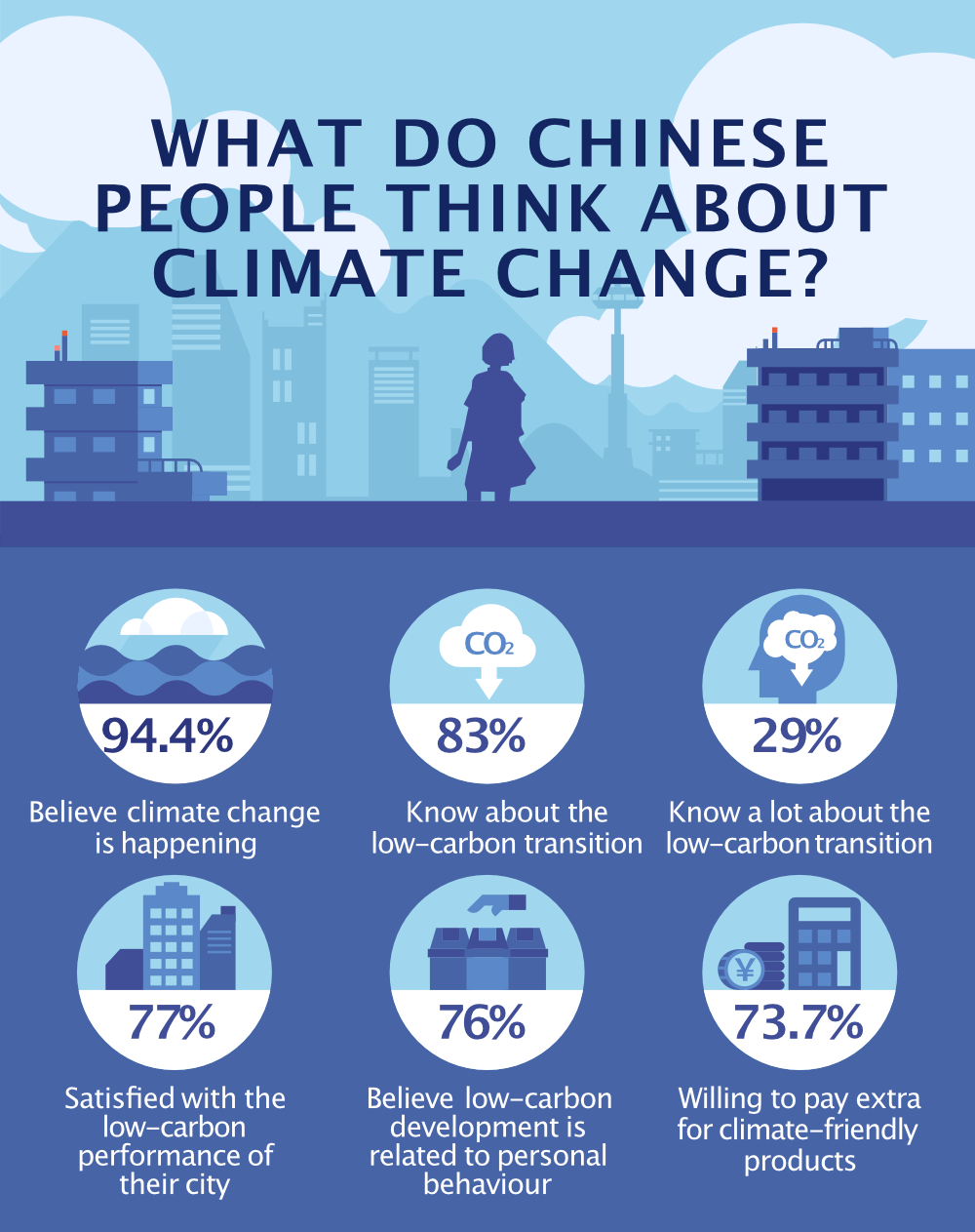
Finding a consensus about what needs to be done about the climate change crisis is difficult when there are many varying viewpoints. This can be extra difficult when our President, leader of one of the world’s superpowers, does not even acknowledge climate change as real problem we are facing. When leadership chooses to blatantly ignore concerns it can be frustrating and may feel as nothing can be done. Although the US isn’t a prime example of being environmentally superior, other countries are getting on board to make a change. For example, China is making governmental changes to be more eco-friendly after a summer of typhoons, heatwaves, and flash floods. A 2017 national survey stated that 94.4% of respondents believed in climate change. Government led campaigns have started pushing for better energy consumption along with developments and low-carbon technologies. It’s good to see that countries like China, who are notoriously known for bad air pollution, are making steps to help protect the environment.
In my opinion, future actions should include a summit of world leaders and world leading environmentalist to sit together in one room to make international standards countries should abide by. Whether that be CO2 emissions, waste disposal, fossil fuel use, whatever they see fit to make the world a better place. Until we get a President who’s willing to acknowledge the threat climate change poses, we will just have to ride the bench as other countries fill our place to change the world. [1]
Now on to El Salvador.
In recent years, El Salvador’s greatest ongoing environmental issue has been clean drinking water. Although nearly every Salvadoran has access to water, the water is not safe, often contaminated with feces and other undesirable waste products. Before we dive into the water issue in El Salvador I would like to applaud one positive they’ve had in the environmental field. As of March 2017, mining for metals is banned nationwide in the country.

Part of this ban was due to the side effects it had on the land and on the country’s water supply. “Mining is an industry whose primary and first victim is water . . . Today in El Salvador, water won out over gold [2]”. It’s very interesting to see that a government was able to put aside economics and actually give priority to the safety to their citizens over the value of mining minerals. They are currently the only nation in the world to ban mining of metallic minerals. When the government saw what was happening they decided to step in and make a change. This appears to be the opposite of Watt-Cloutier’s writing. To think how nice it would have been for the Inuit people if the US would have done what El Salvador did for its people. Water purity is still an issue in El Salvador, but the ball has started rolling in the right direction.
Aside from the banning of mining minerals there aren’t very many strict environmental laws. Corporations still dump waste and untreated water back into the water sources. Around 90% of surface water is contaminated and unsafe to drink by other global standards [3] . The movement for safe drinking water can be seen throughout the country with worker strikes and marches for the cause. In 2018, there was a “Battle for Water Rights”. The corruption of the Salvadoran politics were seen as members of the ARENA party stalled a bill that would protect the right to water in the constitution.
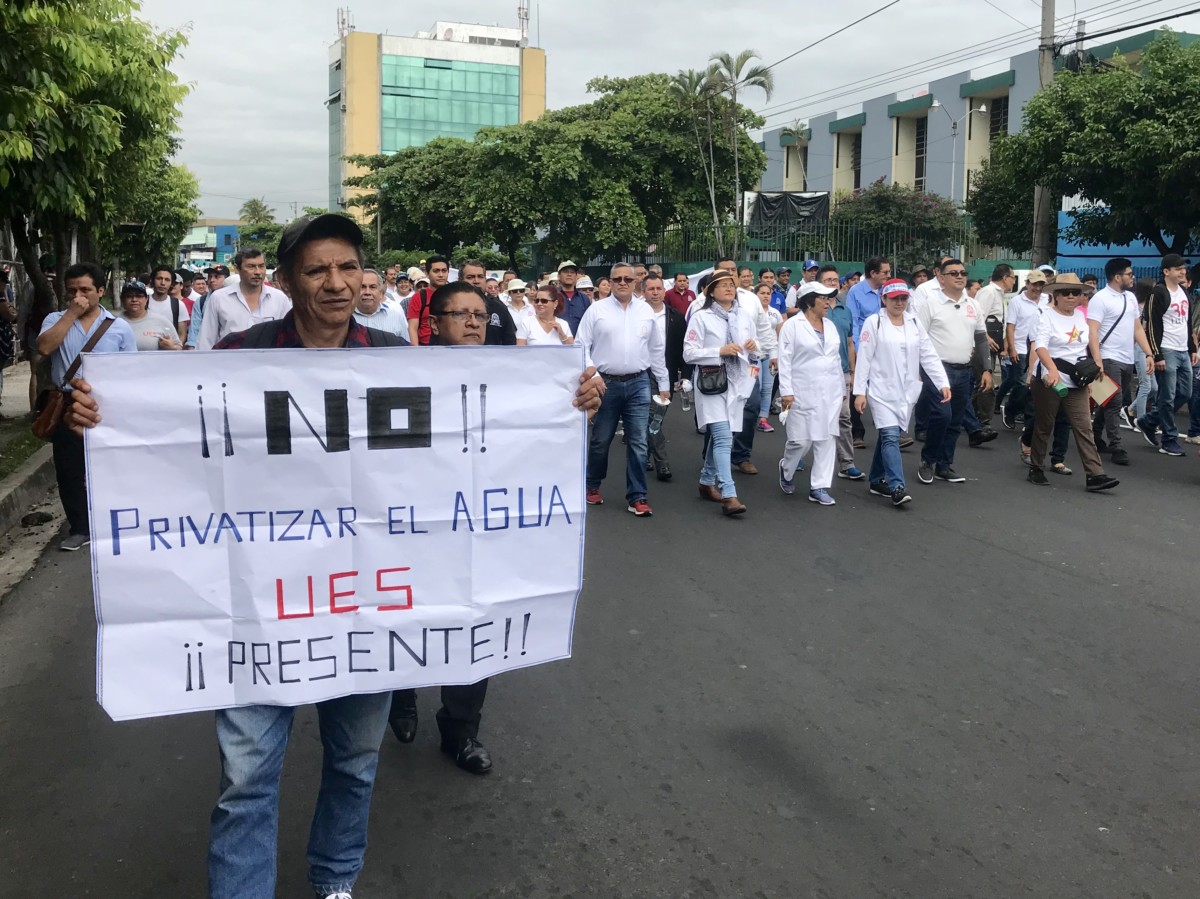
This conflicted with the party’s idea to have corporations privatize the water industry, to which many citizens were not happy. A bill once introduced in 2006 that had yet to pass, due to what I consider corruption, stated water that should be regulated as a public good. The 2006 bill was passed after FMLM one a majority in the elections. Although it is now publicly regulated it is still poorly regulated. Prior to the privatization of water bill being killed, 1 million Salvadorans were without water after ‘damages’ to a pipe occurred. Private water providers than swooped in to provide water to the thirsty Salvadorans, but at a cost. This instance was a big reason for the bill being killed as activists did not want to see this happen again [4].
Another issue that the country faced was deforestation. Since the 1960’s nearly 85% of the forest has been destroyed leaving around 5% of the nations area still covered in forest. Soil erosion is a result of this deforestation and has left 50% of the soil as unusable for farming. This is a very difficult result to reverse and the country will be seeing fallout for this for years to come. The damage has already been done in this area and reversal will only take and policy change, but it is currently not the country’s most pressing issue. [4]
As a closing note I’d like to say it was difficult to find Salvadoran news outlets reporting on environmental issues. Direct searching “environmentalism” and “climate change” yielding only TWO results on the local news outlets, with one of them being about Trump’s view on climate change. Besides the water crises, that locals are clearly passionate about, I’m interested in seeing how the rest of the country views other environmental issues. I might have to call my friend to see what she thinks.

 Peace Studies Blog