Nationalism the sense of pride that one feels as a member of a nation state. The term is used often today in the media and is often used very loosely to refer to any opposition to globalization based on a feeling of connection to a national identity. Not to be confused with patriotism, nationalism is often a more radical form of political and militaristic movements. Nationalism is focused around a country’s language, culture, and sometimes race. Nationalist countries are less likely to join world organizations, maintain a higher view of themselves, and promote themselves at the expense of others. According to Fareed Zakaria, nationalism is a danger to the world because it promotes violence. He gives examples of average, everyday people who can have a sense of hate toward other nations for no apparent reason. Nationalism a positive view of taking control of other nations, seeing themselves as the superior nation. In its most extreme forms, nationalism has led to war, genocide, and other horrific tragedies.

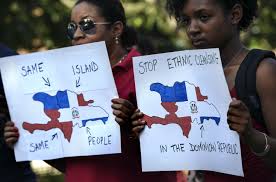
One long standing theme of nationalism in the Dominican Republic is their hatred toward their neighboring country, Haiti, with whom they share the island of Hispaniola. In 2013, the highest court in the Dominican Republic ruled that anyone with parents who entered the country illegally would not be considered legal. Until 2010, anyone born on Dominican Republic soil was considered a legal citizen. In fact, it was declared that anyone born between 1929 and 2010 who had foreign ancestry were “not true Dominican Nationals.” The result of this ruling was a mass deportation of those who did not meet legal immigration status, a majority of which were Dominicans of Haitian parents who entered the country illegally.
According to the Michigan State University College of Law, the plan was promoted by the Dominican government as a way to “…reform its immigration system and erase the statelessness within the country.” The government even claimed that “no person born in the Dominican Republic will be expelled from our territory.” This turned out to be a false claim as more than 200,000 people of Haitian descent have either been deported to or fled to Haiti. The tragedy here is that these people of Haitian descent are being deported for something they had no control over.
This is not a new idea in the Dominican Republic, the country has long been in a struggle with Haitians and has committed atrocities against them before. One of these events includes the Parsley Massacre. Dominican dictator Rafael Trujillo made his intentions clear in a speech he delivered on October 2nd, 1937. He claimed that “Three hundred Haitians are now dead in Bancia. This remedy will continue.” The remedy, killing Haitians along the border between it and the Dominican Republic who were reportedly stealing crops, provisions, etc. from borderland residents, lasted for a mere 6 days. Estimated for the number of deaths range from 12,000 to 20,000.
The Dominican Republic has experienced above average economic growth. According to a 2013 United Nations Development Program report, its average annual growth rate was 5.4%. Due to a more diversified economy, and strong trade agreements internationally, its GDP rose 50% from 2000 to 2011. Despite these economic advances, income inequality has increased as well as poverty. According to a World Bank report from 2014, the poverty level was 32%, and by 2011 had risen to 40.4%. The report states that income inequality is a larger issue in urban areas. It is difficult for the poor to bring themselves out of their situation. Between 2000 and 2009, 41% of the Latin American and Caribbean population were able to move into a higher income group, while in the Dominican Republic only 2% was able to move up. When there is a large gap between the rich and the poor, a relentless cycle of poverty persists. The Dominican Republic ranks 146th in the world by the GINI coefficient, making it one of the most unequal countries in the world.
 Peace Studies Blog